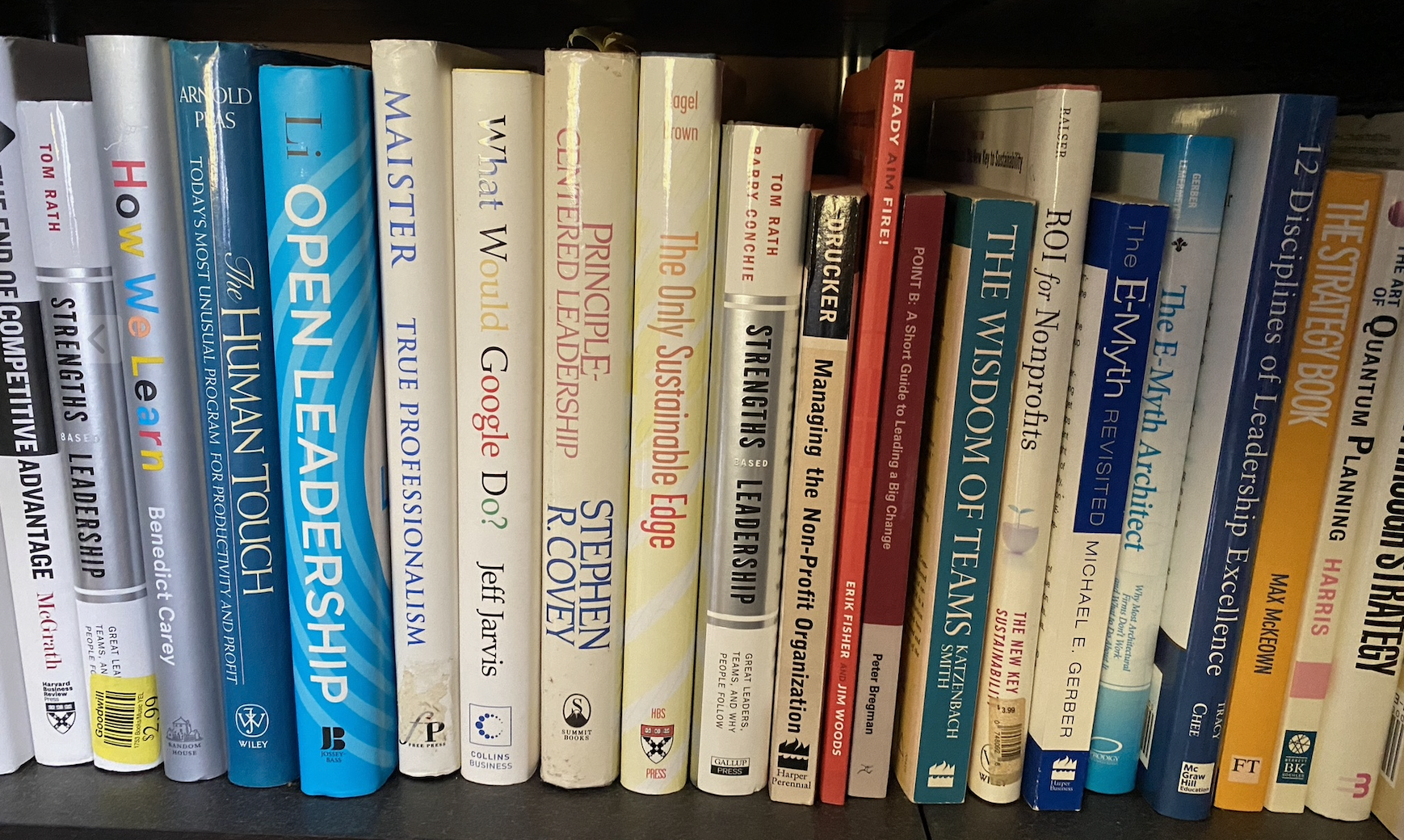
Love & Work treats “give peace a chance” as a design brief.
Humanity faces overlapping crises—democratic erosion, climate disruption, deep inequality, and a widespread loss of meaning. The current trajectory won’t get us where we need to go.
Across the globe, people are designing, building, and testing new ways to work, learn, love, and live. These efforts are small enough to try, real enough to matter, and open enough to evolve. Love & Work maps them so they’re easier to see, learn from, and join.
spring 2026
“You never change things by fighting the existing reality. To change something, build a new model that makes the existing model obsolete.”— R. Buckminster Fuller
LEARNING, SYSTEMS THINKING
None of us has to do everything, but each of us can do something. In Jewish teaching, Rabbi Tarfon says, “It is not your duty to finish the work, but neither are you free to desist from it”—a line often associated with the work of repairing the world (tikkun olam). No one is asked to save everything; each of us is asked to take up our share of the work through whatever mix of creativity, care, and courage is available to us, right where we are.
...read more
culture, story
For centuries, many of us in the industrial West have lived inside a tale that casts the world as raw material and humans as its managers, consumers, and winners or losers. This old narrative has powered extraordinary innovation, but it has also delivered us to the brink: a heating planet, frayed democracies, mass extinction, and a pervasive sense that life is speeding up and thinning out at the same time. In that light, the question is not just what policies we adopt or which technologies we deploy, but what story we are living in—and whether it can still hold.
...read more
learning, long view
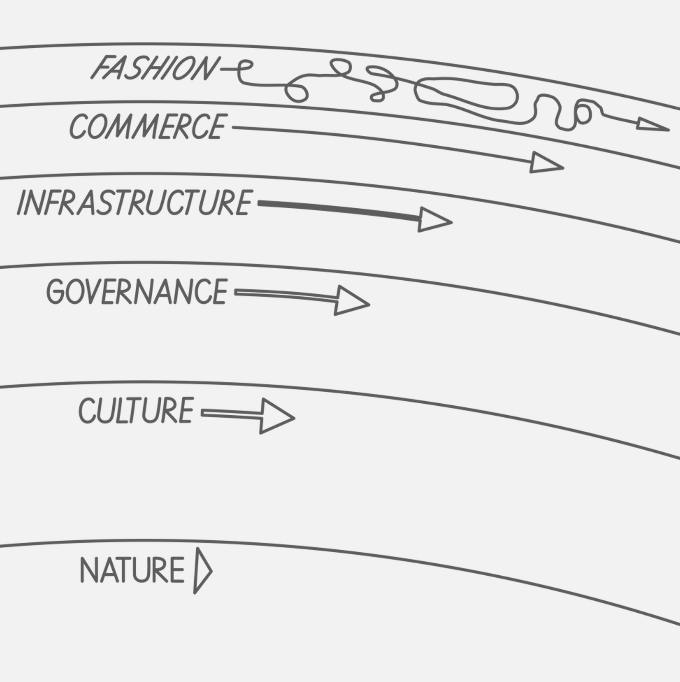
Social change unfolds over generations, not election cycles. Margaret Wheatley tells a story about colleagues who once met with the Dalai Lama while feeling deeply discouraged that their work for change seemed to have little impact. They asked whether their efforts would ever make a difference, given how dire things looked. With a smile, he replied: “Oh, don’t worry about that. Your work will bear influence in about 700 years.”
...read more
culture, celebration
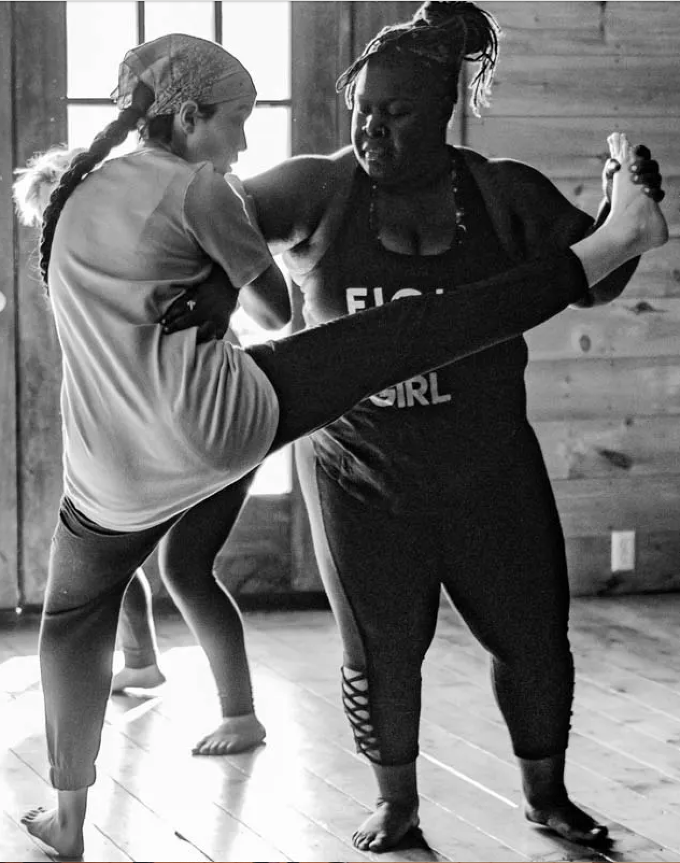
The future needs our delight as much as our outrage. adrienne maree brown teaches that what we pay attention to grows, and that pleasure can be a strategy for liberation—a way of reclaiming our whole, joyful selves in the face of systems designed to numb, exhaust, and divide us. When joy, kindness, and love are chosen deliberately, the terms of the struggle begin to change. Most of us were taught to think of power as domination, extraction, and control.
...read more

HABITAT, design
Design is often invisible but never neutral; it quietly shapes how we see, feel, and act together. It can make cynicism feel inevitable, or gently suggest that care is a given. The lines of a building, the way a room holds light, the ease or friction in a doorway or a website—all of these choices whisper instructions about what and who matters. When we move through environments that are coherent, gracious, and humane, it becomes easier to imagine that our shared life could be that way too.
...read more

company, patronage
In 1984, at the first Hackers Conference, Stewart Brand famously said, “Information wants to be free.” What he actually said was a little more nuanced: “Information wants to be expensive, because it’s so valuable. The right information in the right place just changes your life. On the other hand, information wants to be free, because the cost of getting it out is getting lower and lower all the time. So you have these two fighting against each other.”
...read more

LEARNING, COLLECTIVE INTELLIGENCE
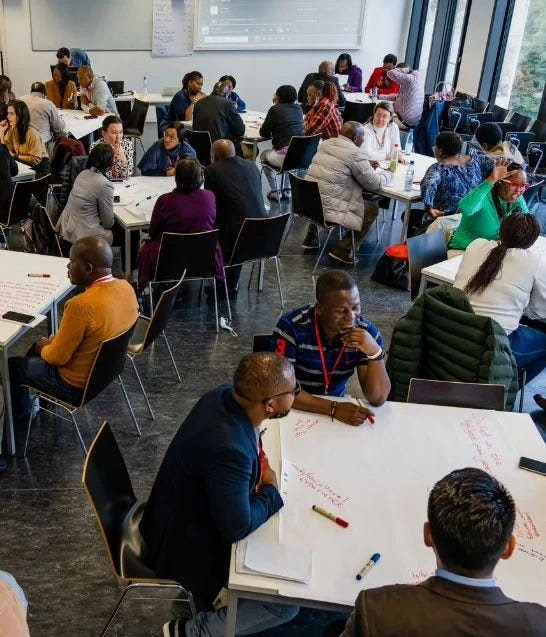
The smartest person in the room is almost never the person who thinks they are. And in any case, the room itself is usually smarter than any single person in it — if we know how to work it. This is not a flattering metaphor. It is a finding. When groups are given the conditions to think well together — genuine diversity of perspective, real listening, shared stakes, and the freedom to disagree — they reliably outperform even their most gifted individual members.
...read more
LEARNING, FUTURES THINKING
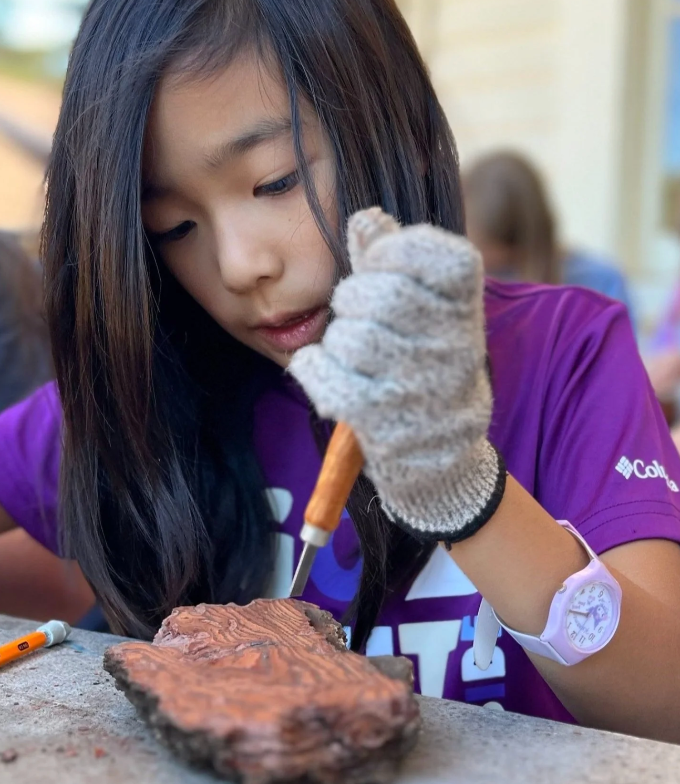
We have confused education with the delivery of content. For more than a century, most schools in the industrial world have been organized around a simple transaction: adults hold knowledge; children receive it. The measure of success is how much sticks. The tools are lessons, tests, grades, and credentials—a production line that begins with small children and ends, theoretically, with prepared adults.
...read more

LEARNING, FUTURES THINKING
We built our civilization on a single, confident assumption: that the natural world is a resource. Not a teacher, not a community, not a relative — a resource. Something to be surveyed, extracted, managed, and, if necessary, replaced. This assumption is so embedded in our institutions, our economics, and our education that most of us have spent our lives inside it without ever having to name it.
...read more
LEARNING, personal development
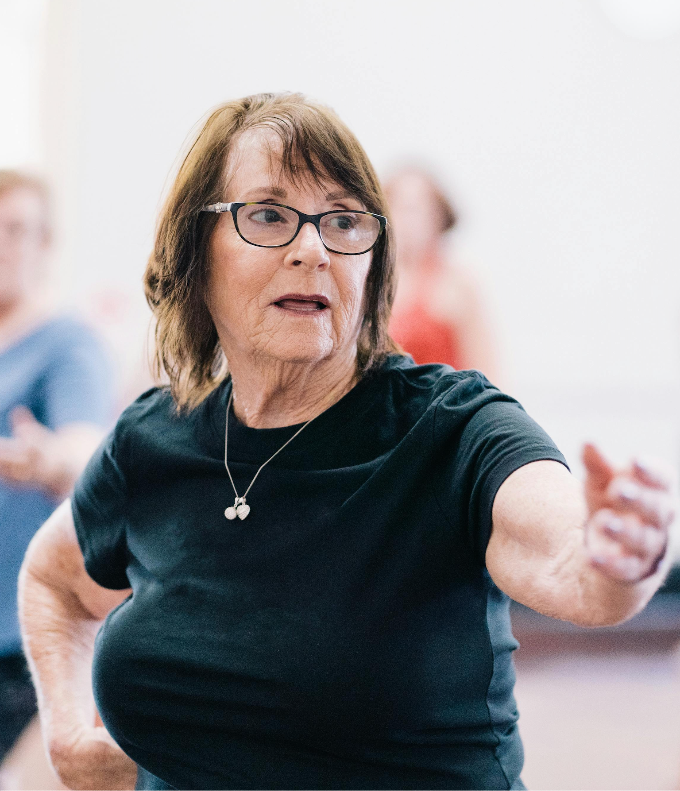
It's relatively easy to describe the crises of our time in the language of systems: broken institutions, failed markets, collapsing ecologies, eroding democracies. But why are these systems failing? It is elucidating to remember that every human-built system is a pattern of relationships. Decisions are made by people who operate from the emotional capacities they have developed over a lifetime.
...read more
LEARNING, systems thinking
Picture a meeting you have attended recently about something that genuinely mattered — a community problem, an organizational challenge, a question that required the best thinking of everyone in the room. Chances are it followed a familiar script. An agenda was circulated. A few people spoke most of the time. Someone at the front of the room held a marker.
...read more
APRIL 17, 2026
“There is power in being robbed & still choosing to dance.”― Amanda Gorman

CIVICS, SOCIAL INTELLIGENCE
Sebastian Junger has spent much of his life moving toward the places most of us avoid—storms, war zones, the thin edges where systems fail and people are forced to rely on each other. In Tribe: On Homecoming and Belonging, he turns from the question of how we survive those moments to something more intriguing: why, inside disruption, so many people feel more awake, more necessary, more alive than they do in the steady drift of ordinary life.
Book: Tribe: On Homecoming and Belonging

HABITAT, INTEGRATED DESIGN
As climate volatility increases, architects and urban designers face mounting water challenges. Well-designed rainwater harvesting systems can cut potable water use by up to 55% in commercial buildings and 30% in homes. With 36% of major cities now experiencing water stress—driven by rapid development and expanding hardscapes—rainwater is no longer just runoff, but a resource to design with.
ARTICLE: Rainwater Harvesting 101: Integrating Aesthetics & Sustainability In Architecture

company, cooperatives
Modern co-op history is often told as beginning in 19th-century Europe. Yes, the Rochdale Society of Equitable Pioneers in 1844 England is significant for codifying principles that still guide co-ops today. But this narrative sidelines much older cooperative traditions in Africa, Asia, the Americas, and Indigenous communities.
ARTICLE: Mapping The Cultural Heritage Of Co-Ops: What Should Be On The List?
ARTICLE: The skylines of the future will be made of wood
ARTICLE: A grassroots movement in the Mountain South is turning guns into garden tools to spark conversations about safety, belonging, and what truly protects rural communities.
ARTICLE: Higher levels of inflammation are associated with a stronger preference for interacting with others through social media rather than face-to-face, researchers report.
ARTICLE: The energy shocks rippling from the war in Iran have prompted countries, from Cambodia to Peru, to embrace remote work. Leaders in Europe are now joining the push as they look to curb consumption of oil.
ARTICLE: It’s a myth that baby boys are less social than girls: A new look at decades of research

APRIL 17, 2026
"Writing is a suspension of life in order to re-create life."- John McPhee

learning, collective efficacy
Albert Bandura was one of the most influential psychologists of the 20th century. Long before “social emotional learning” or “mindset” became common language, he argued that change is a process of learning—how people gradually develop new ways of thinking and acting.In a 1961 paper called Psychotherapy as a Learning Process, Bandura upended the idea that behavior could be explained by any single cause.

CIVICS, PERSONAL RESPONSIBILITY
I know I speak for millions when I say that, in a time when the daily news feels endlessly bleak, I’m hungry for reminders that ordinary people still have real power close to home. Writing in Ms., Kerani Mitchell offers exactly that, with a tapestry of examples that give both context and inspiration to the question, “What can I do?”
ARTICLE: The Antidote to Despair Is Finding our Role in Community Building

COMPANY, ORGANIZATIONAL CULTURE
Davines takes both their B Corp certification and their slogan—For a Good Life—very seriously. Rooted in a family legacy that treats the business like a living being, Davines has long seen sustainability not as a marketing angle but as the only acceptable way to operate, framing “good life” as a balance of environmental, social, and economic wellbeing.
ARTICLE: Healthy Soil, Healthy People: How Davines Inspires Beauty from the Ground Up
.png)
HABITAT, INDIGENOUS WORLDVIEWS
Indigenous worldviews treat land, buildings, and communities as living relatives in a web of kinship, not as inert assets or technical problems to solve. When those worldviews lead design, architecture stops being a delivery mechanism for services and becomes a practice of renewing relationships—between people and place, past and future, human and more-than-human worlds.
ARTICLE: Architecture by, for, and with America’s First Communities
ARTICLE: For the first time in the U.S., renewables generate more power than natural gas.
ARTICLE: Years of investment in green infrastructure have driven electricity prices down across Nordic countries—sometimes below zero.
ARTICLE: Scientists have developed a laser process that bonds paper using its own material, avoiding the need for polluting glues.
ARTICLE: Mining for clean energy metals is highly destructive, but new approaches aim to grow those metals using plants instead of digging them from the earth.
ARTICLE: Financial accounting hides environmental and social costs behind reported profits. More complete accounting could lower pollution, protect ecosystems, and strengthen long-term economic stability for society as a whole.

APRIL 10, 2026
"We came all this way to explore the moon, and the most important thing is that we discovered the earth." - William Anders, Apollo Astronaut

NATURE, ECOLOGICAL WISDOM
In her first book, Finding the Mother Tree, Suzanne Simard argued that forests are not collections of isolated trees but living, communicating communities connected by underground fungal networks. In her new work, When the Forest Breathes, she extends that idea into a broader thesis: forests are relational, self-renewing communities whose health depends on cycles of reciprocity among trees, fungi, soil, and people—and if we learn from those relationships, we can redesign forestry, climate policy, and even our own communities around regeneration rather than extraction.
BOOK: When the Forest Breathes

HABITAT, BIOMASS
In a 1995 The Atlantic cover story, Amory B. Lovins and L. Hunter Lovins of the Rocky Mountain Institute introduced the ultra-efficient, hybrid-ready “Hypercar” concept to a mass audience—two years before Toyota launched the Toyota Prius in Japan and five years before it reached global markets. In retrospect, the article anticipated a major shift in the auto industry.
REPORT: Building with Biomass: A New American Harvest

learning, personal development
Parker J. Palmer is a writer, educator, and activist whose work sits at the intersection of spirituality, education, community, and democratic life. A lifelong Quaker, he doesn’t celebrate Easter in a traditional liturgical sense, but engages it as a season and symbol of resurrection, resistance, and renewal. In a recent essay, he reflects on how “resurrection” can feel more threatening than comforting, both personally and politically, because genuine new life asks us to leave behind familiar forms of “death-in-life” and risk change.
ARTICLE: Threatened with Resurrection

communications, social messaging
“No Blue, No Green” is a two-phase environmental design campaign by Droga5 São Paulo for the SOS Oceano. Its core message—“without the ocean, there is no life on land”—is distilled into the line “No blue, no green.” Phase one, launched at Rio Ocean Week 2025, removed blue and green from Brazil’s flag, turning a national symbol into a stark environmental warning.
ARTICLE: No Blue, No Green Campaign by Droga5 São Paulo Uses Screen-Printed Art to Defend Brazil’s Oceans
ARTICLE: Finland has once again been named the happiest country in the world. This year, no English-speaking country made the top ten.
ARTICLE: The Little Free Library World Map is an interactive online map that shows the locations of more than 200,000 registered “take a book, share a book” boxes across 120+ countries.
ARTICLE: A new study offers some of the strongest evidence yet that viewing art doesn’t just move us emotionally—it changes how we think.
ARTICLE: Fruit trees turn marginal farms into carbon sinks and cash machines.
ARTICLE: Because aging infrastructure and renewable intermittency create volatility, the U.S. electrical grid is very fragile; because EVs can act as distributed batteries, they can help smooth supply and demand.

APRIL 3, 2026
“All flourishing is mutual.” —Robin Wall Kimmerer

LEARNING, personal development
Though she first wrote it in the late 1990s, Joanna Macy could have written this essay for these unsettling, surreal days, when the confusion isn’t whether things are bad, but how an ordinary person could possibly respond.In her quiet and stedfast voice, Macy says that the greatest danger we face is not climate chaos, war, a president who demeans others while abusing power for profit, or billionaires who hoard wealth while others struggle for basics.
RESOURCE: Personal Guidelines for the Great Turning

learning, emotions
Mary Helen Immordino‑Yang is a psychologist and neuroscientist who studies how emotion, culture, and social relationships shape learning and brain development. In two decades of research she has learned that it is neurobiologically impossible to separate deep thinking and durable learning from the feelings and meanings that surround them. Her book Emotions, Learning, and the Brain is a collection of research‑based essays showing that deep thinking and durable learning emerge from our emotional and relational life, not from cognition alone.
BOOK: Emotions, Learning, and the Brain. Exploring the Educational Implications of Affective Neuroscience

habitat, energy
Once upon a time, Russia was the EU’s largest gas supplier, providing around 40–45% of its imported gas. Then Russia decided to invade Ukraine and gradually turned off the taps and saw key pipelines sabotaged, triggering a massive price shock that exposed just how dangerous it is to lean on giant fossil fuel projects that can be turned into weapons overnight. More recently, the war in Iran has hit a different set of fossil fuel chokepoints, with fighting around the Strait of Hormuz slowing or blocking shipments that normally carry about a fifth of the world’s oil and a large share of global LNG, driving up prices and forcing Europe back into crisis mode just a few years after the Ukraine shock.
ARTICLE: Co-operatives and the Global Energy Crisis
ARTICLE: The Casa Branda Materials Analyser tool lets you input a garment’s fabric composition to see how it wears, how to care for it, and how long it’s likely to last.
ARTICLE: A campaign to replace animal skins with synthetic alternatives in cultural ceremonies has gained support in Zambia and delivered tangible conservation benefits for African leopards.
ARTICLE: Pocket gardens improve mental and physical health, cool overheated streets, filter polluted air, absorb stormwater to reduce flooding, support pollinators and biodiversity, create quieter spaces, and foster social connection in cities.
ARTICLE: Amid declining test scores, Sweden has pivoted away from screens and invested in back-to-basics school materials, like books.
ARTICLE: Even a few scattered trees on farmland can be a boon for wildlife.

MARCH 27, 2026
"The 20th century taught us how to build machines that reason. The 21st taught us how to build societies that love." - Isabelle C. Hau

LEARNING, relational intelligence
Isabelle Hau is executive director of the Stanford Accelerator for Learning and author of Love to Learn: The Transformative Power of Care and Connection in Early Education. She cares about what happens to children when no one is paying attention to them. Now she's applying that interest to the question of what happens to all of us when we stop paying attention to each other.
ARTICLE: Welcome to the Era of Relational Intelligence

CIVICS, CITIZENSHIP
Thich Nhat Hanh once suggested that “the next Buddha will be the Sangha”—not a lone savior, but a community practicing together. Rebecca Solnit takes that insight as both spiritual and political. In a recent interview about her new book The Beginning Comes After the End, she argues that the strongest counterweight to Trumpism and climate crisis is not a heroic leader, but civil society itself: ordinary people who, over time, quietly bend the world in new directions.
INTERVIEW: Rebecca Solnit Says the Left’s Next Hero Is Already Here

COMMUNICATIONS, DESIGN
I wish there were more books like Universal Principles of Design. It’s a field guide to the invisible forces shaping how we live, decide, and relate. Its premise is simple but consequential: design is a powerful force. When we understand and use it well, it supports our intentions; when we don’t, it works against them. Structured as short, two-page entries, the book reads less like theory and more like a shop manual for human environments.
BOOK: Universal Principles Of Design, 200 Ways to Increase Appeal, Enhance Usability, Influence Perception, and Make Better Design Decisions
ARTICLE: Yes, electricity rates are rising in the U.S. No, AI is not to blame.
ARTICLE: A study reports that a material used in certain clay tennis court surfaces can draw down vast amounts of atmospheric carbon dioxide.
ARTICLE: New data from World Wildlife Federation Mexico offers evidence that the decline of eastern monarchs — the world’s largest population — has stopped, for now.
ARTICLE: Why do we keep turning economic and diplomatic problems into wars, when history keeps screaming ‘this never ends well’?”
ARTICLE: Wires and textiles made of carbon nanotube fibers could amp up the conversion of clean electricity to high-temperature heat, cutting the carbon footprint of manufacturing.
ARTICLE: A record share of U.S. workers now have access to paid leave

MARCH 13, 2026
“I look at joy as an act of resistance against despair and its forces… a work that can become a state that can become a way of life.” - Willie Jennings

CULTURE, connection
Willie James Jennings is a professor of Systematic Theology and Africana Studies at Yale Divinity School, a Baptist minister, and the author of The Christian Imagination and After Whiteness. Miroslav Volf is the founder and director of the Yale Center for Faith & Culture and a professor at Yale Divinity School. In this interview, they introduce joy as an embodied, communal act of resistance against despair—one that can grow into a sustaining way of life.
PODCAST/TRANSCRIPT: Joy and the Act of Resistance Against Despair

civics, listening
Most regional planning follows a familiar script. Experts pick the topic first—housing growth, economic development—then build the plan around it.Consultants study jobs, traffic, and land use. Targets are set for new housing units or employment. Maps appear showing growth zones and transportation corridors. Only after the framework is mostly built are residents invited to comment on it.
ARTICLE: The Future is Local: Mitmach-Region Vorarlberg

nature, forests
The Hidden Life of Trees helped bring to public awareness what Suzanne Simard’s groundbreaking research on forest networks had revealed: how forests actually live and relate. Rather than collections of isolated, competing trees, forests are interdependent communities and complex communication networks that teem with hidden activity—places where trees share resources, respond to threats, and cooperate to sustain shared life.
BOOK: The Hidden Life of Trees: A Graphic Adaptation

HABITAT, housing
Kuokkalan Kalon, a newly completed timber residential block in Kuokkala, Finland, offers a glimpse of how cities can grow without losing their character—or their humanity.Built beside Kuokkala’s wooden church in the city of Jyväskylä, the project was designed to feel calm and house-like, fitting gently into the neighborhood while allowing the church to remain the visual landmark. Instead of competing with the past, the architecture strengthens the local identity that was already there.
ARTICLE: Collaboratorio


MARCH 6, 2026
"Optimism is a duty. The future is open. It is not predetermined. No one can predict it, except by chance. We all contribute to determining it by what we do. We are all equally responsible for its success." - Karl Popper

civics, politics
Karl Popper worried about the day a Donald Trump would walk onto the stage. He had watched democracies erode from within—fear rising, dissent narrowing, leaders claiming special authority in moments of crisis—and he asked a simple question: how do free societies keep the ability to correct power before it hardens?The Open Society and Its Enemies, written during World War II, reads less like history and more like a field manual. Popper argued that the greatest danger is not only force, but the belief that force is necessary and inevitable.
BOOK: The Open Society and Its Enemies

habitat, social infrastructure
In the United States, homelessness is usually treated as a behavioral problem to manage rather than a housing problem to solve. People are expected to get sober, stabilize, and find work before they are considered “ready” for a home. Finland reversed the sequence. There, a permanent home comes first. Only after someone has a door they can lock does the slower work of recovery and rebuilding begin. When housing stops being a reward for good behavior and becomes basic infrastructure, people finally have the stability to change their lives.
VIDEO: How Finland Fixed Homelessness While the US Fails: Home vs. Shelter

nature, biophilia
If this idea seems obvious, here is the science that makes the case. Society should treat access to nature as core social infrastructure and “prescribe” it at scale to heal both individual bodies and a fraying civic fabric. Long treated as a backdrop, nature is a low-cost, high-leverage intervention that measurably improves physical and mental health while strengthening social connection and civic empathy. To address loneliness, polarization, and chronic illness, we need structural “nature prescriptions” embedded in cities, schools, and health systems—not just lifestyle advice.
ARTICLE: Society Needs A Doctor’s Prescription For Nature

communications, brand messaging
NPR, a brand recognized for the power and authority of audio, is using its distinctive logo to turn three simple letters into an invitation—who, how, and why—for your right to be curious.In a new brand campaign with Mischief, an independent creative agency known for irreverent, highly awarded campaigns that punch above their media weight for brands across categories, NPR reimagines its familiar red, black, and blue blocks so each letter becomes a question word, mirroring the work its journalists do every day.
ARTICLE: NPR’s New Brand Campaign Wants You to Ask Questions


FEBRUARY 27, 2026
"If the time comes when our culture tires of the endless homicidal feuds, despairs of the use of force and war as a means of bringing peace, becomes discontent with the half-lives that its members are living - only then will our culture seriously look for alternatives." - Carl Rogers

civics, human potential
Carl Rogers was an American psychologist and a founder of humanistic psychology, a field that emphasizes human potential, growth, and the search for meaning. He shifted the focus of therapy away from the expert authority of the therapist toward the client’s own inner experience, insight, and capacity for self-direction. A Way of Being is widely regarded as his most personal, reflective, and explicitly political book—part autobiography, part manifesto, and part vision.
BOOK: A Way of Being

culture, community
Savannah Kruger and her partner Jon Bo loved their apartment in Boulder, Colorado—close to parks, trails, groceries, and downtown—but felt something was missing. “There wasn’t much community in our neighborhood yet.” So they decided to build it.They began with a simple potluck for their 31-unit building, hand-delivering handwritten invitations and knocking on every door.
ARTICLE: Building Neighborhood Communities

economics, biophysical limits
Nate Hagens is a systems thinker and educator focused on the “human predicament” at the intersection of energy, economy, ecology, and human behavior. He’s been tracking how our financial stories and growth expectations have drifted away from the physical realities of energy, materials, and a finite biosphere.
ARTICLE: The Biophysical Phase Shift

culture, bioregional development
In Nova Scotia, a small but vivid flax-to-linen experiment is quietly rebuilding local textile capacity by braiding together history, culture, small farms, and just-enough machinery. Its aim is not to “compete” with global linen, but to grow a place-based fabric of resilience: cloth that reflects a particular land, climate, and community.
ARTICLE: Revisiting the Nova Scotia Flax to Linen Ecosystem

FEBRUARY 20, 2026
"...dreams offer us paths of healing and hope. Without dreams, we are separated from our ancestors, and we are devoid of the possibilities to connect with our ancestors." - Ailton Krenak

nature, gaia/living earth
Ailton Krenak says it plainly. The economic system most of us take for granted—corporate capitalism, shaped by a colonial mindset—has done far more than damage the Earth. It has also diminished our sense of agency and narrowed our imagination. It trains us to believe in endless growth, constant progress, and technological rescue, even as the living and social systems that sustain us visibly fail around us. In Ideas to Postpone the End of the World, Krenak articulates how the problem runs deeper than policy or technology. Our very ideas of “humanity” and “progress” estrange us, he says, from the Earth that sustains us and from the relationships that make us human.
PDF: Ideas to Postpone the End of the World

company, employee ownership
This is a good primer on worker cooperatives.It makes a simple, grounded case: if we want local economies that endure, we need ownership, decision-making, and care to live closer to home. Worker cooperatives are one way to do that. They are businesses owned by the people who work in them, with profits shared and decisions made by those most affected. From that structure, a different pattern emerges. Money circulates locally rather than leaking out to distant shareholders. Jobs tend to be more stable and more dignified.
ARTICLE: How Worker Cooperatives Are Building the Future of Local Economies: A Complete Guide

communication, social messaging
My Pockets is an award-winning film production company and arts organization based in Hull, East Yorkshire, UK. They use collaborative creativity—especially with young people—to catalyze social change. For this project, Day One, they partnered with Sheffield Youth Voice and Influence Service—a Sheffield City Council team that helps young people shape decisions affecting their lives—to create a series of screen-printed posters expressing young people’s thoughts, fears, humor, and defiance about climate change in their own words and images.
ARTICLE: What Do Children Have To Say About Climate Change? This Collaborative Poster Series Investigates

nature, biogenic materials
Industrial hemp is a millennia-old plant that can meet many of our essential needs—food, shelter, clothing, soil health—while also supporting climate stability and biodiversity. In France, an organization called InterChanvre has helped turn that potential into a working system, showing what a truly integrated, place-based economy can look like from seed to finished product. InterChanvre brings together the entire hemp sector—farmers, processors, researchers, and manufacturers—and acts as a kind of steward for the whole ecosystem.
WEBSITE: InterChanvre