December 5, 2025
Culture
Regenerating nature, communities, and local economies through systems change
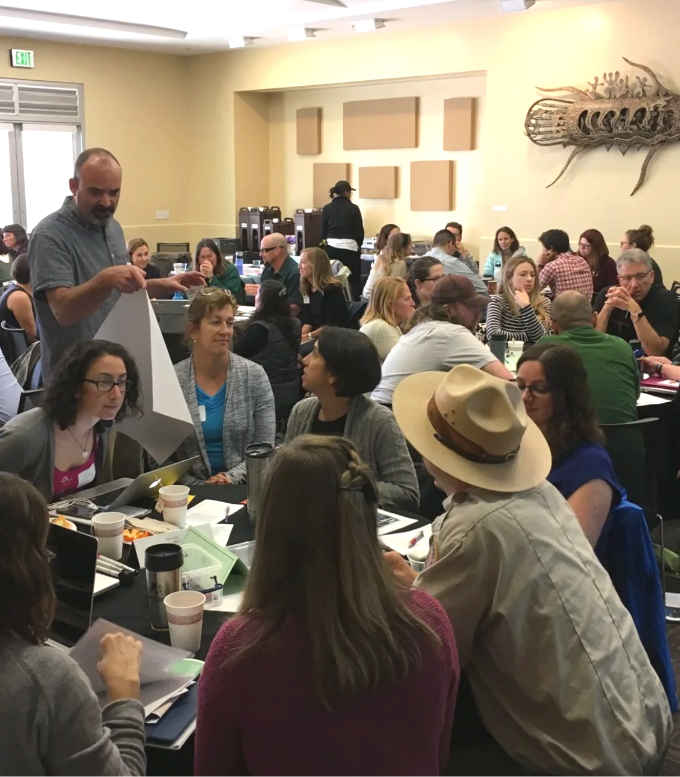
In Biggar's work community listening sessions are a structured way for residents to share how they actually live, learn, and relate to their environment, so that plans reflect lived experience rather than outsider assumptions. Image via Connected to Place
If Matt Biggar had a magic wand, then corporate capitalist structures that drive extraction and disconnection would lose their grip, replaced by locally rooted economies that prioritize ecological limits, shared prosperity, and belonging. He doesn't, so he sketched a framework that shows people how to see, map, and change the systems in their own place so daily life becomes more connected, local, and regenerative.
Connected to Place makes the case for what he calls “place-based systems change," a way of tackling big social and environmental problems by reshaping the underlying systems of daily life within a specific geographic area. He presents it as a practical, scalable way to tackle intertwined crises of climate, inequality, social fragmentation, and economic precarity.
He teaches people how to see, map, and change the systems in their own place. He helps collaborators learn to shift power, transform land use, reset local culture, and align sectors (government, nonprofits, schools, businesses, residents) around shared place-based goals.
I meet regularly with a small group of neighbors to discuss how we might affect systems-level change in our own community. I'm going to suggest this book as assigned reading.
"Determining how to deploy systems change starts with understanding what is holding current systems and their associated problems in place. Applying behavioral science and analyzing corporate capitalism’s hold on our systems provides that basis. Across the systems featured in this book, we will see how corporate capitalist interests have used power, land use, and culture to create the conditions that shape how we live. Learning from corporate capitalism, we can turn these factors into systems-change levers."
BOOK EXCERPT: Putting Systems Change in Place
RELATED ARTICLE: Living Connected to Place and Why It Matters Now