January 2, 2026
Civics
Love with a civic address
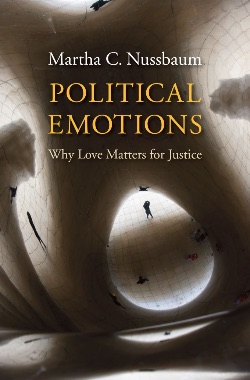
Martha Nussbaum is a philosopher and legal scholar who has spent her career asking what human beings need to live lives of dignity—and how law, education, and culture can support that aim. In Political Emotions: Why Love Matters for Justice, she brings this work together to suggest that certain shared feelings—compassion, solidarity, and a critical kind of civic pride—provide the emotional infrastructure diverse societies need to pursue genuine justice.
“Public love” is her shorthand for the emotionally charged attachments that bind people to shared ideals—and in turn one another—within a community. She observes that these emotions allow us to involve recognizing another person’s fate as bound up with one’s own.
The good news is that this kind of love can be cultivated. It is something we can practice and train—in families, schools, social movements, and public culture. And the most obvious way to do this is with liberal servings of education and the arts. Story, art, ritual, and everyday interaction strengthen this moral muscle, making it easier to use when politics strain us. She is a strong advocate for public schools and civic spaces that teach history through the voices of the excluded, and that use literature, poetry, film, and theater to stretch empathy beyond the familiar.
Her critics argue that one can support fair institutions, redistribution, and resistance to domination out of respect or solidarity without calling it love—and that insisting on love risks being philosophically overreaching or emotionally unrealistic. But this is precisely what draws me to Nussbaum’s work. Love works. Rage, polarization, and mutual delegitimation do not.
"Ceding the terrain of emotion-shaping to antiliberal forces gives them a huge advantage in the people’s hearts and risks making people think of liberal values as tepid and boring."
"All political principles, the good as well as the bad, need emotional support to ensure their stability over time, and all decent societies need to guard against division and hierarchy by cultivating appropriate sentiments of sympathy and love."
BOOK: Political Emotions: Why Love Matters for Justice