January 2, 2026
Culture
Our stories about the future affect our behavior in the present.
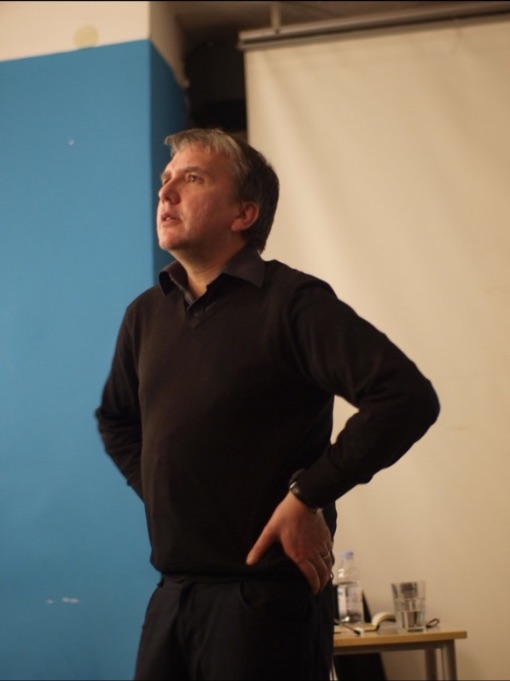
In May of 2014 Mark Fisher gave a lecture at the net.culture club MaMa in Zagreb, Croatia. Titled 'The Slow Cancellation of the Future' he made the case that late capitalism has trapped culture in endless repetition and nostalgia, hollowing out our ability to imagine genuinely different futures. Photo by tomislavmedak, licensed under CC BY 2.0.
Sam Paterson warns that fatalistic “end-of-the-world” thinking closes off possibilities at the very moment we need them most. When catastrophe is treated as unavoidable, action begins to feel symbolic or futile, discouraging collective effort, experimentation, and reform.
He draws on cultural theorist Mark Fisher’s observation that capitalism has trained our attention on an endless present, dulling our capacity to imagine futures that are meaningfully different from today.
From this, Paterson introduces the idea of “jackpot thinking”: the belief that a single, inevitable chain of crises will determine the future and render meaningful choice irrelevant. The appeal of this framing is easy to understand. It offers a way to make sense of overlapping crises while easing personal and collective responsibility. If collapse is guaranteed, then action can be safely deferred. The result is resignation disguised as realism.
Paterson also cautions that many apocalypse narratives quietly carry conservative assumptions, centering the loss of existing systems and privileges rather than confronting the structures that produce harm—or the vast suffering that might still be prevented.
The pandemic, he suggests, stripped away any remaining illusion of a stable or recoverable normal. The lingering question—are we back to normal yet?—reveals something more unsettling and more useful: nothing is fully settled. That uncertainty, he proposes, can be fertile ground for imagining different futures.
Taken together, the essay becomes a call for “counterfutures” that resist both apocalyptic fatalism and nostalgic reboots, and instead grow out of the present’s unresolved openness.
Resisting apocalypse, in this sense, is not a denial of danger. It is a refusal of stories that shut down agency, and an insistence that history is still being made—and can still be made otherwise.
"Are we ‘back’ to ‘normal’ yet? No one seems to know, which is an answer in itself. But this strange state of affairs could be the perfect soil in which to plant counterfutures. In this time of uncertainty and (marine) heat waves, in the cultural vacuum following the departure of the endless banal cancelled future, it is important to follow Hannah Arendt’s famous demand that we ‘think what we are doing’. It’s difficult to think about the present for long without thinking about the future, and the reverse is also true. As the hidden effects of the pandemic on culture continue to come into view, part of thinking about what we are doing could include considering whether the futures we imagine are genuinely fresh. Are we moving toward the new, or are we running the twentieth century on better hardware?"
ARTICLE: Against Apocalypse: The Slow Cancellation of the Slow Cancellation of the Future