January 9, 2026
Teaching
Building futures literacy in the transition from study to working life.
If we assume the future is something we must consciously design together—not a fate to endure—then we need futures literacy. When students learn how they “use the future” in their thinking, they can surface fears, hopes, and hidden assumptions, reducing paralysis and futures-related anxiety.
Research shows that futures methods increase optimism, a sense of efficacy, and the belief that individual choices can influence outcomes—precisely what is needed at the threshold of working life. Building this kind of agency at a key transition point helps students move from passive worry about “what’s coming” to active participation in shaping their own lives, career paths, and societies.
Futures Lab byStudents is a non-formal learning program developed by the Copenhagen Institute for Futures Studies and byStudents to build this capacity. The curriculum combines strategic foresight with collective exploration, helping participants imagine, understand, and shape long-term futures in response to complex societal challenges.
Students work with real-world issues—such as sustainable food systems, future creativity, security, and everyday lifestyles—using methods including horizon scanning, scenario building, and causal layered analysis.
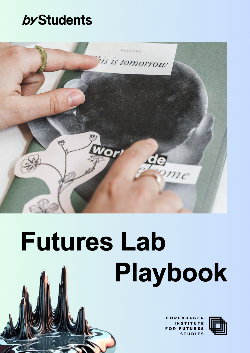
Futures Lab was intentionally designed as a shared, collaborative model. The Futures Lab Playbook translates its process, methods, and principles into a practical guide for educators, institutions, and community organizers. It functions as a step-by-step resource for designing and running futures literacy workshop series in diverse contexts.
The playbook offers guiding principles, core methods, and example session designs. It is also meant to be remixed: educators can adapt individual exercises, sequences, and design principles, weaving them into existing courses, retreats, or community programs rather than running the full lab.
PDF BOOK: Futures Lab Playbook