December 12, 2025
Learning
Design history as a “practice of freedom”
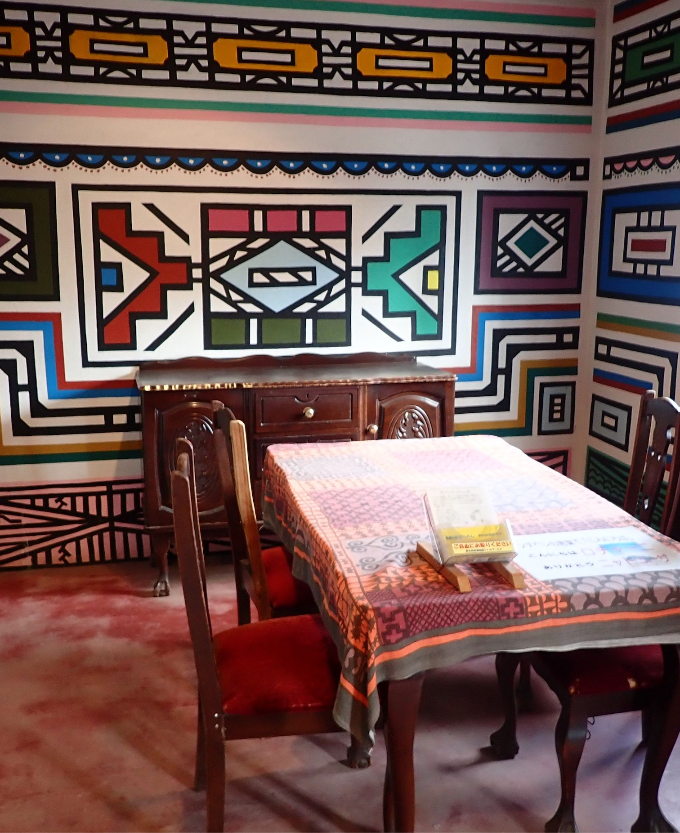
Plural design history pedagogy recognizes that vernacular and “untutored” practices—such as the Village Ndebele houses of South Africa—embody deep craft and intelligence. These traditions should be understood on their own terms, not treated as peripheral or as raw material for Western designers. Photo by Kzaral
bell hooks saw education as a “practice of freedom," an opportunity to invite marginalized voices, encourage open dialogue, and challenge dominant narratives rather than reproduce them. Boston University professor Kristen Coogan applies this same lens to graphic design history. She has redesigned her History of Graphic Design course so students help write a broader, more inclusive account, one that foregrounds plural, diverse, and often marginalized perspectives instead of a single Western canon. She also edited a student-created anthology, Design History Reader: An Emerging Vision for a New Narrative, which reframes graphic design history through this expanded, more equitable lens.
Instead of a chronological survey, chapters are organized thematically to foreground "conceptual ecosystems” and cross-cultural connections in design. Topics intentionally highlight under-known designers and movements, including both dominant and minority cultures, in order to challenge and expand the standard Western design history vocabulary.
The book frames itself as a contemporary vision of graphic design history: a way to study, interact with, and perceive the field that centers multiplicity, empathy, and inclusion. It is described as a dynamic, incomplete “living archive” meant to be expanded and built upon as collective research and teaching practices continue to evolve.
Coogan's teaching asks how designers and educators can foster cultures of empathy and inclusion and contribute to social change through design. This week Steven Heller posted an interview with her about "Design history at the proverbial crossroads (and crowded intersections)".
"The stories in the Reader spotlight qualities that traditional accounts often overlook—immediacy, craft, subversion, resistance, theatricality, even camp. For me, it’s more than a history book: It doesn’t just add new material to the archive, it rethinks how we define the canon in the first place. It shows that design history becomes richer, more inclusive and more meaningful when we open up our sense of what—and who—counts."
"The line between art and design has always been blurry. So much contemporary and historical art relies on graphic communication—using text, image and hierarchy to convey a message—while design increasingly embraces expressive, conceptual or performative qualities traditionally associated with art. Some work resists easy categorization: It may be self-initiated, ephemeral or “unreproducible” in the conventional sense, yet still operates as visual communication with clear intent and audience.
"For me, the question isn’t whether something is 'art' or 'design,' but how it works, who it speaks to, and the strategies it uses. Embracing this messiness gives us a fuller, more honest view of visual culture."
INTERVIEW: The Daily Heller: The Growth of New Design History Ecosystems
BOOK: Design History Reader