December 12, 2025
Civics
A general blueprint for how any cooperative human group can function well
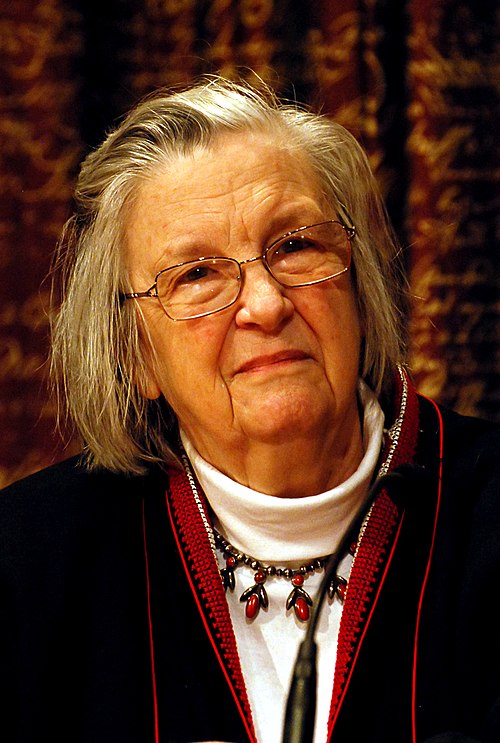
Elinor Ostrom’s work showed how communities of resource users can successfully self‑govern common‑pool resources over the long term—avoiding “tragedy of the commons” outcomes—when they craft and enforce their own context‑specific rules and institutions. David Sloan Wilson suggests that these same design principles can be applied to help any cooperative group function better.
Elinor Ostrom was an American political scientist and political economist best known for showing that communities can successfully manage shared resources without relying only on government or markets. Her work challenged the idea that commons inevitably collapse into a “tragedy of the commons.” Through decades of field research, she documented how real communities created their own effective rules and institutions. From this, she distilled eight design principles common to long-lasting, well-managed commons.
David Sloan Wilson, an evolutionary biologist known for his work on multilevel (group) selection, argues in this article that Ostrom’s principles are more than a guide to managing shared resources. He sees them as a general blueprint for how any cooperative human group can function well. Grounded in evolutionary theory, his case is that these principles can be used intentionally to design better groups.
He explains that mid-20th-century biology, economics, and social science put too much weight on individual self-interest and too little on group-level selection and group agency. Modern multilevel selection theory shows that groups that keep selfish behavior in check often outperform groups that don’t—a dynamic that helps explain major evolutionary transitions and the unusually cooperative nature of human beings.
Mirroring this insight, Ostrom’s research shows that many communities avoid tragedies of the commons when certain conditions are present—conditions that line up closely with what evolutionary theory predicts for a group functioning like a coherent, higher-level organism.
Wilson’s emphasizes that because these principles grow out of general evolutionary dynamics, they apply to any group with a shared goal that could be undermined by self-serving behavior.
Readers of this letter will recognize the ways that these principles show up in all kinds of settings—schools, neighborhoods, congregations, workplaces, volunteer groups. They offer a practical, evidence-based framework for building more cooperative, effective, and resilient communities.
"I quickly realized that Lin’s core design principle approach dovetailed with multilevel selection theory, which my fellow-heretics and I had worked so hard to revive. Her approach is especially pertinent to the concept of major evolutionary transitions, whereby members of groups become so cooperative that the group becomes a higher-level organism in its own right."
ARTICLE: Generalizing the Commons