January 23, 2026
Civics
What does a creative response to polarization look like?
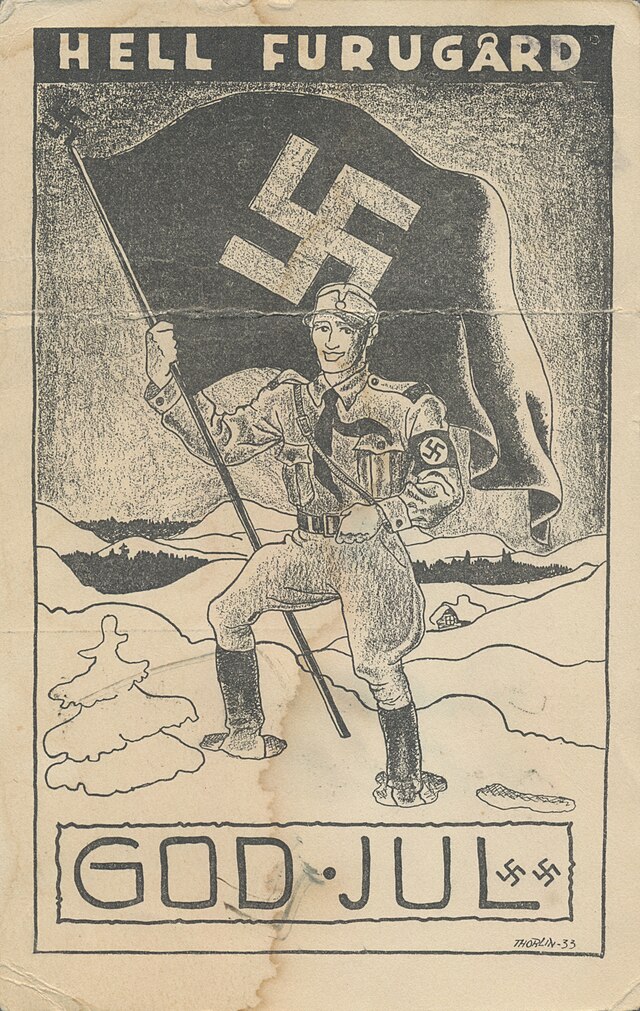
Nazi propaganda card printed in Sweden in the 1930s. In the 1920s and ’30s, Nazis openly paraded and spewed their anti-Semitism, embrace of violence, and hatred of democracy throughout Norway and Sweden.
Activist, sociologist, and writer George Lakey is as troubled by today’s polarization in the United States as you and I are. But while the moment is painful, he also suggests that polarization can be a precondition for major democratic and economic advances—if people respond creatively rather than retreating into despair.
For perspective, he points to Nordic history. Sweden and Norway—now celebrated for high employment, debt-free grads of universities, paid parental leave, high wages, “best place to be an elder,” and lack of poverty—achieved their most transformative breakthroughs when their societies were deeply polarized in the 1920s and 1930s.
He also reminds us that the United States experienced intense polarization in the 1930s and the 1960s, marked by fascist rhetoric, the growth of the Ku Klux Klan, and fierce conflicts over labor and the Vietnam War. Yet those same periods produced lasting gains: Social Security, Medicare, shorter workweeks, and expanded rights for Black Americans, women, children, elders, and people with disabilities. These were examples of what Lakey calls “creative responses” to turmoil.
The challenge, Lakey suggests, is not to wish polarization away but to respond to it with discipline rather than panic. Creative responses require patience, solidarity, and a willingness to build alternatives while resisting dehumanization. In this sense, polarization becomes a test—not only of political systems, but of civic character and collective maturity.
ARTICLE: The Hopeful Thing About Our Ugly, Painful Polarization