January 2, 2026
Learning
"The essential art of civilization is maintenance.”
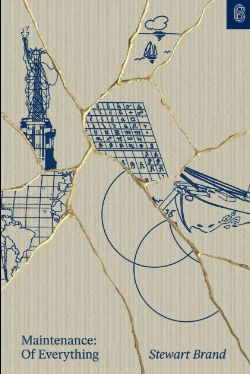
Stewart Brand’s been working on a new book, and it’s pushing at a quiet but radical idea: maybe civilization’s biggest problem isn’t a lack of innovation, or even the threat of collapse, but our failure to take care of what already exists. Instead of obsessing over the next new thing—or the end of everything—he argues we might do better by paying serious attention to the practices and institutions that keep systems working over the long haul.
In Maintenance: Of Everything, Part One, Brand reframes maintenance—the daily, unglamorous work of keeping systems, structures, and relationships functional—as the “essential art of civilization.” It’s the thing everything depends on, he says, and the thing we consistently undervalue and misunderstand.
To sharpen the point, he leans on Peter Sandborn and William Lucyshyn’s definition of system sustainment: the full set of actions across development, operation, management, and end-of-life that maximize a system’s usefulness while minimizing its overall footprint. Framed this way, maintenance stops looking like a chore and starts looking like a civilizational responsibility. If complex societies are going to last, they have to learn how to recognize, resource, and institutionalize care at every scale.
I’ve long appreciated Brand’s ability to think in scale. If this excerpt is any indication, the same guy who first helped me see the Whole Earth as a living system is once again shifting my perspective. From household habits to global infrastructure, he pushes back on short-term, novelty-chasing culture and makes a strong, clear case for long-term care, stewardship, and staying power.
"Maintenance, in this larger sense, has nothing optional about it. The necessity of maintenance doesn’t accumulate invisibly; it is understood as a given. When you take responsibility for something, you enter into a contract to take care of it. If it’s a child, to keep it fed. If it’s a knife, to keep it sharp."
"...Sustainment, then, is seen as embracing a larger time frame than maintenance, and it supports system evolution. A worrying condition worldwide is that civilization’s critical systems are rarely adequately resourced for long-term sustainment."
"...The sustainment concept might help us think pragmatically about humanity’s role in taking increasing responsibility for the health of our largest and oldest legacy system, Earth’s biosphere."
ARTICLE: The Essential Art of Civilization