December 5, 2025
Culture
“We cannot change the way the world is, but by opening to the world as it is we may discover that gentleness, decency, and bravery are available."
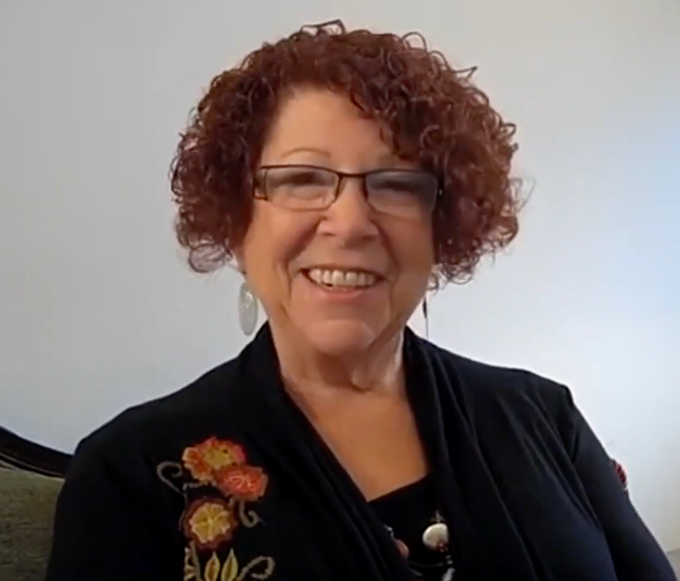
Screen grab from Margaret Wheatley Interview. The Practice of Living Systems.
In this interview with Tami Simon of Sounds True, Margaret Wheatley speaks candidly about daily experiences of rage, grief, fear, and powerlessness. She fears that we’ve reached tipping points on major issues—climate, justice, democracy—where we no longer have the means or political will to create the large-scale change many activists once imagined. Continuing to push for sweeping reversals, she says, is exhausting leaders and advocates and leading to illness, despair, and burnout. She is concerned that the "myth of inevitable progress" keeps us from seeing the reality of civilizational decline.
Drawing on historians like Joseph Tainter and John Glubb, Wheatley notes that civilizations tend to follow predictable life cycles: rise, flourishing, bureaucratic over-complexity, capture by elites, and eventual degradation. Pointing to signs of late-stage decline—rigid and costly systems, concentrated wealth and power, erosion of rights, and a culture driven by entertainment and distraction—she suggests the United States is following same script.
Still, this is not a call to withdraw. It is not permission to stand by while people are harmed. Instead, Wheatley urges a shift from trying to rescue collapsing systems to serving people directly, wherever we are, with whatever influence we have. This echoes her earlier calls to shift from “fixing the world” to “changing how the world happens here.” You still reform curricula, redesign care models, or re-culture organizations, but you treat these efforts as ways to make your corner more truthful, compassionate, and alive—not as levers that will redeem the whole.
In my own search for a framework to describe the new learning humans are reaching for, I find myself using Spiral Dynamics as a scaffold. In this context, Wheatley’s insistence that any system built on ego, control, and greed will eventually collapse also points to the possibility that a completely new system can emerge at the same time.
Central to this shift is her idea of “Islands of Sanity.” She encourages leaders to focus on transcendence rather than transformation. “Sane leadership,” as she defines it, rests on a steady belief in people’s creativity, generosity, and kindness. The task is to create communities and organizations where those qualities can flourish, even in a disordered world.
"There are several elements here that are important. The first one is that life is cyclical. We know this, but we don’t apply it. Everything has a life stage. We’re the only civilization—Western civilization—that got hooked on a very false premise, which is progress. So, we can stand outside living and dying, being young and then going through the seasons and getting old. We can forego all that because of our technological skills. We can always make things better. That was a very deceiving and a historical myth that is still in the hearts and minds of many, many activists."
"...let’s create these alternatives in our local communities, because that’s what gives us a satisfying life. How it contributes to building a brighter future, a future that’s based on more humane values—that will happen. But the timeline is probably a lot longer than we want it to be. I mean, His Holiness the Dalai Lama was speaking to some friends of mine years ago, who were despairing of the work, that their work would have any influence, and he just said, 'Oh, don’t worry about that. Your work will bear influence in about 700 years.' That gave us a different time cycle here."
INTERVIEW: Margaret Wheatley: Warriors For The Human Spirit