November 14, 2025
Learning
We don't spend much time imagining all the possibilities the future holds.
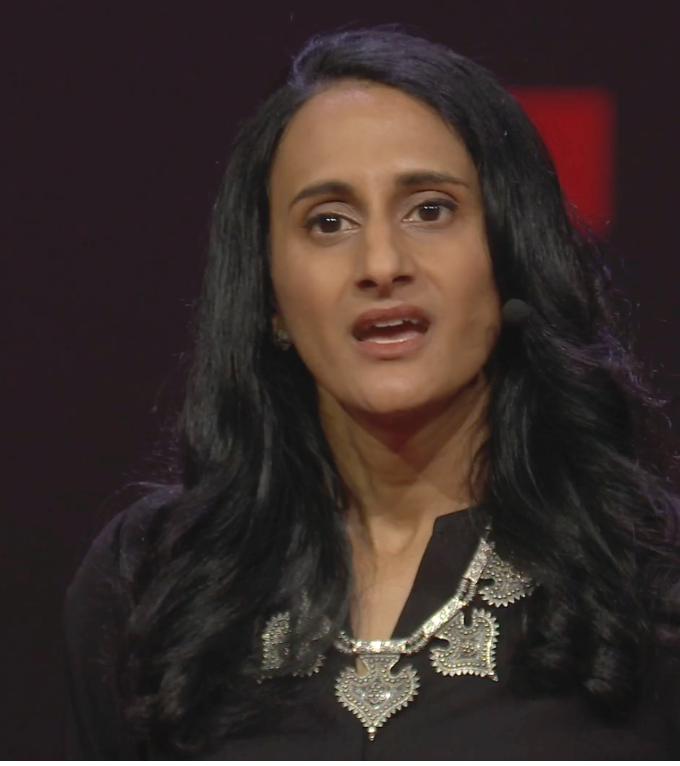
Bina Venkataraman says that humans have a superpower that we ignore.
She is a science policy expert, journalist, and author working at the crossroads of social progress, environmental change, and science policy. In her 2019 book The Optimist’s Telescope: Thinking Ahead in a Reckless Age, she explores how individuals and societies can overcome shortsightedness to confront long-term challenges like climate change and public health.
In this TED Talk, she distills key ideas about how blending future imagination with historical understanding can help us make wiser choices today—and build resilience for tomorrow.
Modern life, she says, is dominated by immediacy. News, politics, business, and even our personal habits fixate on the present. Our communities, institutions, and economies are structured in ways that impair foresight and reward short-term thinking.
Yet she also reminds us that humans have a remarkable superpower: mental time travel—the ability to imagine the future and project ourselves into what’s yet to come. Civilization’s greatest achievements, from agriculture to the internet, began as imaginative acts of looking beyond the present.
Importantly, the short-term mistakes she identifies are not inevitable; they’re preventable with the right tools for foresight. She points to examples like Wes Jackson’s work with perennial grain crops—innovations that serve future generations while also rewarding those who act now.
Her message is clear and hopeful: to see ourselves as ancestors to all humanity. Her call to action is to use imagination bravely—to anticipate, design, and shape the future, rather than merely inherit it.
TED TALK: The power to think ahead in a reckless age | Bina Venkataraman