October 24, 2025
Civics
"This crisis is not about election cycles. It’s about historical tides."
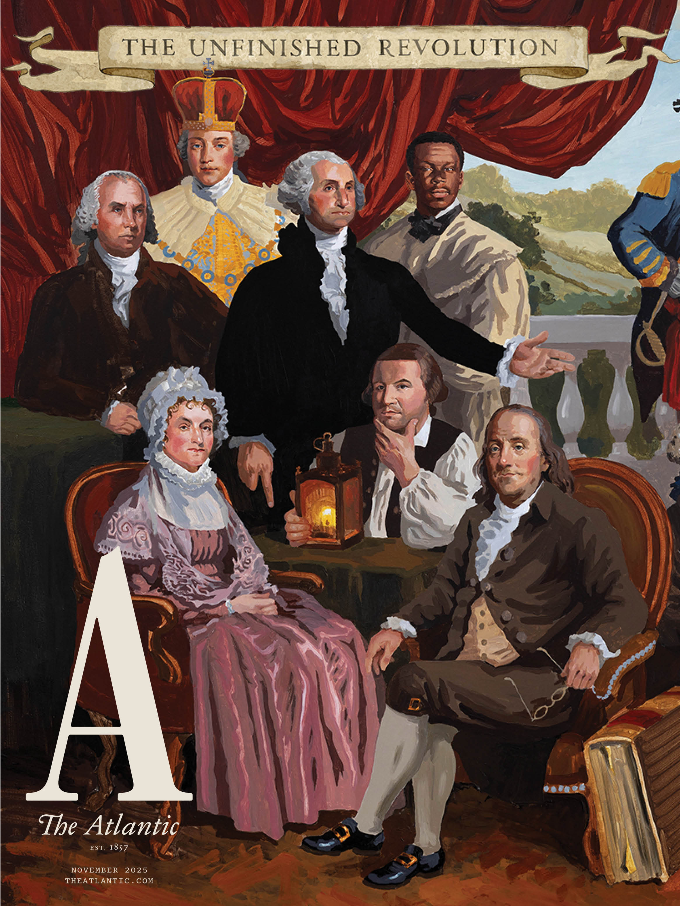
The cover theme of The Atlantic’s November 2025 issue is “The Unfinished Revolution.” The editors mark the 250th anniversary of America’s founding and explore how the ideals, struggles, and unfinished business of the Revolution continue to shape the nation’s present and future.
In this context, David Brooks makes a clarion call. In his article “America Needs a Mass Movement—Now,” he ties the issue’s historic theme to today’s existential struggle for democracy. He warns that this moment echoes the foundational crisis faced by the founders—and that only broad, hopeful mobilization can renew American democracy. His piece serves as a contemporary bridge, directly connecting the unfinished business of the Revolution to the urgent need for civic action today.
Brooks is a centrist and widely read commentator. His reputation as a moderate voice in mainstream media (The Atlantic, The New York Times) gives this message broader reach than similar calls from activist groups that have been sounding the alarm for years but often preach to the choir. Brooks speaks to audiences who may be skeptical of activist language or who have not previously felt urgency about democratic threats, including moderate conservatives, independents, and establishment Democrats.
I like to think that this article marks a symbolic tipping point. When a respected centrist opinion leader urgently calls for a mass movement to defend democracy, it signals that threats once dismissed as extreme or “partisan” are now seen as undeniable and mainstream. Brooks’s warning represents a shift from quiet concern to public emergency.
Relevant to my personal commitment to radical hope, Brooks is not just echoing calls for resistance—he’s reframing the fight as a hopeful, inclusive movement for renewal. His message emphasizes unity over division, optimism over despair. This approach may inspire people who are exhausted by political conflict or uncertain about joining protests led by traditional activists.
One can hope.
"I am not one of those who believe that Donald Trump has already turned America into a dictatorship. Yet the crossing-over from freedom into authoritarianism may be marked not by a single dramatic event but by the slow corrosion of our ruling institutions—and that corrosion is well under way. For 250 years, the essence of America’s democratic system, drawing on thinkers going back to Cicero and Cato, has been that no one is above the law. Public officials’ first duty is to put the law before the satisfaction of their own selfish impulses. That concept is alien to Trump."
"Although Trump’s actions across these various spheres may seem like separate policies, they are part of one project: creating a savage war of all against all and then using the presidency to profit and gain power from it. Trumpism can also be seen as a multipronged effort to amputate the higher elements of the human spirit—learning, compassion, science, the pursuit of justice—and supplant those virtues with greed, retribution, ego, appetite. Trumpism is an attempt to make the world a playground for the rich and ruthless, so it seeks to dissolve the sinews of moral and legal restraint that make civilization decent."
ARTICLE: America Needs a Mass Movement Now