December 12, 2025
Habitat
"The design of our schools is a choice. We can decide that our kids deserve beautiful, inspiring places to learn."
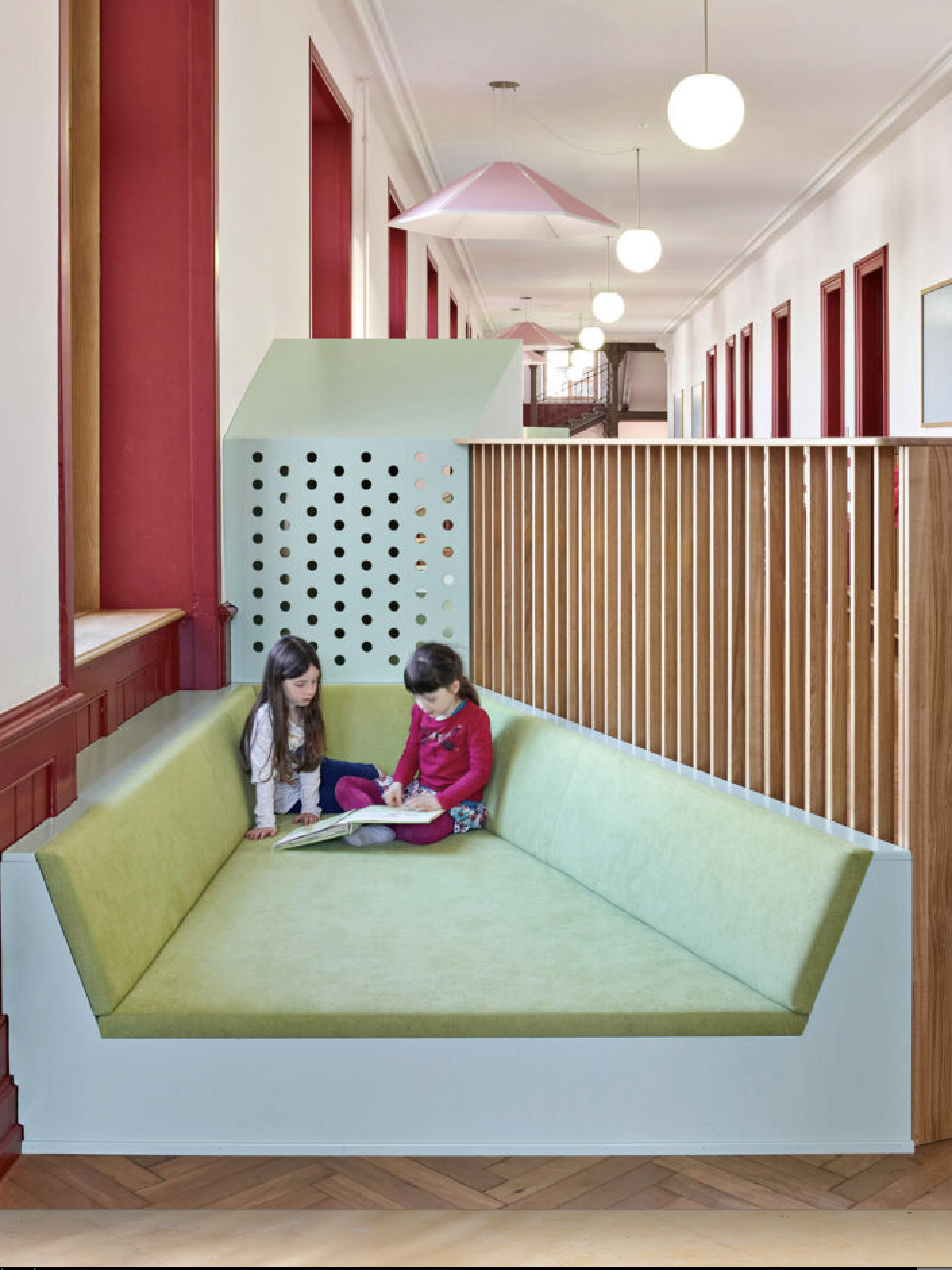
St. Johann School, Basel, Switzerland. Designed by ZMIK. Image via Dezeen.
Ingrid Fetell Lee is a designer, researcher, and writer who studies how the built environment shapes joy, emotion, and well-being. In this article, she argues that most schools are unattractive not because beauty is costly, but because education systems prize efficiency, safety, and control over children’s emotional needs. She suggests that conventional school architecture reflects a belief that beauty is frivolous in education, resulting in institutional, prison-like spaces geared toward crowd management and durability.
Drawing on a survey of innovative schools around the world, she distills seven practical design principles that can be used even in existing buildings. Her core point is that joyful learning environments do not require expensive architecture; they depend on thoughtful choices about color, form, light, and how spaces invite use.
The seven strategies include making storage beautiful (such as using colorful cubbies as focal points), employing bold color intentionally, incorporating curves that support play, and designing elements with “open affordances” so children can use spaces in multiple ways. She also highlights treating hallways and stairs as energizing transitions, adding playful wayfinding to support orientation and placemaking, and infusing facades and interiors with moments of whimsy and home-like warmth.
ARTICLE: How to Design a Better School Building