January 9, 2026
Company
Worker ownership is a natural way to distribute wealth.
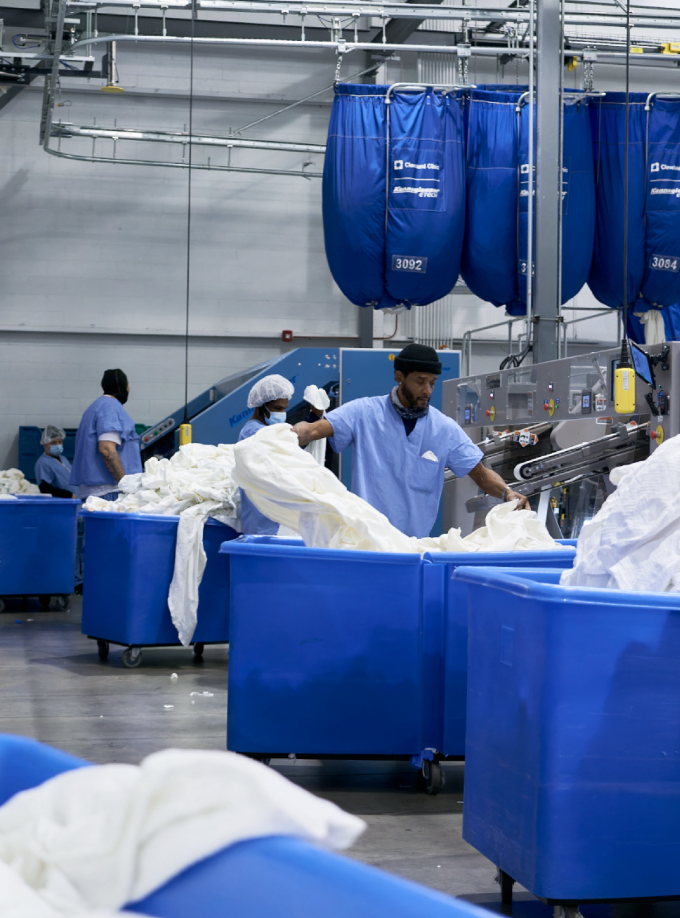
Worker owners at Evergreen Cooperative Laundry in Cleveland, Ohio, a commercial laundry owned by its 200 workers. (Photo by Collin Arnold.)
Last May I introduced my friend John Abrams’s book, From Founder to Future, a practical roadmap for mission-driven business owners who want to move beyond founder-centric control toward shared ownership, preserved purpose, and what he calls a “CommonWealth company.” John sees enormous potential for small and mid-sized businesses to become engines of shared wealth, democratic practice, and ecological responsibility—not merely vehicles for private exit.
Marjorie Kelly is another voice in this same conversation. In this article, she also points to the looming “silver tsunami” of retiring Baby Boomer owners as both a warning and an opportunity. Traditional exit paths, she argues, tend to funnel value to distant investors and deepen inequality. With more than half of U.S. businesses owned by people over 55, the coming wave of retirements will move millions of jobs and trillions of dollars in assets. Converting even a fraction of these firms to employee ownership could meaningfully reshape wealth distribution.
Kelly extends the argument by insisting that employee ownership is not a niche succession strategy but a macro-level opportunity. If even a small share of these businesses transitioned to worker ownership, millions of people could move from being wage earners to co-owners and wealth holders, while local economies retain the enterprises that anchor community life.
She directs her message to foundations, impact investors, and policymakers, calling for “active capital” and public policy to be retooled so that the simplest and most attractive option for aging owners is selling to their workers rather than to private equity.
Kelly frames this shift as central to building an “ownership economy”—one in which ordinary workers hold stakes in productive assets and wealth no longer flows upward by default. In this sense, she is sketching the necessary scaffolding—capital, law, and intermediary infrastructure—that could allow thousands of locally rooted enterprises to endure and evolve in place.
ARTICLE: An Opportunity to Build the Ownership Economy