December 12, 2025
Culture
A “different voice” that speaks from a premise of connection and responsibility rather than separateness and hierarchy
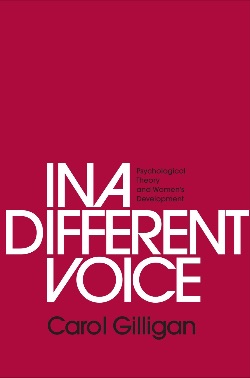
When Carol Gilligan wrote In a Different Voice in 1982, most ideas about moral development were still based almost entirely on research with boys and men. Their way of reasoning was treated as the only “mature” way to judge right and wrong. Because of that, women’s more relational, care-focused responses were often labeled as immature instead of being seen as a different and equally valid approach.
Gilligan’s key insight broadened that perspective: this care- and relationship-focused way of thinking is its own legitimate moral perspective—a “different voice,” not a lesser one. That idea helped launch what is now called the ethics of care. And it foreshadows what current leadership and workplace-well-being research says about how people actually thrive.
Today a wide convergence of researchers—including humanistic, developmental, motivational, and positive‑psychology traditions—all agree that human potential depends on the quality of relationships and how care and connection are distributed. This book anticipated what their studies would find. Gilligan provided an important ethical and developmental backbone for subsequent research on psychological safety and self‑determination. Today it is hard to talk about human potential without talking about the quality of relationships and how care is shared. In this view, paying attention to people, noticing harm, and staying responsive isn’t a “soft” extra—it’s a core design principle for any environment where people can grow.
Her voice is especially relevant today. In a day when the leader of our country builds his own personal power by deliberately encouraging citizens to protect themselves first, Gilligan shows the far greater benefits of learning to hold care for self and care for others together—treating them not as opposing choices, but as interdependent responsibilities within the same moral life.
File under: Things we still need to learn.
“... I draw on the work of Piaget (1968) in identifying conflict as the harbinger of growth and also on the work of Erikson (1964) who, in charting development through crisis, demonstrates how a heightened vulnerability signals the emergence of a potential strength, creating a dangerous opportunity for growth, 'a turning point for better or worse.'"
BOOK: In A Different Voice