January 30, 2026
Learning
Unlocking our capacity to experiment with new patterns might be as simple as singing together.
One of the most self-defeating phrases we repeat is, “It’s always been this way. People don’t change.”
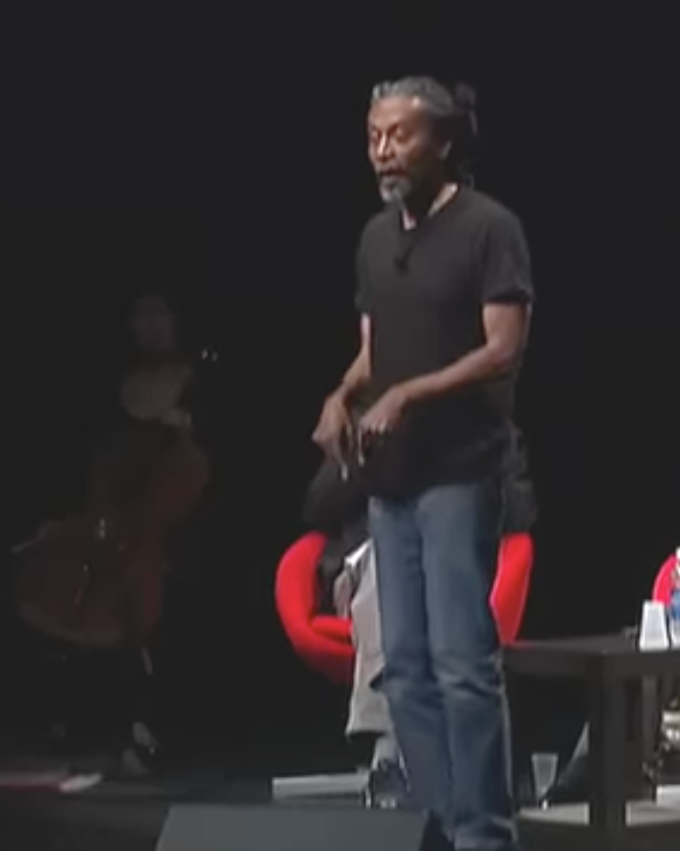
In this short video, Bobby McFerrin shows just how wrong that assumption is. In 2009, at the World Science Festival, he appeared on a panel titled Notes & Neurons: In Search of the Common Chorus, which explored how music and the brain interact—and whether our responses to music are universal or culturally shaped.
At one point, McFerrin spontaneously jumps to his feet and, using only his body and a few playful leaps across the stage, turns the entire audience into a living instrument. Without instruction, he leads them to sing a pentatonic scale they have never been taught. In doing so, he demonstrates how quickly humans can form new patterns together—a powerful and hopeful signal of our collective capacity to learn and change.
The audience grasps a new “code” almost instantly: position on stage equals pitch. There is no explanation, no theory, and no shared rehearsal. Without words, McFerrin reveals how deeply we are wired for rapid, implicit learning—how we extract structure from experience and adjust our expectations on the fly, even with minimal information.
Once the pattern is established, people begin to anticipate where the melody will go—and they are usually right. This mirrors how the brain constantly generates predictions about the world and revises them when surprised, a process fundamental not only to music, but to learning, adaptation, and change more broadly.
It’s a joyful, quietly radical demonstration that humans are not fixed. We are built to learn, to adapt, and—most importantly—to do so together.
VIDEO: Bobby McFerrin Demonstrates the Power of the Pentatonic Scale