February 13, 2026
Habitat
How small design choices make public spaces truly public
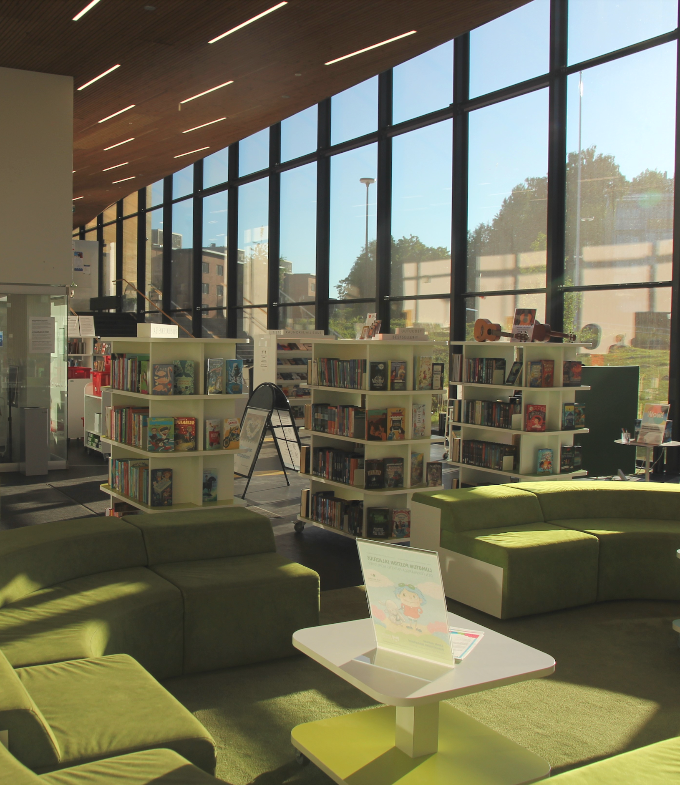
Maunula House in northern Helsinki feels low-key and welcoming because it opens onto nearby outdoor spaces, has several doors you can use, and big glass walls that make the inside and outside flow together.
We’ve talked before about how public libraries have become essential civic infrastructure. These highly trusted, low-barrier, mixed-use spaces are central to building social capital and strengthening communities. That’s why I was drawn to a paper by two researchers in the Department of Architecture at Aalto University in Espoo, Finland, who set out to explore a gap they had noticed. While libraries are widely studied as democratizing institutions and sites of social capital, far less is known about how library buildings interact with their surroundings—or how specific spatial qualities and management choices actively encourage or discourage everyday use.
Rather than treating libraries as abstract programs or policy instruments, the researchers approach them as relational public spaces shaped by layouts, thresholds, materials, artifacts, and rules. They conducted close-up case studies of two Helsinki libraries—Oodi in the city center and Maunula in a historically stigmatized suburb—tracing how concrete design decisions and day-to-day governance practices either lower or raise the threshold for people to enter, linger, mingle, and make the space their own.
The article ultimately becomes a compelling story about how small, practical choices—in layout, materials, routines, and norms—can transform library buildings into genuinely public places: spaces where almost anyone can walk in, find a place to be, and feel entitled to stay.
At its core, the paper is driven by a normative aim: to show how libraries can deliberately lower barriers, nurture social capital, and advance spatial justice—offering lessons for future planning and design that support encounter, belonging, and equitable access.
PAPER: The Public Library Building As Nexus For Social Interactions: Cases From Helsinki