February 13, 2026
Learning
Redesigning organizations and markets so they regenerate rather than extract
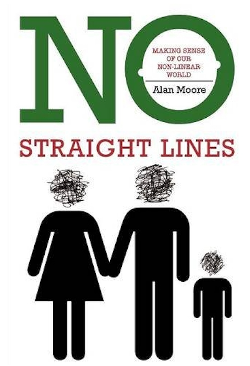
Alan Moore is very clear about one thing: we have reached the limits of the old industrial operating system, built on assumptions of predictability, hierarchy, and linear cause and effect. He describes a “trilemma” of social, organizational, and economic complexity that makes those assumptions untenable: the collision of rising social expectations and inequities, increasingly intricate and interdependent organizational systems, and an economic order built for linear growth and efficiency rather than resilience and shared flourishing. The rules we once relied on to organize business, institutions, and society no longer hold.
He contrasts the linear thinking that built and sustained those systems—planning, control, and rigid structure—with nonlinear approaches rooted in adaptation, emergence, and networks. In this cogent, clearly articulated book, he invites us to develop and practice these skills, which remain unfamiliar to most. He shows that value now comes from navigating complexity through feedback, experimentation, and iterative learning.
Readers steeped in the Donella Meadows pedagogy of systems-thinking will feel familiar ground underfoot here. Alan Moore doesn’t name her directly, but he is clearly working adjacent terrain: nonlinearity, feedback over time, and networks that behave more like ecologies than machines. You can hear echoes of Margaret Wheatley as well—self-organization, living systems, and order emerging without central control.
What Moore adds is something distinct and practical: a designer’s brief for reinvention. This is not theory for theory’s sake, but close attention to craft, aesthetics, and how things are actually made, sustained, and cared for over time. He is interested in redesigning organizations and markets so they regenerate rather than extract—moving toward a restorative, human-scale economy that serves the commons, not just the balance sheet.
I’m especially drawn to his framing of our moment as a design problem. Our institutions were built for a different era and now need to be reimagined with people at the center. Moore calls for new social, economic, and organizational forms that prioritize wellbeing, participation, and craft-like care in how systems are designed and maintained.
BOOK: No Straight Lines. Making Sense of Our Non-Linear World