Habitat
How the places we make—homes, buildings, neighborhoods, and communities—shape how we live and relate, and how we might inhabit the Earth as participants rather than masters.
Part of Love & Work's continuing inquiry into what human beings are capable of becoming.
habitat
The places we create shape who we become.
"The mother art is architecture. Without an architecture of our own we have no soul of our own civilization." — Frank Lloyd Wright
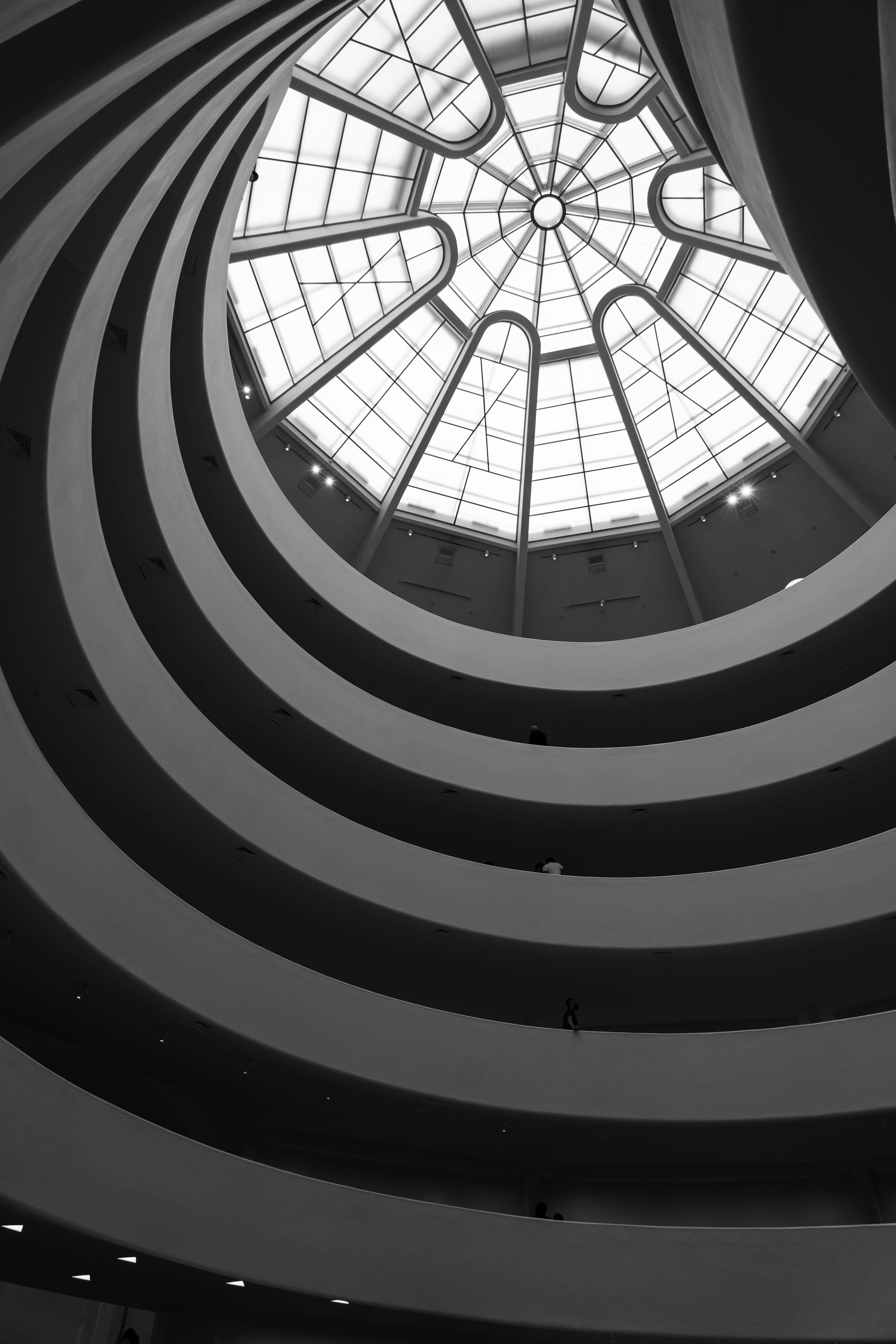
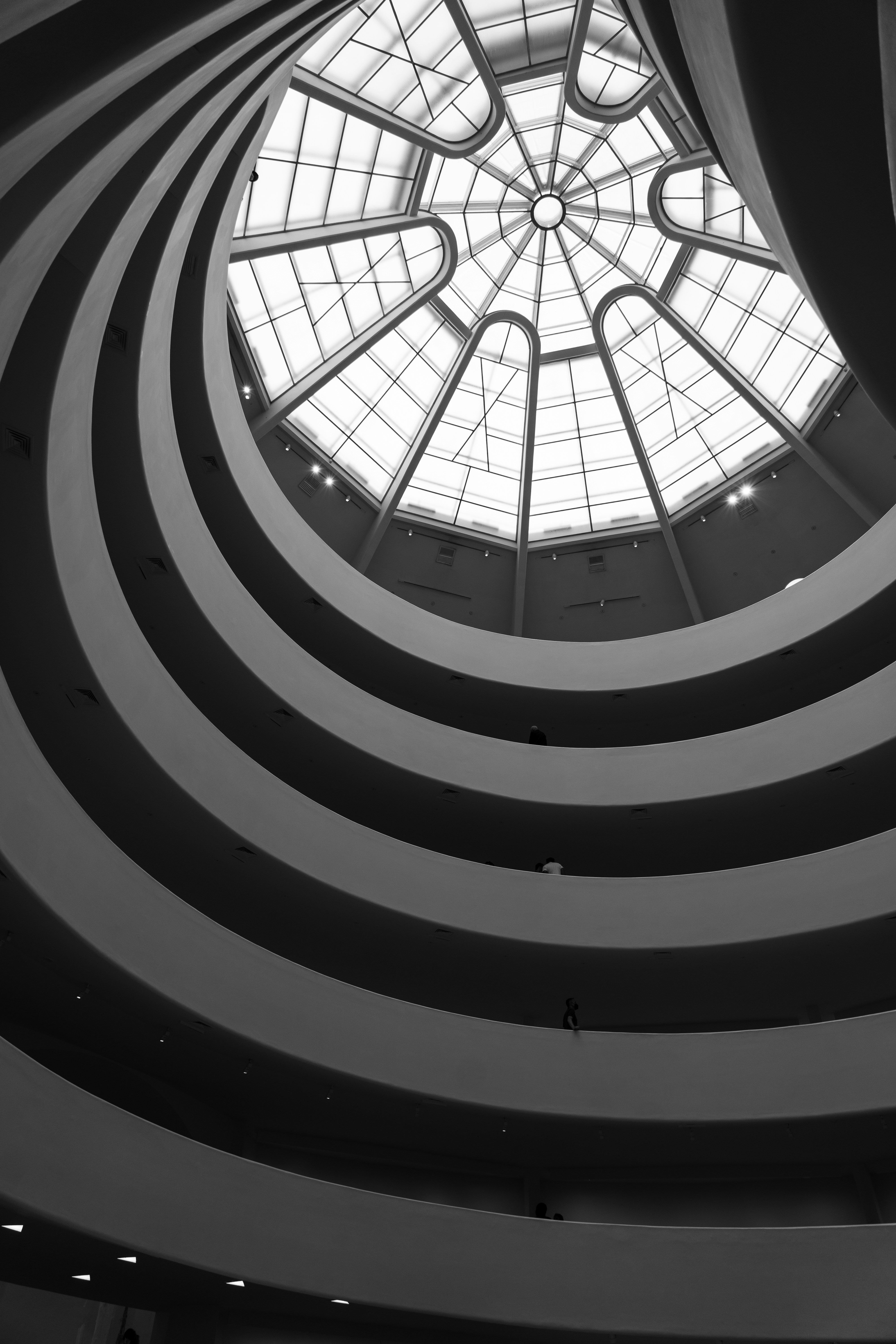
Guggenheim Museum, 5th Avenue, New York, NY, USA. Photo by Marco D'Abramo*
The only problem with the Guggenheim Museum in New York is that the building is so magnificent that its own energy can overshadow the art it was ostensibly designed to showcase. The place itself changes me from the moment I enter.
Frank Lloyd Wright designed it as a great spiraling ramp beneath a luminous dome, where visitors drift upward through space rather than from one rectangular gallery to the next. Every time I enter this grand hall of light and movement, before I’ve stopped to look at a single piece of art, something has already shifted. I find myself standing a little taller. More curious. More open. The building itself expands my sense of what human beings are capable of creating, of what we can be.
Contrast that experience with walking through a strip mall anywhere in America. At its best, it is an exercise in pedestrian efficiency: a place to park your car and buy something. Period. It certainly doesn’t stir the imagination, let alone suggest that life might be more important than my next snack.
Worse, places like this don't simply fail to inspire. They gradually teach us to expect less—from our communities, from our public spaces, and ultimately from ourselves. The difference isn’t merely aesthetic. It is philosophical. Every place makes a proposal about what kind of lives are possible there.
We tend to think of habitat as the physical places we occupy: our homes, buildings, neighborhoods, and cities. But habitat is something much larger. It is the physical expression of what a society believes about life. It is where our values become tangible and where our relationship with one another, with nature, and with the future takes material form.
Every building embodies a conversation about what kind of lives are possible there. A library proposes that curiosity matters. A front porch proposes that neighbors are worth knowing. A public square proposes that strangers can become citizens. A school proposes that everyone is capable of learning. The places we build do more than shelter our lives. They shape our expectations of them. Some places invite us to become larger than ourselves. Others ask almost nothing of us.
Once we begin to see this, architecture stops being a specialty reserved for architects. It becomes one of civilization’s most powerful languages. The materials we choose, the way a building meets the land, the amount of daylight we welcome inside, whether a structure can adapt over generations or must be discarded after a few decades—each decision expresses a belief about what deserves to endure.
The most hopeful buildings are not simply efficient or beautiful. They participate in life. They evolve with the people who inhabit them. They treat the land not as a commodity to be conquered but as a living system to which they belong. They remind us that stewardship and imagination are not opposing values but partners.
What if the places we build are doing far more than accommodating our lives? What if, every day, they are helping us discover who we might become?
HABITAT, HUMAN FLOURISHING
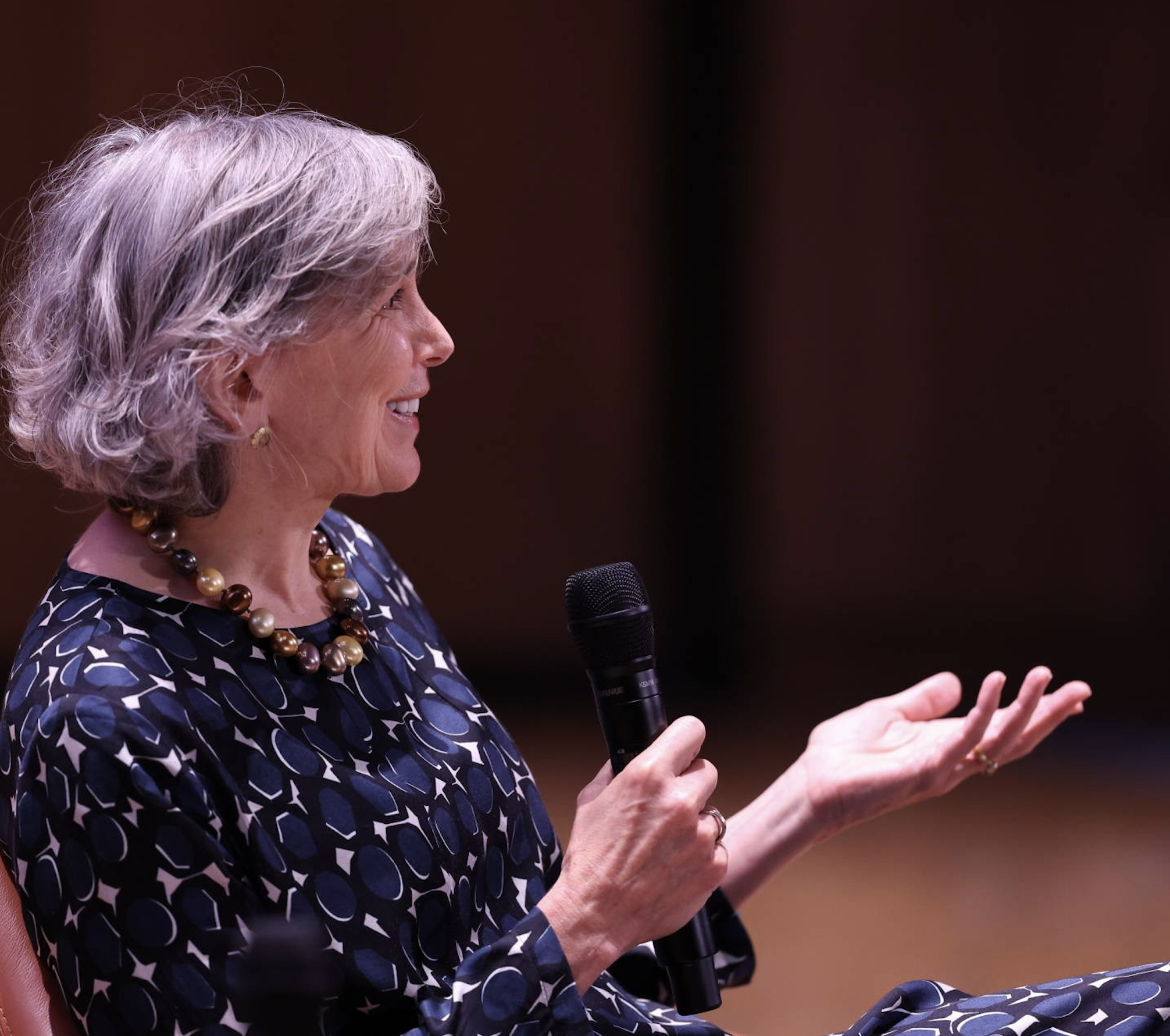
Why crappy buildings make us feel crappy
Sarah Williams Goldhagen spent much of her career writing about architecture before asking a different question: What does a building do to and for the people who inhabit it? Drawing on neuroscience, cognitive psychology, and environmental design, Welcome to Your World shows how our surroundings shape our attention, emotions, health, relationships, and sense of ourselves.
BOOK: Welcome to Your World. How the Built Environment Shapes Our Liveslture, Revised Edition
HABITAT, PUBLIC SPACES
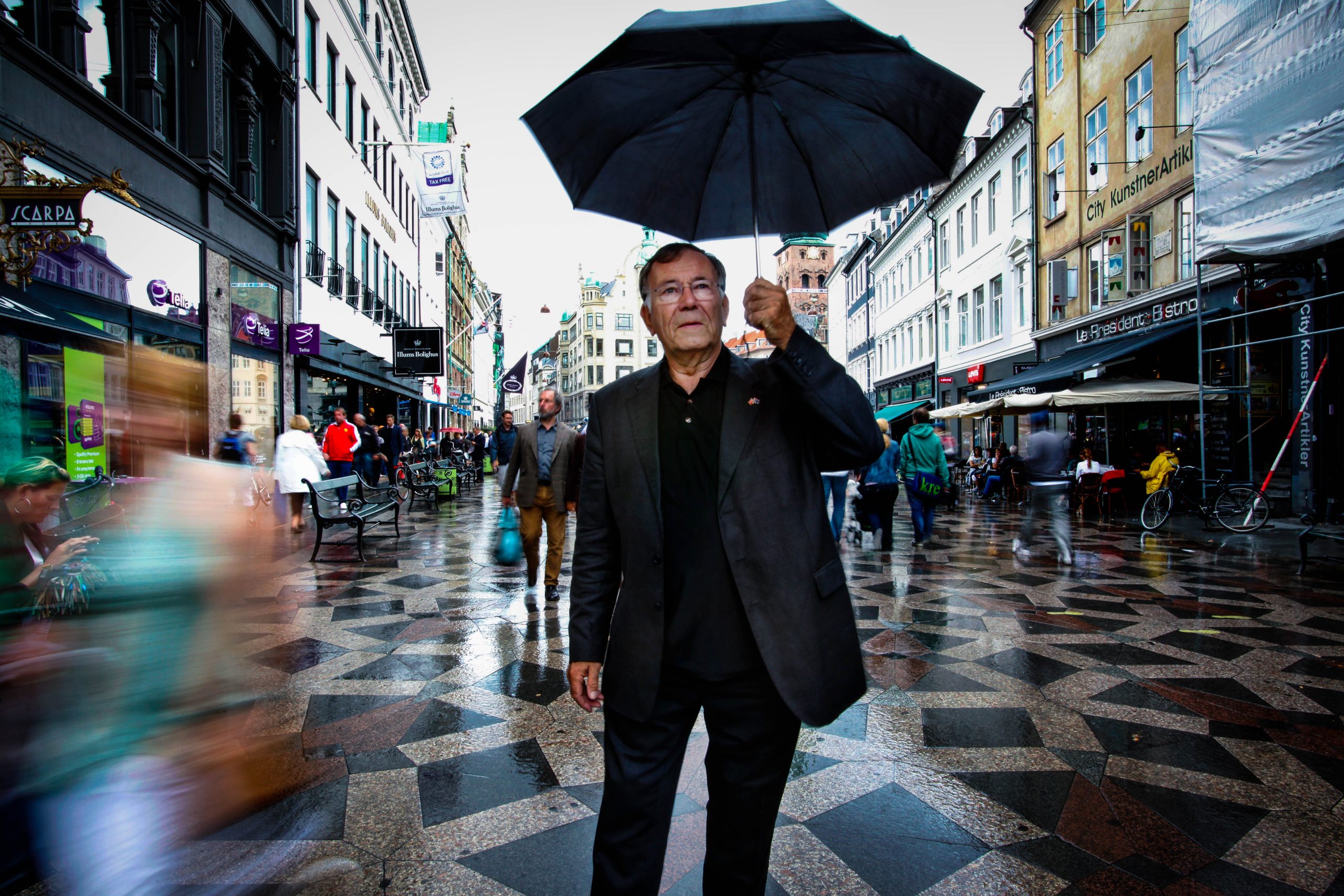
We don’t build community. We build the conditions from which community emerges.
Jan Gehl graduated as an architect in 1960, but had never been taught to think much about the people using the spaces between buildings. Then he married Ingrid, a psychologist, who asked: “Why are architects so interested in buildings and so uninterested in people?”
BOOK: Life Between Buildings. Using Public Space
HABITAT, ADAPTATION
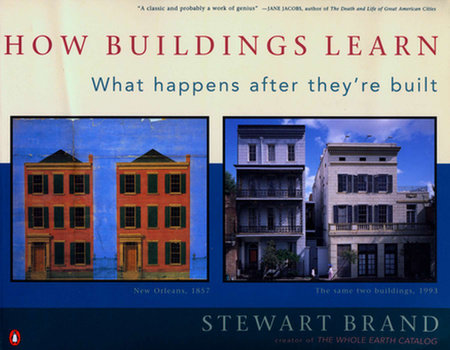
The buildings that last are the buildings that learn.
Stewart Brand has spent his career exploring how systems change. He created the Whole Earth Catalog, anticipated the personal computer revolution, and co-founded the Long Now Foundation. When he turned to architecture, he brought the same curiosity to buildings, asking what happens to them not when they’re built, but over time.
BOOK: How Buildings Learn

HABITAT, biophilia
We forget that we are nature.
E.O. Wilson spent a lifetime asking how life works. One of the world’s leading biologists, he transformed our understanding of ants, biodiversity, and evolution. In his 1984 book Biophilia, he turned to a different question: Why do humans feel so at home in nature? His answer: we are innately drawn to living things.
BOOK: Biophelia. The Human Bond with Other Species
One liners
ARTICLE: A Lesson From Urban Icons on Designing Public Space: Get Rid of Traffic
ARTICLE: Architecture Firms Do More Work Adapting Old Buildings Than Designing New Ones
ARTICLE: How Designing for Mental and Behavioral Health Strengthens Architectural Practice
ARTICLE: Brussels Built “Europe’s Largest Frying Pan” Instead of a Shady Public Square
ARTICLE: Social housing designed around gardens, light, flexibility and residents' autonomy rather than standardized "machines for living."
*About the photograph
Frank Lloyd Wright spent the last sixteen years of his life designing the Guggenheim Museum. Begun in 1943 and completed in 1959, just months after his death at age ninety-one, it stands as the culmination of a lifetime spent reimagining what architecture could be.
Rather than treating a building as a neutral container for art, Wright made the experience of moving through space part of the work itself. Visitors ascend a continuous spiral beneath a luminous dome, encountering light, form, and one another before they encounter a single painting.
Wright believed architecture should grow organically from its purpose, its materials, and the rhythms of human life. More than sixty years later, the Guggenheim continues to demonstrate that a building can do more than shelter activity. It can enlarge our sense of what is possible.
"Progress is people flourishing."
-Ted Gioia

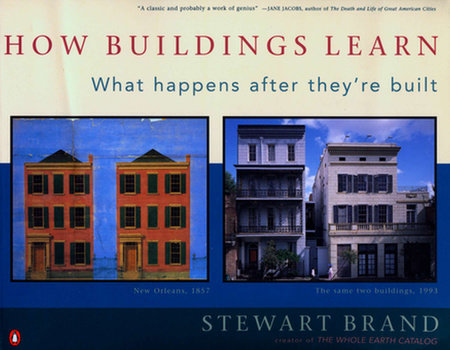
Adaptation
The buildings that last are the buildings that learn.
Stewart Brand has spent much of his career studying systems and how they grow and change. He created the Whole Earth Catalog and later CoEvolution Quarterly, two influential publications that helped my generation think differently about technology, ecology, design, and the interconnected systems that shape our lives.
BOOK: How Buildings Learn
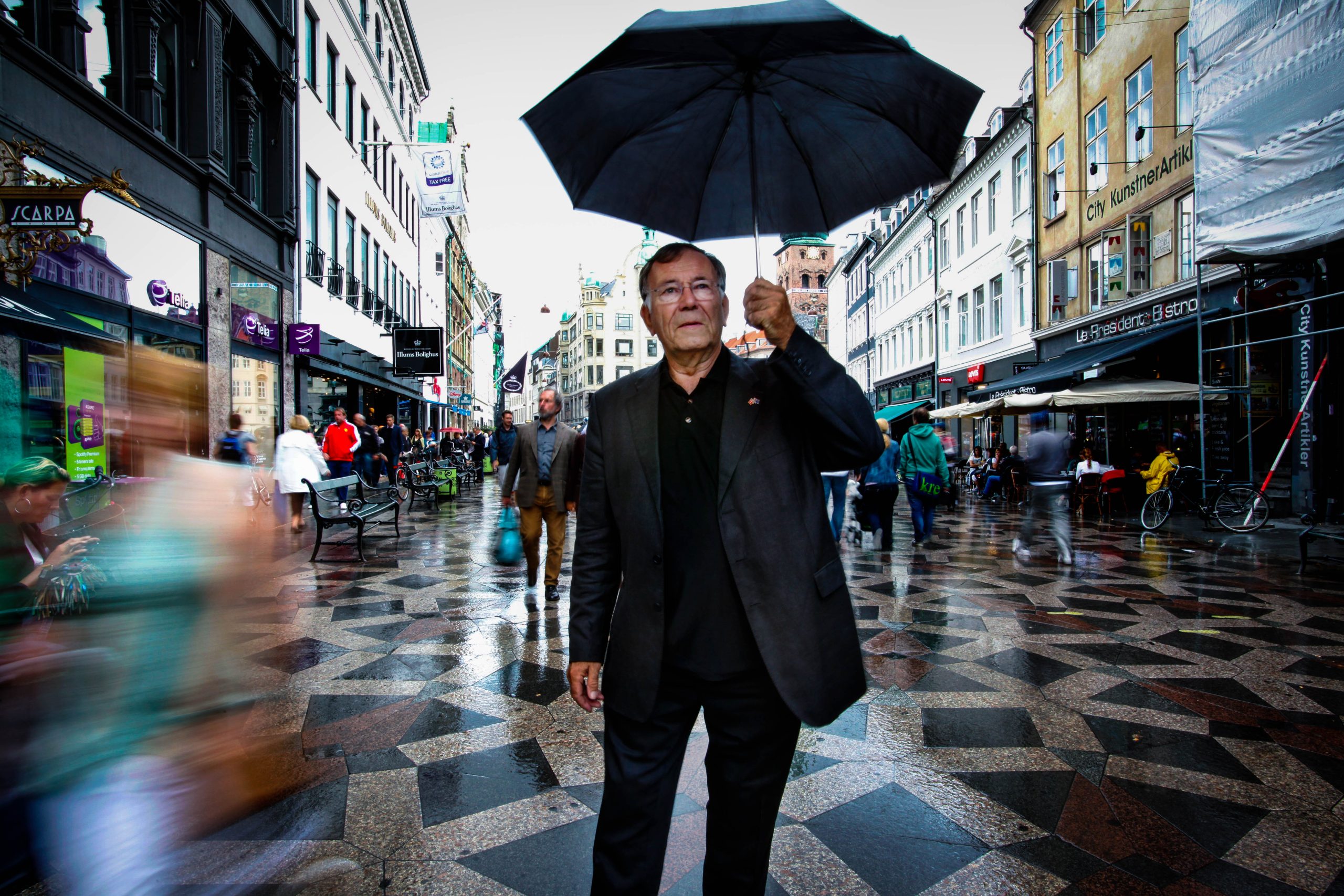
Public Spaces
We don’t build community. We build the conditions from which community emerges.
Jan Gehl graduated as a conventional architect in 1960. He knew how to design buildings, but by his own admission he had never been taught to think much about the people who would use the spaces between them.
BOOK: Life Between Buildings. Using Public Space
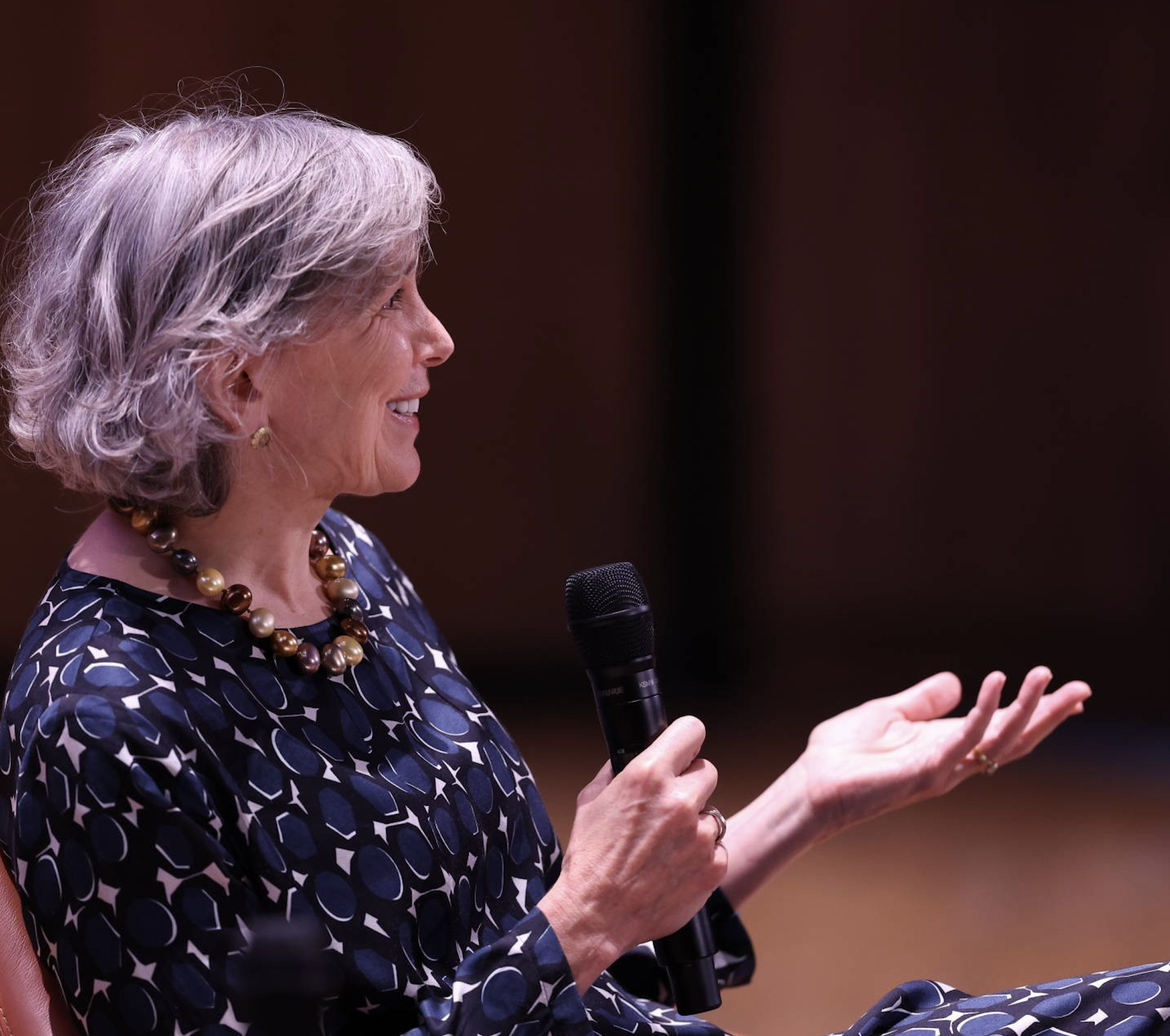
Human Flourishing
Why crappy buildings make us feel crappy
Sarah Williams Goldhagen has spent much of her career writing about architecture. But over time she found herself asking a different question. Instead of asking whether a building is beautiful, she began asking what it does to and for the people who inhabit it.
BOOK: Welcome to Your World. How the Built Environment Shapes Our Lives
Public Spaces
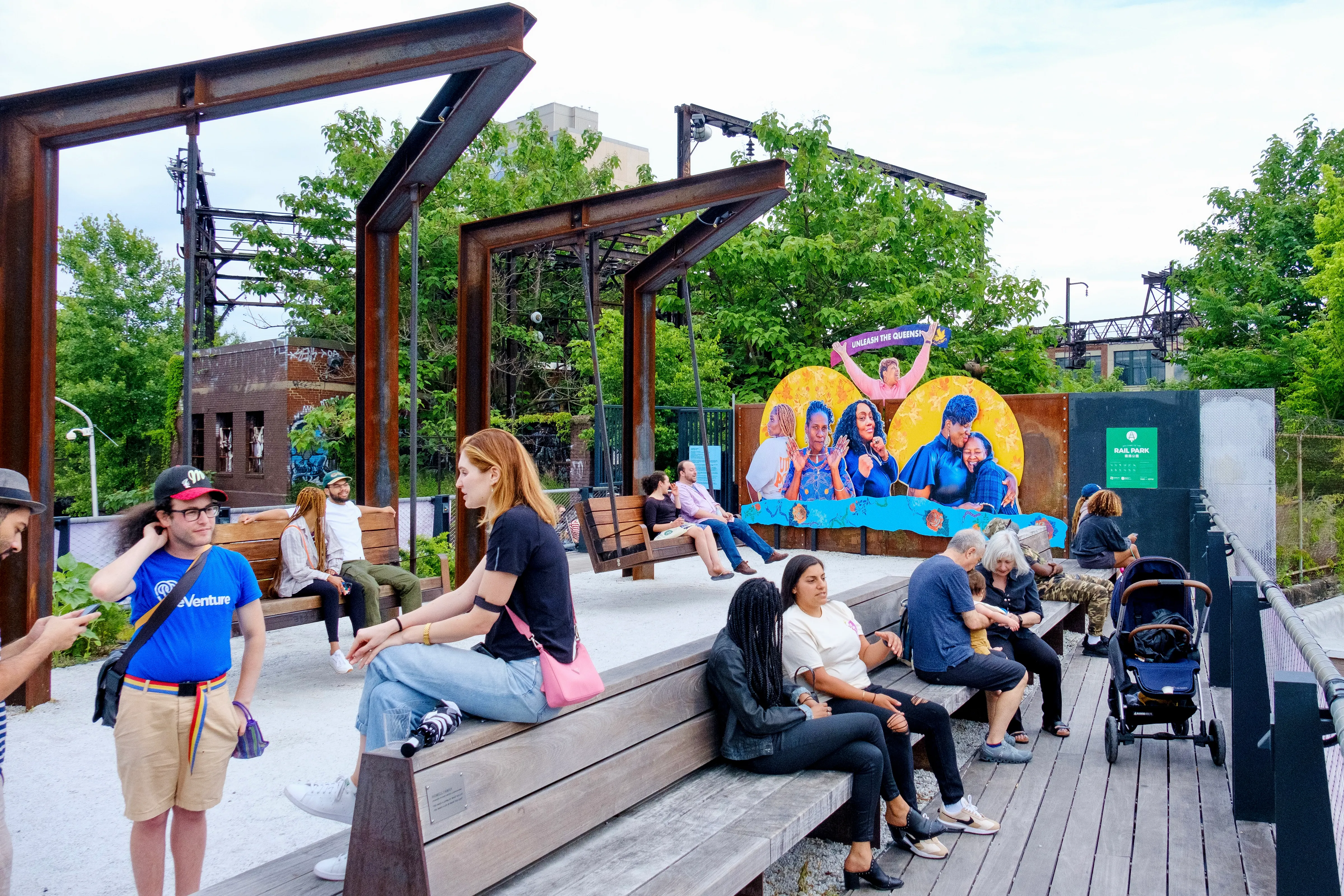
Loneliness isn't only a personal problem. It's a design problem.
Over the past several decades we’ve built lives that make it easier to consume, commute, and connect online than to know the people who live nearby. Clubs have faded. Civic organizations have shrunk. Many neighborhoods lack the parks, libraries, trails, and community spaces where relationships naturally form.
ARTICLE: Americans Are Lonely and Disconnected. Better Civic Spaces Can Help.
Integrated Design
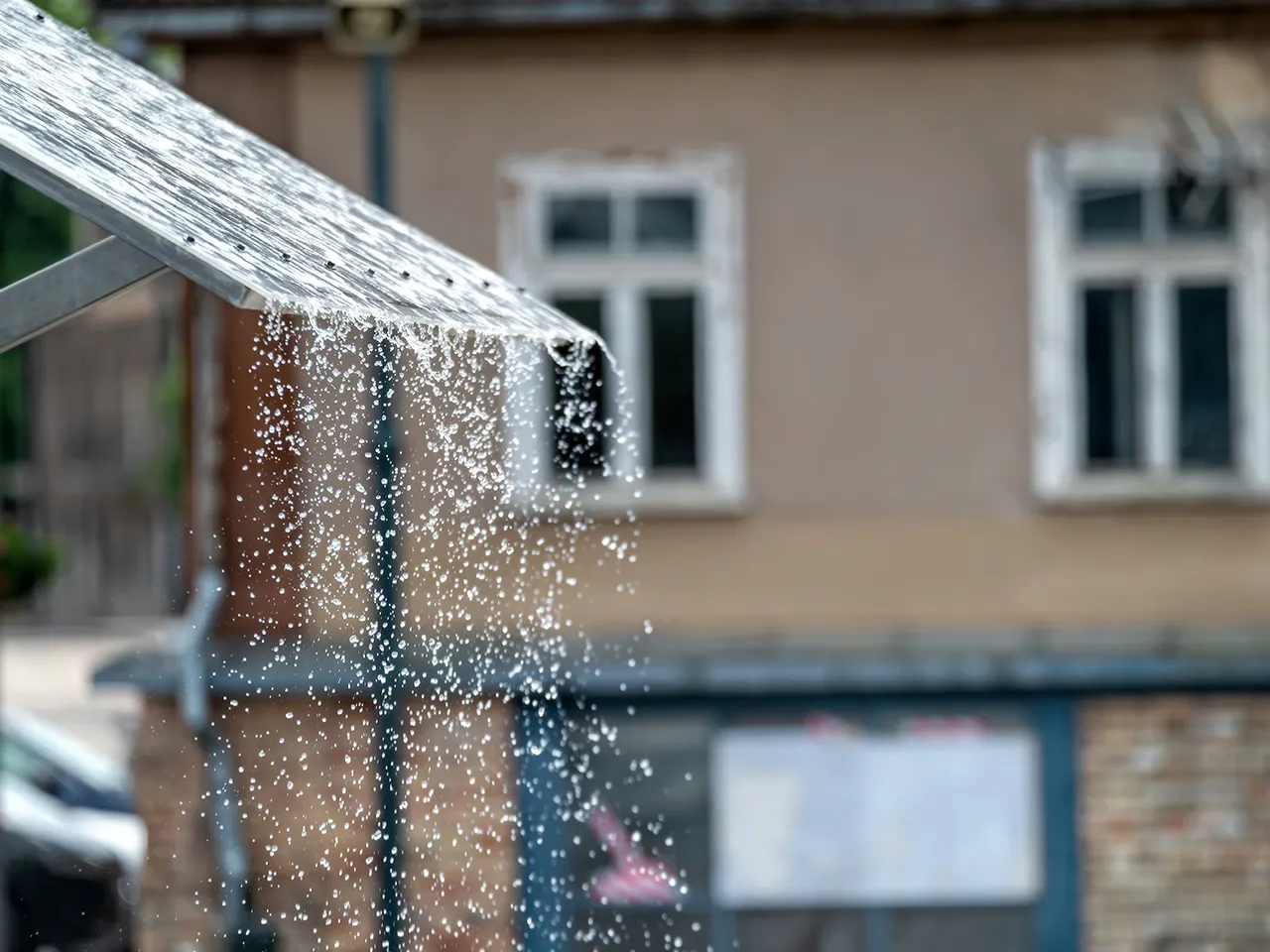
Harvesting rain Is now both smart design and smart building
As climate volatility increases, architects and urban designers face mounting water challenges. Well-designed rainwater harvesting systems can cut potable water use by up to 55% in commercial buildings and 30% in homes. With 36% of major cities now experiencing water stress—driven by rapid development and expanding hardscapes—rainwater is no longer just runoff, but a resource to design with.
ARTICLE: Rainwater Harvesting 101: Integrating Aesthetics & Sustainability In Architecture
.png)
Indigenous Wisdom
How Indigenous-informed architecture reframes design as reciprocity.
Indigenous worldviews treat land, buildings, and communities as living relatives in a web of kinship, not as inert assets or technical problems to solve. When those worldviews lead design, architecture stops being a delivery mechanism for services and becomes a practice of renewing relationships—between people and place, past and future, human and more-than-human worlds.
ARTICLE: Architecture by, for, and with America’s First Communities
Biomass
How upcycling plentiful, underutilized biomass into building materials can help solve America’s housing crisis, create jobs, and boost domestic manufacturing
In a 1995 The Atlantic cover story, Amory B. Lovins and L. Hunter Lovins of the Rocky Mountain Institute introduced the ultra-efficient, hybrid-ready “Hypercar” concept to a mass audience—two years before Toyota launched the Toyota Prius in Japan and five years before it reached global markets. In retrospect, the article anticipated a major shift in the auto industry.
REPORT: Building with Biomass: A New American Harvest
Energy
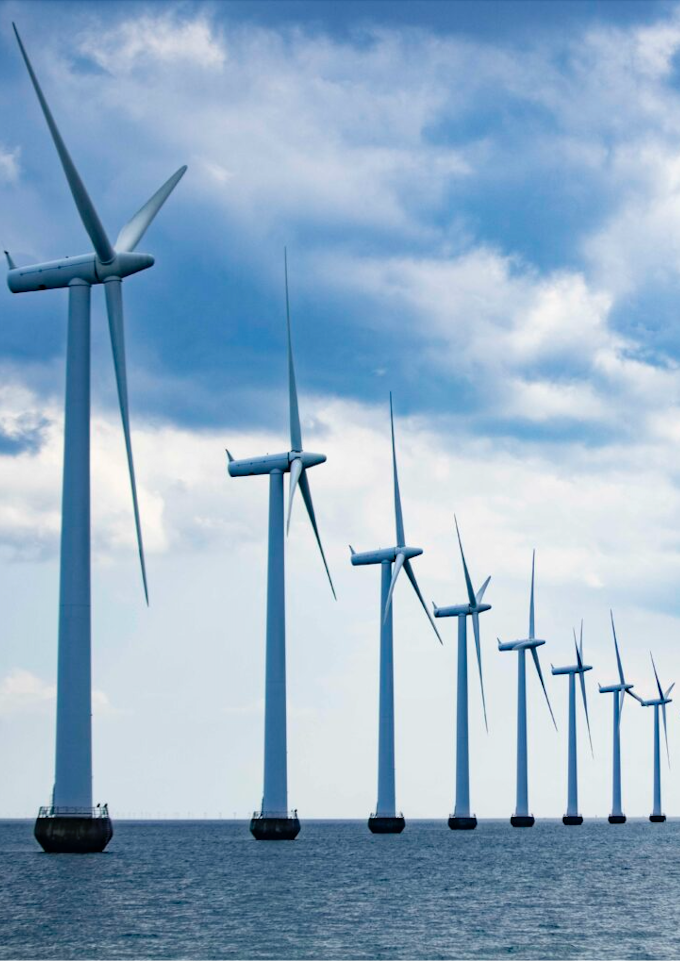
War is not healthy for children, living things and centralized fossil fuel energy systems.
Once upon a time, Russia was the EU’s largest gas supplier, providing around 40–45% of its imported gas. Then Russia decided to invade Ukraine and gradually turned off the taps and saw key pipelines sabotaged, triggering a massive price shock that exposed just how dangerous it is to lean on giant fossil fuel projects that can be turned into weapons overnight.More recently, the war in Iran has hit a different set of fossil fuel chokepoints, with fighting around the Strait of Hormuz slowing or blocking shipments that normally carry about a fifth of the world’s oil and a large share of global LNG, driving up prices and forcing Europe back into crisis mode just a few years after the Ukraine shock.
ARTICLE: Co-operatives and the Global Energy Crisis

Social Infrastructure
How Finland reduced homelessness by more than 80 percent
In the United States, homelessness is usually treated as a behavioral problem to manage rather than a housing problem to solve. People are expected to get sober, stabilize, and find work before they are considered “ready” for a home. Finland reversed the sequence. There, a permanent home comes first. Only after someone has a door they can lock does the slower work of recovery and rebuilding begin. When housing stops being a reward for good behavior and becomes basic infrastructure, people finally have the stability to change their lives.
VIDEO: How Finland Fixed Homelessness While the US Fails: Home vs. Shelter
Housing
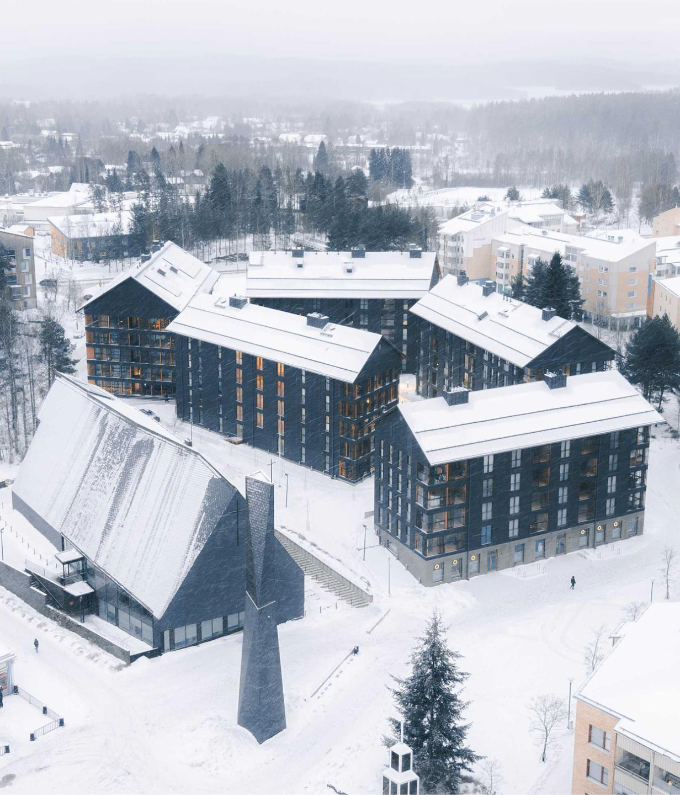
Dense urban housing can be beautiful, low‑carbon, and socially generous at the same time.
Kuokkalan Kalon, a newly completed timber residential block in Kuokkala, Finland, offers a glimpse of how cities can grow without losing their character—or their humanity. Built beside Kuokkala’s wooden church in the city of Jyväskylä, the project was designed to feel calm and house-like, fitting gently into the neighborhood while allowing the church to remain the visual landmark.
ARTICLE: Collaboratorio

