August 14, 2026
Habitat
We forget that we are nature.
For most of human history, there was no distinction between habitat and nature.
Shelter might have protected us from rain or cold, but it remained deeply connected to the landscape around it. Daylight, fresh air, changing seasons, flowing water, birdsong, local wood and stone—these weren’t amenities. They were simply life.
Then something changed. Many (most?) of the places we’ve built over the last century became astonishingly good at separating us from—even ignoring—the natural world. Artificial light replaced daylight. Mechanical systems replaced fresh air. Asphalt replaced soil. Parking lots replaced trees. We built environments that functioned toward some ends efficiently, but often left us feeling eerily disconnected.
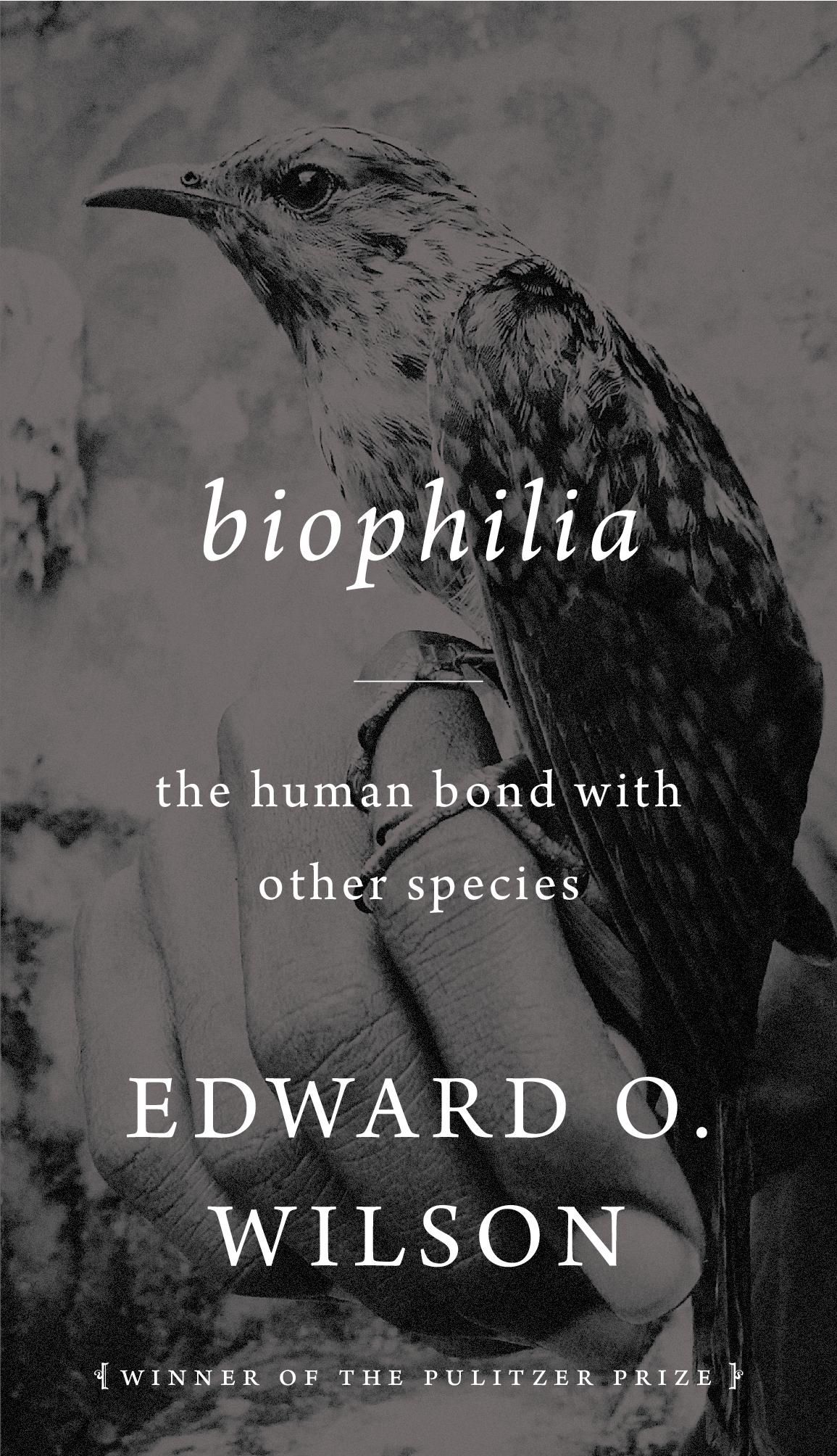
E.O. Wilson spent a lifetime asking how life works. One of the world's leading biologists, he transformed our understanding of ants, biodiversity, and evolution. He wrote Biophilia in 1984, midway through his career.
In this book he turned his attention to a related question: Why do human beings feel so at home in nature? He arrived at an idea that feels obvious once you hear it: human beings love living things.
Wilson didn’t coin the word biophilia—the psychoanalyst Erich Fromm had used it two decades earlier to describe a love of life and a psychological orientation toward growth, vitality, and living things. But Wilson gave it a new meaning. He proposed that our attraction to trees, rivers, birds, and other living systems isn’t merely a preference, it’s part of our evolutionary inheritance. After millions of years evolving in close relationship with the natural world, he observed, we possess an innate affinity for life itself.
He called this the Biophilia Hypothesis. It would profoundly influence modern architecture and design, beginning with the recognition that human beings are nature. We evolved in forests, grasslands, beside rivers, beneath changing skies. Our bodies and brains still respond to those environments whether we recognize it or not.
Why do we instinctively choose the table beside the window? Why does a walk through the woods restore us in ways a walk through a parking lot rarely does? Why do hospital patients recover faster when they can see trees? Why do children gravitate toward streams, rocks, and fallen logs instead of flat concrete playgrounds?
Wilson suggested these aren’t merely preferences. They’re memories written into our biology.
Biophilia helped inspire an entire movement in architecture and design. It encouraged architects to think beyond efficiency and aesthetics and ask a different question: How might a building help people feel more deeply connected to the living world?
That’s a different way of thinking about habitat. Not as protection from nature, but as a way of belonging within it.
BOOK: Biophelia. The Human Bond with Other Species
No items found.