August 14, 2026
Habitat
The places we create shape who we become.
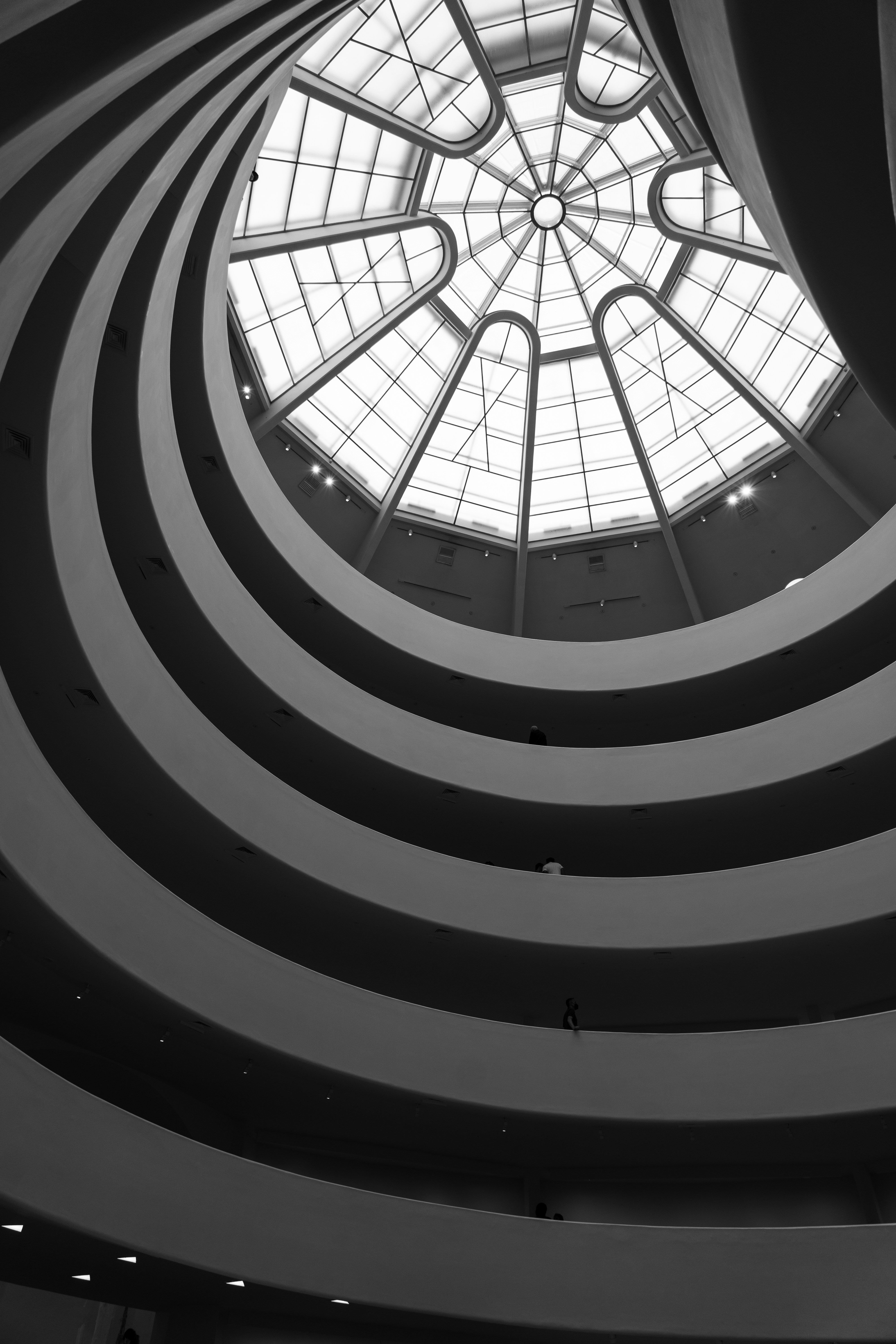
Guggenheim Museum, 5th Avenue, New York, NY, USA. Photo by Marco D'Abramo
The only problem with the Guggenheim Museum in New York is that the building is so magnificent that its own energy can overshadow the art it was ostensibly designed to showcase. The place itself changes me from the moment I enter.
Frank Lloyd Wright designed it as a great spiraling ramp beneath a luminous dome, where visitors drift upward through space rather than from one rectangular gallery to the next. Every time I enter this grand hall of light and movement, before I’ve stopped to look at a single piece of art, something has already shifted. I find myself standing a little taller. More curious. More open. The building itself expands my sense of what human beings are capable of creating, of what we can be.
Contrast that experience with walking through a strip mall anywhere in America. At its best, it is an exercise in pedestrian efficiency: a place to park your car and buy something. Period. It certainly doesn’t stir the imagination, let alone suggest that life might be more important than my next snack.
Worse, places like this don't simply fail to inspire. They gradually teach us to expect less—from our communities, from our public spaces, and ultimately from ourselves. The difference isn’t merely aesthetic. It is philosophical. Every place makes a proposal about what kind of lives are possible there.
We tend to think of habitat as the physical places we occupy: our homes, buildings, neighborhoods, and cities. But habitat is something much larger. It is the physical expression of what a society believes about life. It is where our values become tangible and where our relationship with one another, with nature, and with the future takes material form.
Every building embodies a conversation about what kind of lives are possible there. A library proposes that curiosity matters. A front porch proposes that neighbors are worth knowing. A public square proposes that strangers can become citizens. A school proposes that everyone is capable of learning.
The places we build do more than shelter our lives. They shape our expectations of them. Some places invite us to become larger than ourselves. Others ask almost nothing of us.
Once we begin to see this, architecture stops being a specialty reserved for architects. It becomes one of civilization’s most powerful languages. The materials we choose, the way a building meets the land, the amount of daylight we welcome inside, whether a structure can adapt over generations or must be discarded after a few decades—each decision expresses a belief about what deserves to endure.
The most hopeful buildings are not simply efficient or beautiful. They participate in life. They evolve with the people who inhabit them. They treat the land not as a commodity to be conquered but as a living system to which they belong. They remind us that stewardship and imagination are not opposing values but partners.
What if the places we build are doing far more than accommodating our lives? What if, every day, they are helping us discover who we might become?
No items found.