April 3, 2026
Habitat
War is not healthy for children, living things and centralized fossil fuel energy systems.
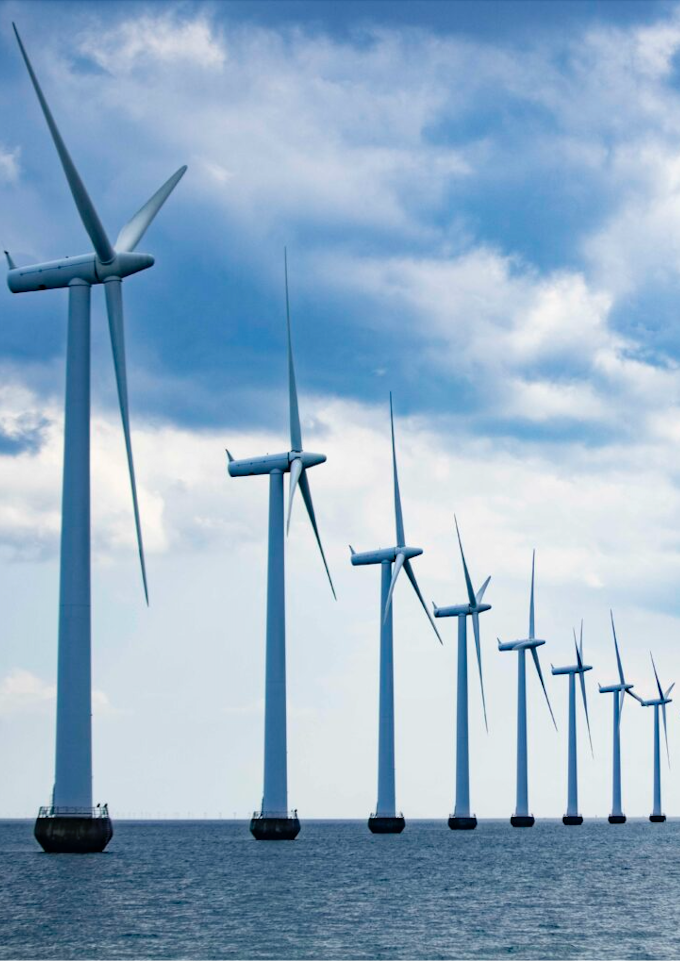
The Middelgrunden wind farm, located just outside Copenhagen Harbour, comprises 20 wind turbines arranged in a 3.4 km-long concave line. The farm produces approximately 99,000 MWh annually, enough to power thousands of local households. The project is half-owned by Copenhagen’s municipal utility company and half-owned by a Wind Turbine Cooperative with 8,650 local members. Image via State of Green
Once upon a time, Russia was the EU’s largest gas supplier, providing around 40–45% of its imported gas. Then Russia decided to invade Ukraine and gradually turned off the taps and saw key pipelines sabotaged, triggering a massive price shock that exposed just how dangerous it is to lean on giant fossil fuel projects that can be turned into weapons overnight.
More recently, the war in Iran has hit a different set of fossil fuel chokepoints, with fighting around the Strait of Hormuz slowing or blocking shipments that normally carry about a fifth of the world’s oil and a large share of global LNG, driving up prices and forcing Europe back into crisis mode just a few years after the Ukraine shock.
Co-ops and renewables don’t work that way. Instead of concentrating risk in a few large pipelines and shipping lanes, they distribute it across thousands of rooftops, turbines, and efficiency projects that cannot all be disrupted by a single missile or blockade. Shaz Rahman observes that this model is already operating at scale. He links the fragility of centralized fossil fuel systems to the resilience of small, citizen-owned projects, which have shown they can keep power flowing, stabilize costs, and protect communities when global markets seize up.
He points to places where this is already normal life, not theory: Danish wind co‑operatives that grew out of the 1970s oil shocks, Belgian co‑op suppliers that capped prices through both the Ukraine and Iran crises, Greek energy communities that combine rooftop solar, batteries, and flexible demand so neighborhoods can use more of their own power, and Irish co‑ops that organize whole‑house retrofits to cut the need for imported fuel.
In his UK backyard, community solar and wind projects, retail co-ops putting panels on their own roofs, and retrofit groups offering hands-on guidance are demonstrating in real time how citizen-owned infrastructure can shield households from war-driven price spikes and supply shocks.