August 14, 2026
Habitat
The buildings that last are the buildings that learn.
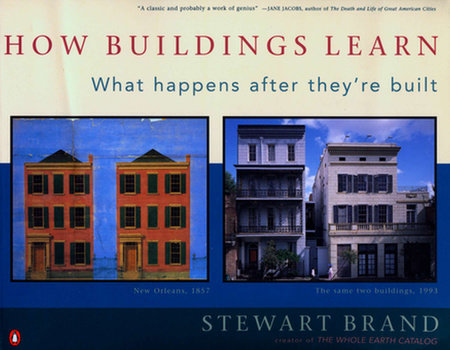
Stewart Brand has spent much of his career studying systems and how they grow and change. He created the Whole Earth Catalog and later CoEvolution Quarterly, two influential publications that helped my generation think differently about technology, ecology, design, and the interconnected systems that shape our lives. He wrote about cybernetics and personal computers long before most people imagined owning one. In The Media Lab: Inventing the Future at MIT, he gave readers an early glimpse of a future that is now completely ordinary: computers as creative partners, connected to one another, woven into everyday life, and expanding rather than replacing human capability. And he co-founded the Long Now Foundation, which encourages us to take a long view, to think in centuries instead of election cycles.
So it shouldn’t have surprised anyone that when Brand began thinking about architecture, he wasn’t really interested in buildings. He was interested in what happened to them over time. What he saw is that buildings change. Not just physically, but functionally.
They acquire additions, repairs, new owners, new technologies, and entirely new purposes. Yesterday’s factory becomes tomorrow’s apartments. An old warehouse becomes a neighborhood café. A school becomes housing.
We tend to think of buildings as finished the day construction ends. Brand invites us to see them differently. That's when their real lives begin.
In How Buildings Learn, he shows how the best buildings aren’t those that remain exactly as they were designed. They’re the ones that continue to adapt. They respond to changing needs, new technologies, different families, different businesses, and different generations.
A building that can’t change eventually becomes obsolete. A building that can adapt has the chance to remain useful—and loved—for decades, even centuries.
That idea changed the way I think about habitat. The places we build are not monuments. They’re participants in our lives. Like neighborhoods, organizations, and communities, they are never really finished. They continue to evolve alongside the people who inhabit them.
BOOK: How Buildings Learn