July 17, 2026
Habitat
Loneliness isn't only a personal problem. It's a design problem.
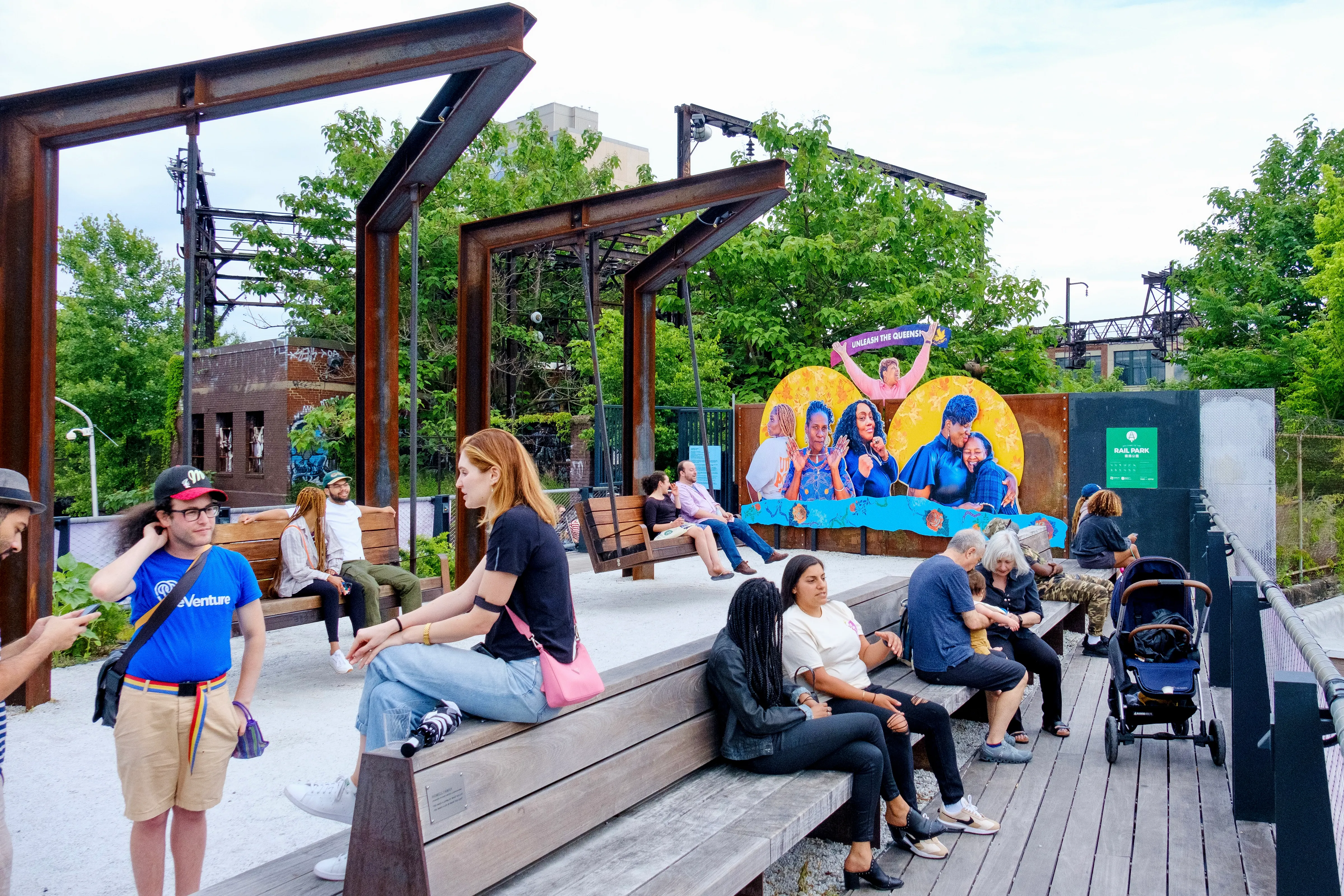
The annual summer block party at Philadelphia’s Rail Park. Image courtesy Friends of the Rail Park. Image credit: Julian Moore-Griffin.
Over the past several decades we’ve built lives that make it easier to consume, commute, and connect online than to know the people who live nearby. Clubs have faded. Civic organizations have shrunk. Many neighborhoods lack the parks, libraries, trails, and community spaces where relationships naturally form.
This essay makes the case that rebuilding civic life begins by rebuilding the places where civic life happens. A well-designed public square, library, trail, or neighborhood park is more than an amenity. It is social infrastructure: a place where trust grows, strangers become neighbors, and democracy is practiced in ordinary encounters rather than only at the ballot box.
Philadelphia’s Rail Park offers one example. Residents transformed an abandoned rail line into a public gathering place, then filled it with walks, festivals, and community events that brought people together across differences. The lesson is simple: places matter, but what happens in them matters just as much.
We often think stronger communities produce better public spaces. Increasingly, the evidence suggests the reverse is also true. Build places that invite people to belong, and over time they begin creating the kind of communities—and democracies—we’ve been missing.
ARTICLE: Americans Are Lonely and Disconnected. Better Civic Spaces Can Help.