Communication
How language, listening, conversation, and dialogue shape what we understand, how we relate, and what we are able to create together.
Part of Love & Work's continuing inquiry into what human beings are capable of becoming.
shared meaning
Communication is the invisible architecture of belonging.
"The single biggest problem in communication is the illusion that it has taken place."- George Bernard Shaw
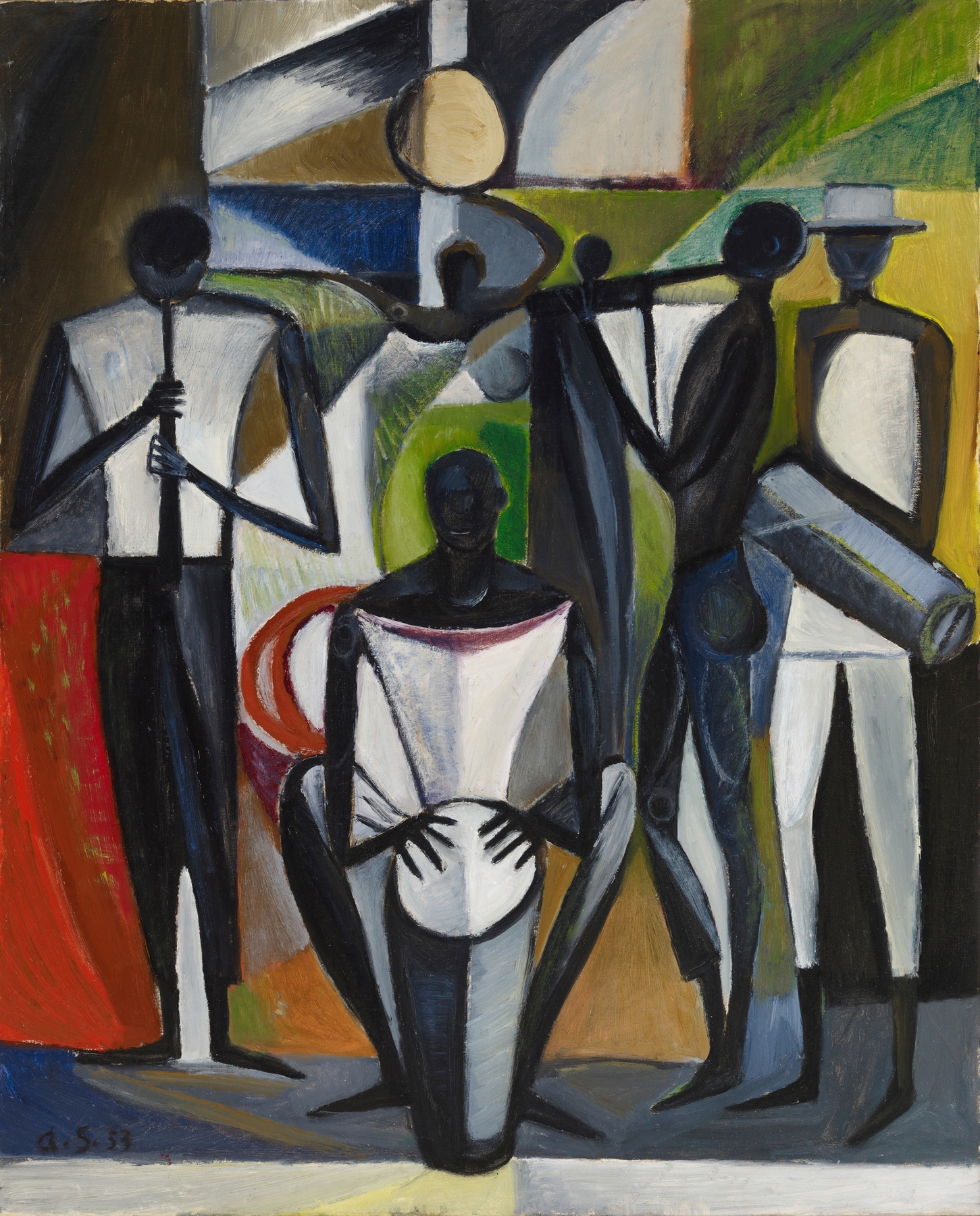
Orchestra (1953) Anita Snellman. Read more about this painting.*
For more than forty years I’ve worked with organizations of every kind. Some were reinventing how we live and work through technology. A few designed and sold athletic gear. One was providing international aid services. More than one was educating tomorrow’s teachers, caregivers, and community leaders. Their missions couldn’t have been more different. Yet beneath the surface, they all kept arriving at the same realization.
Organizations rarely struggle because they lack words. They struggle because they lack shared understanding.
Marketing can’t resolve confusion. Internal newsletters can’t rebuild trust. Mission statements can’t compensate for strategic ambiguity. People communicate clearly when they know what they’re building together.
The same pattern repeats at every scale. Families lose one another not because they stop talking, but because they stop understanding what matters most to one another. Communities fracture when shared purpose gives way to competing stories. Our culture often mistakes louder voices for clearer meaning. Whether we’re leading a company, raising children, or trying to hold a democracy together, communication is ultimately the work of creating enough shared understanding to move forward together.
Communication is the work of creating shared understanding, and shared understanding begins by noticing what lies beneath the words themselves.
Living into our fullest humanity has always been a shared endeavor. The conversations we practice today become the relationships, organizations, and cultures we inhabit tomorrow.
communication, shared meaning
Communication creates society
Marshall McLuhan famously observed that the medium is the message—that the ways we communicate shape society as profoundly as the ideas we communicate.James Carey asks even deeper questions. What if communication is not primarily the transmission of information, but the creation of shared meaning? What if communication itself is how society comes into being?
BOOK: Communication as Culture, Revised Edition
communication, collective intelligence
Learning to think together
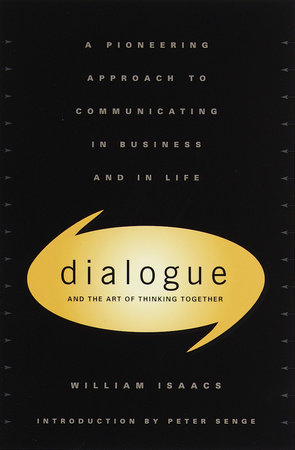
William Isaacs asks a question that opens all kinds of doors: What becomes possible when a group learns to think together?His answer stretches our understanding of communication itself. Dialogue, he suggests, is far more than conversation. It is the practice of creating the conditions where a group can discover insights that none of its members could have reached alone.
BOOK: Dialogue and the Art of Thinking Together
communication, nonviolent communication
Learn to hear what matters
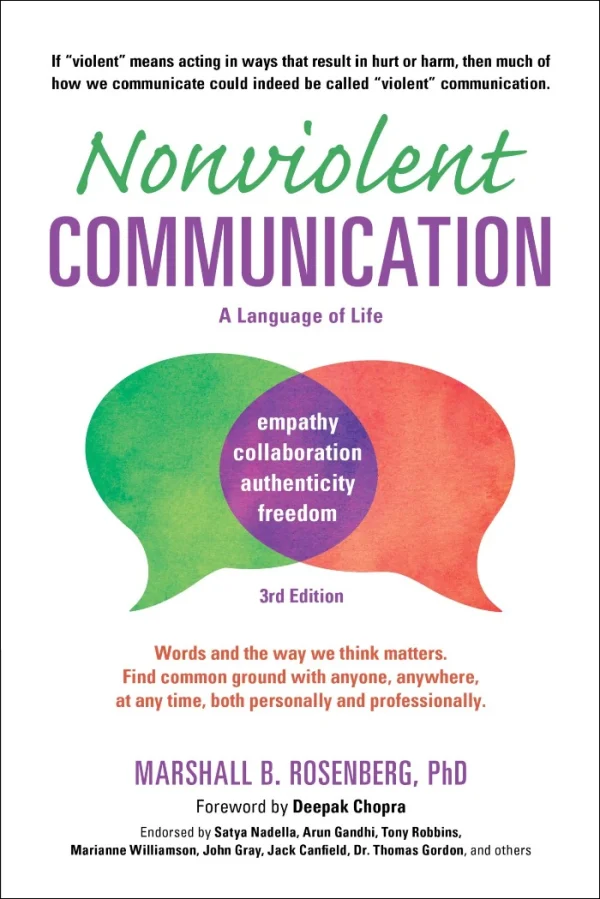
Most communication books promise techniques. They offer better ways to persuade, negotiate, present, or influence. Marshall Rosenberg's Nonviolent Communication begins somewhere much deeper.His central insight is deceptively simple—and extraordinarily difficult to practice: beneath every opinion, criticism, argument, or demand is a human being trying to meet a need.
BOOK: Nonviolent Communication. A Language of Life

communication, listening
The power of a better question
The person asking the questions often learns more than the person giving the answers. Edgar Schein built an entire philosophy of leadership around that deceptively simple idea.Unlike many consultants, Schein was convinced that leaders and advisors should stop arriving with answers. Their job was not to be the smartest person in the room. It was to help the room become smarter.
BOOK: Humble Inquiry, The Gentle Art of Asking Instead of Telling
*About the painting
Anita Snellman was born in Helsinki in 1924 and became one of Finland’s leading twentieth-century painters.
She painted Orchestra in 1953, not long after studying in Paris. The influence of European modernism is there, but so is her own voice. The painting isn’t strictly realistic, nor is it abstract. It lives somewhere in between.
The musicians remain distinct individuals, yet they are clearly part of something larger. Each makes sense on their own. Together, they become something else. No one in the room is making music alone. Each player matters. The listener matters. The music itself exists because everyone is attending to one another.This is how communication works. Meaning rarely arrives fully formed from a single voice. It emerges between people—through attention, timing, and the shared work of creating something that none of us could have created alone.
"Progress is people flourishing."
-Ted Gioia

Writing
'Writers, please remember to reward yourself.'
Author, Marcy Dermansky, has published five novels to date. She has received fellowships from MacDowell and the Edward Albee Ranch, and has also won the Smallmouth Press Andre Dubus Novella Award and the Story Magazine Carson McCullers Short Story Prize.
ARTICLE: The First Step in the Writing Process: Be Kind to Yourself
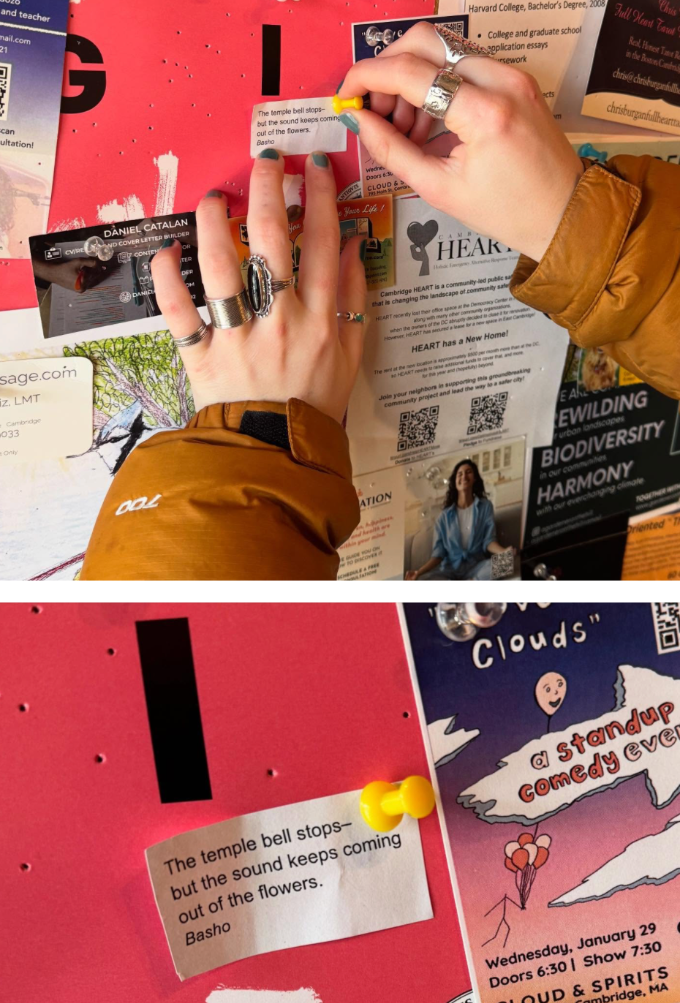


Graphic Design
Acknowledging and learning from the beauty and intelligence found within global design practices
Centered is a new insightful book of essays, interviews and images taking a global look at design diversity.
ARTICLE: A New Book from Kaleena Sales Platforms the People and Ideas Diversifying Design

Social Messaging
Giving voice to the victim of wars and its consequences
EMERGENCY is an independent and neutral international organization that provides free, high-quality medical and surgical care to victims of war, landmines and poverty.
ARTICLE: Emergency and Ogilvy Italy's '365 Days' Campaign Is A Wish for a 2025 Against War

Brand
Visual Identity
Community-centric focus, dynamic visual identities and other brand strategy and design trends of the new year
I’ve spent this year chatting with design pros, dissecting pitch decks, and analyzing emerging campaigns to uncover where the branding industry is headed.
ARTICLE: Forecasting the Future: Brand & Design Predictions for 2025
Graphic Design
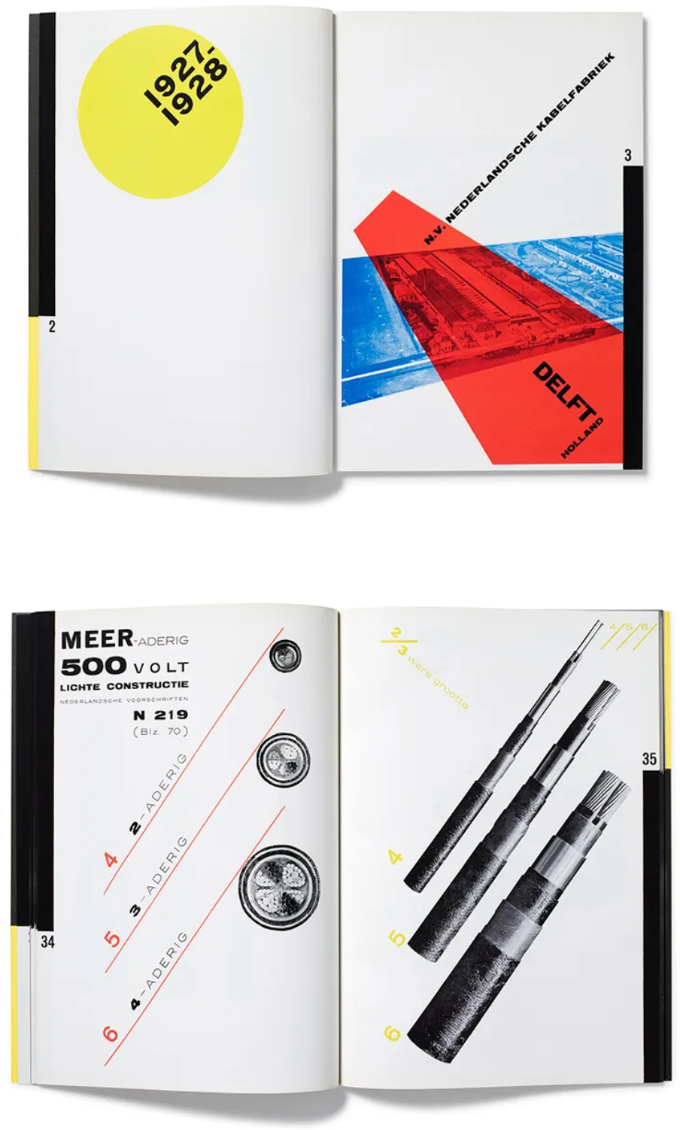
One of the most progressive graphic designers of the 1920s and ’30s, one who challenged traditional conventions, did so at a time when fascism was taking root throughout Europe.
Last week Steven Heller reviewed the Letterform Archive rerelease of a founding masterpiece of modern typography from one of the twentieth century’s most ambitious creatives, Piet Zwart, the Dutch photographer, typographer, and industrial designer.
ARTICLE: Piet Zwart’s Best Client

Advertising
Social Messaging
Imagine if this ad were selling the common good instead of sports clothes.
Set aside for moment that this is a TV commercial for a sports fashion retailer that operates 3,400 stores across 32 countries.
ARTICLE: Central Cee and Maya Jama Redefine ‘Family’ in JD Sports’ Christmas Film
Media
'Trust is the most valuable thing on any balance sheet.'
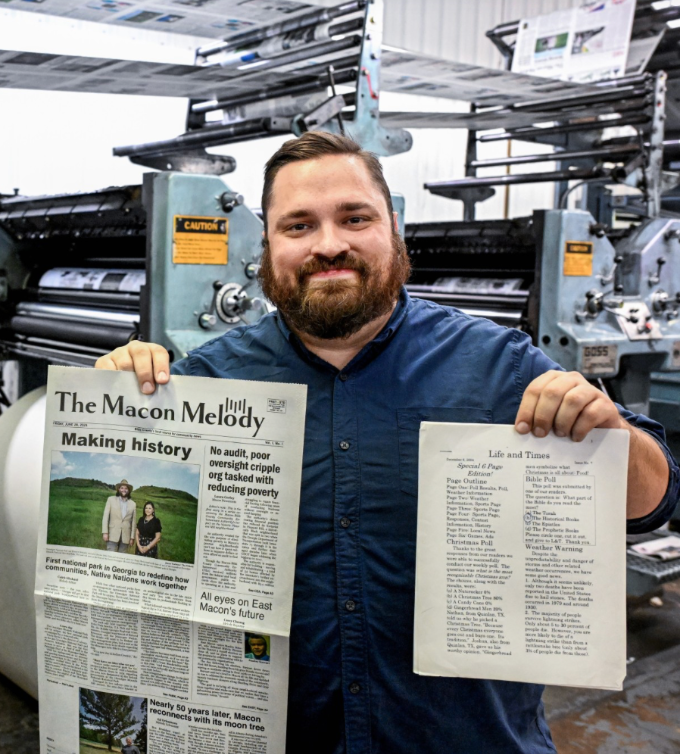
When newspaper veteran Ross McDuffie became the first-ever chief portfolio officer for the National Trust for Local News, the nonprofit organization owned two dozen newspapers in Colorado and generated around $5 million in earned revenue.
ARTICLE: The National Trust for Local News Keeps Buying Local Newspapers. Here’s What They’ve Learned

Advertising
This ad campaign was developed with a team of young audience members who shared their personal insight throughout the creative process.
Cosmetics brand Maybelline New York has unveiled a powerful new campaign to mark World Mental Health Day (earlier this month).
ARTICLE: Maybelline’s New Campaign is a Refreshing Take on Mental Health

