August 7, 2026
Communication
Learn to hear what matters
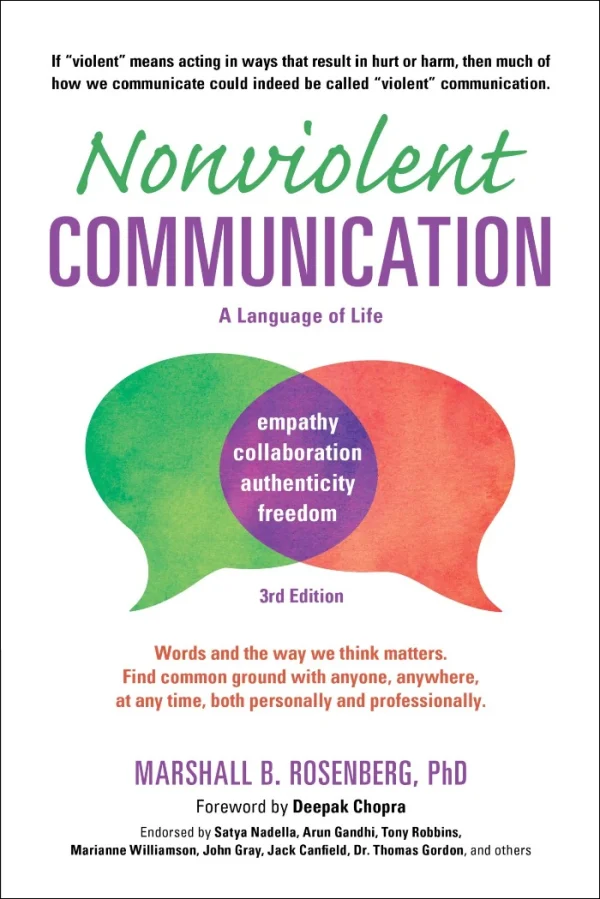
Most communication books promise techniques. They offer better ways to persuade, negotiate, present, or influence. Marshall Rosenberg's Nonviolent Communication—one of the foundational works in the modern movement to understand conflict, relationships, and human connection—begins somewhere much deeper.
His central insight is deceptively simple—and extraordinarily difficult to practice: beneath every opinion, criticism, argument, or demand is a human being trying to meet a need.
When we miss that, conversations become contests. We defend positions, assign blame, and argue over who is right. When we notice it, something remarkable becomes possible. We begin to understand not only what another person is saying, but why they are saying it.
Rosenberg spent decades working in some of the world’s most difficult environments—schools, prisons, neighborhoods divided by violence, and regions marked by war. His goal was never to eliminate conflict. He accepted conflict is part of life. His work was to help people move beneath accusation and judgment to the deeper needs every human being shares: safety, belonging, dignity, autonomy, meaning, love.
That shift changes everything. Rather than asking, Who’s right? Rosenberg encourages us to ask, What is this person trying to protect? What need is asking to be heard?
The question doesn’t excuse harmful behavior. Nor does it require agreement. It simply changes the purpose of communication. Instead of winning, the goal becomes understanding.
Much of what we call communication, Rosenberg observes, is actually interpretation. We assume motives. We attach labels. We confuse our judgments with observations. We hear criticism where someone is expressing fear. We hear indifference where someone is protecting disappointment.
His invitation is not simply to speak differently. It is to notice differently.
That may be why Nonviolent Communication continues to influence educators, mediators, healthcare professionals, community organizers, coaches, and leaders around the world nearly three decades after its publication. It offers more than a method. It offers a different understanding of what people are doing when they speak to one another.
In the end, Rosenberg reminds us that communication about building relationships capable of holding difficult truths without breaking apart.
If the future depends on our ability to live, work, and solve problems together, then learning to hear one another may be one of the most practical forms of hope available to us.
BOOK: Nonviolent Communication. A Language of Life
ARTICLE: Nonviolent Communication: the Key to Improve Your Relationships