Civics
How people build the relationships, practices, institutions, and collective agency needed to participate in shaping a shared future.
Part of Love & Work's continuing inquiry into what human beings are capable of becoming.
social intelligence
Hope is a group project.
"The essential challenge is to transform the isolation and self-interest within our communities into connectedness and caring for the whole." — Peter Block
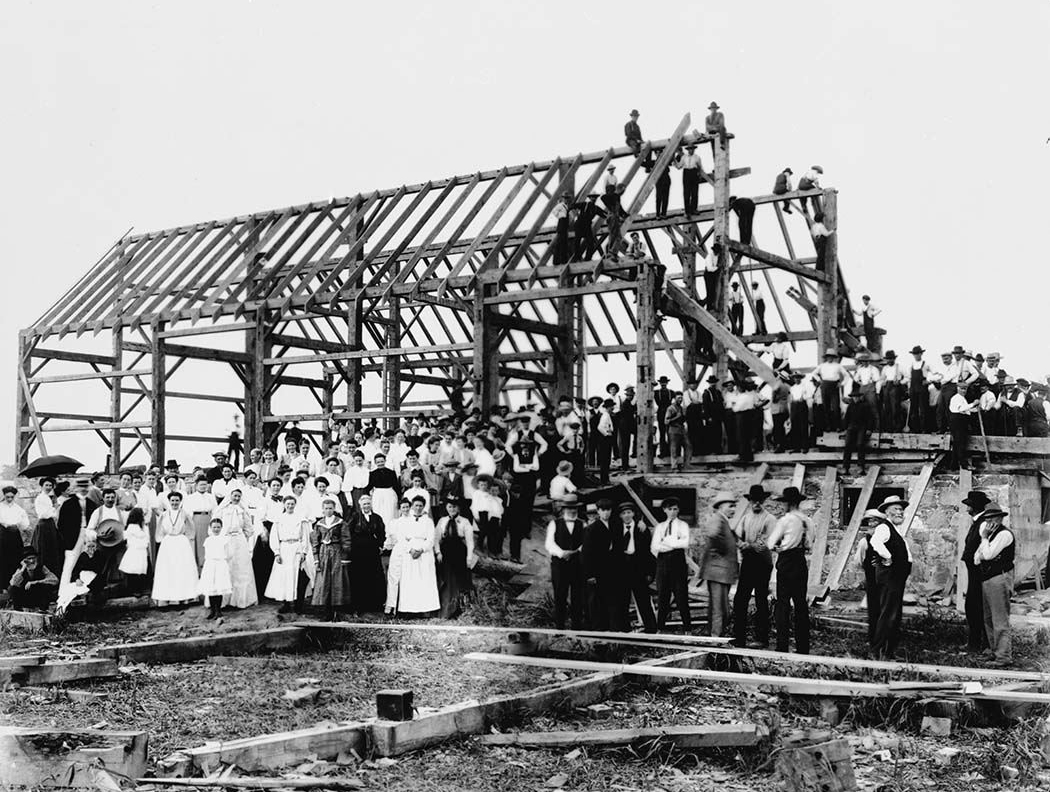
Alexander W. Galbraith, Barn Raising in Lansing (circa 1900)
We are just weeks away from a consequential midterm election, and like you I find myself increasingly frightened by what is happening to American democracy. The Trump administration continues to test the limits of presidential power and the institutions designed to constrain it. Enormous wealth increasingly buys access and influence. The rush to build massive data centers, while communities contend with their demands for power, water, and land, is only the latest obvious manifestation. Rules and norms that once seemed durable suddenly seem much less so. And all around me I hear thoughtful people wondering whether anything they do can possibly make a difference.
That last part may frighten me most. Lately I’ve been wondering what happens when enough people conclude that nothing they do matters.
Carlyn Beccia recently introduced me to a useful idea she calls the “asshole threshold.” Cooperation works when most people believe that other people will cooperate too. But when enough people cheat, exploit, lie, or simply look out for themselves, cooperation begins to seem foolish. Why follow the rules when the assholes don’t?
Eventually the cooperators begin to defect too. That sounds uncomfortably familiar. But there is another side to the story. Research on cooperation suggests that cooperators become more resilient when they find one another, interact repeatedly, and discover that cooperation can actually work.
I keep thinking about what this means for community. Maybe one reason so many of us feel powerless is that we experience the enormous problems confronting us as individuals. Climate change. Concentrated wealth. Threats to democracy. Each is far beyond anything I can affect by myself.
But community changes the scale of the question. You show up. You meet people you didn’t know. Someone listens. Someone knows something you don’t. Someone has a skill, a relationship, a building, a truck, a garden, an idea. You begin to discover what exists among you. You imagine something that none of you could accomplish alone.
And then you do something. Something changes. That experience matters. The question shifts from What can I possibly do? to What might we be able to do together?
Maybe this is what start where you are really means. Whenever people have a chance to know one another, discover what they have among them, imagine what might be possible, and accomplish something together, they experience their own collective capacity.
These experiences are still far too rare. But each one provides evidence that cooperation works. Perhaps hope isn’t something we need to convince one another to feel. Perhaps it is something we create together.
civics, civic capacity
Community is built one gathering at a time.
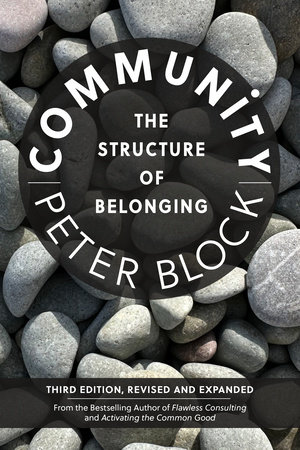
I like Peter Block’s contention that a community’s capacity to create its future resides not primarily in its leaders, but in its citizens and their relationships. In Community, he proposes the small group as the unit of transformation: bring people together, ask questions that matter, discover what each can contribute, and create something together. The experience shifts people from waiting for solutions to discovering their own capacity to act together.
BOOK: Community: The Structure of Belonging
CIVICS, SOCIAL INTELLIGENCE
The opposite of helplessness may be connection.
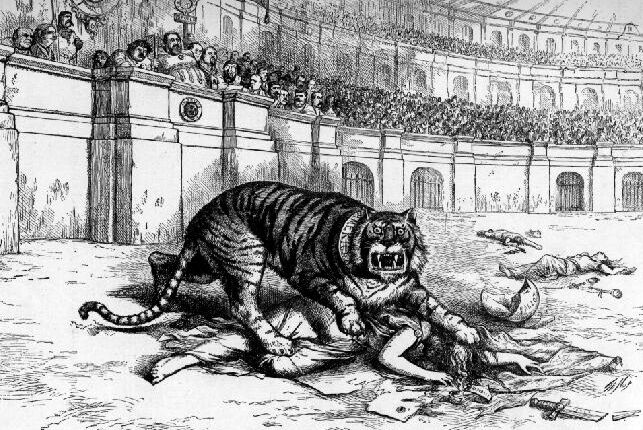
Carlyn Beccia warns that when corruption and self-dealing become common, cooperation starts to look foolish. But drawing on Robert Axelrod’s game theory and the civic organizing of the Gilded Age, she finds reason for hope: cooperation becomes more resilient when cooperators find one another and keep showing up. I like her suggestion that community may be where we find evidence that cooperation works—and where we rediscover our collective power.
ARTICLE: Has America Crossed the Asshole Threshold?
CIVICS, ASSET-BASED COMMUNITY DEVELOPMENT
Look what we've got.
Asset-Based Community Development turns the usual approach to community building on its head. Rather than beginning with problems and deficiencies, John McKnight and Jody Kretzmann begin by discovering the people, relationships, skills, knowledge, spaces, and resources already present. In the process, people discover one another and begin connecting capacities that had been scattered and unseen. The question shifts from What do we lack? to What might we do with what we already have?
ARTICLE: Asset Based Community Development (ABCD)
CIVICS, SOCIAL TECHNOLOGY
Your backyard is wilder than you are.
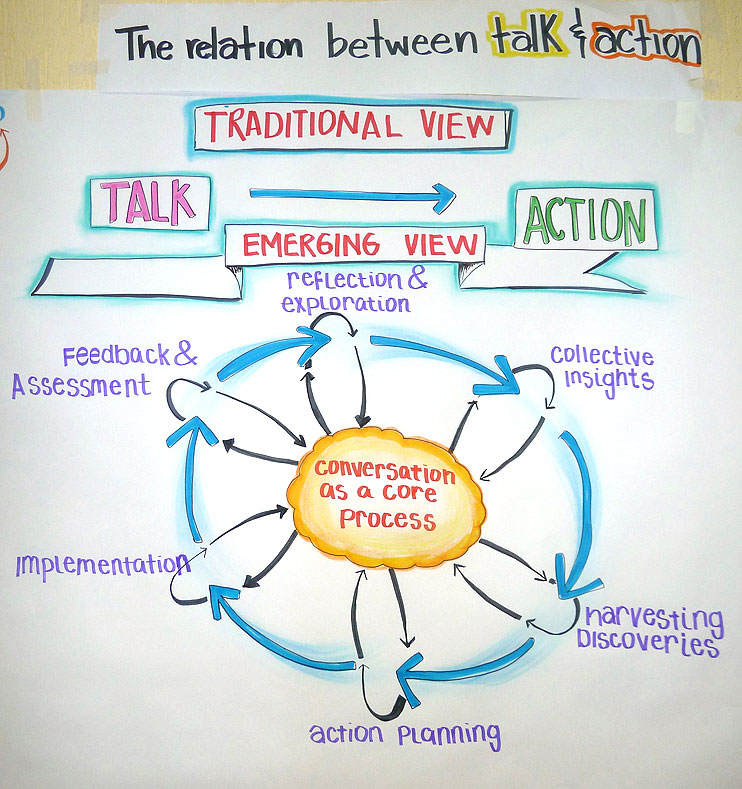
Over the past fifty years, practitioners have developed radically different ways for groups to think and act together. World Café, Open Space, Circle, Appreciative Inquiry, Liberating Structures, and other “social technologies” replace arguing competing points of view with practices that help people listen to and learn from one another. Their premise is radical: change the way people come together, and you can change what they become capable of doing together.
FOLLOW THE THREAD
One liners
ARTICLE: Twenty-nine ordinary residents of Snohomish County spent three weekends learning about artificial intelligence and emerged with 35 recommendations for how their government should use it.
ARTICLE: A Phoenix woman started inviting neighbors into her yard to talk, and those conversations eventually turned a vacant city lot into a community garden.
ARTICLE: A dozen California neighbors skipped the usual fight with a developer, pooled $50,000, bought the land themselves, and turned it into a permanent nature preserve.
ARTICLE: When a heat wave hit Watertown, Massachusetts, neighbors collected unwanted air conditioners from other neighbors, then delivered and installed them free for people who needed them.
ARTICLE: After their island’s only grocery store and gas station closed, Anderson Island residents decided the replacement should belong to the community itself.
ARTICLE: Columbus is giving residents $9 million and asking them—not city officials—to decide how it should be spent in their neighborhoods.
*About the photograph
Alexander W. Galbraith photographed this barn raising in Lansing, then a rural community and now part of North York in Toronto, around 1900.
I am moved by what the photograph contains. There is no obvious expert at the center directing everyone else. Instead, scores of people with different roles and abilities have gathered to accomplish something none could readily do alone.
They aren’t discussing community, they are producing it. And the barn is almost beside the point. The tangible product of the gathering is a building. But another product is the experience people take home: we can do things together.
That is a lovely expression of a truth I want to find and celebrate again and again: Community is one of the places where people learn and relearn that cooperation works.
"Progress is people flourishing."
-Ted Gioia
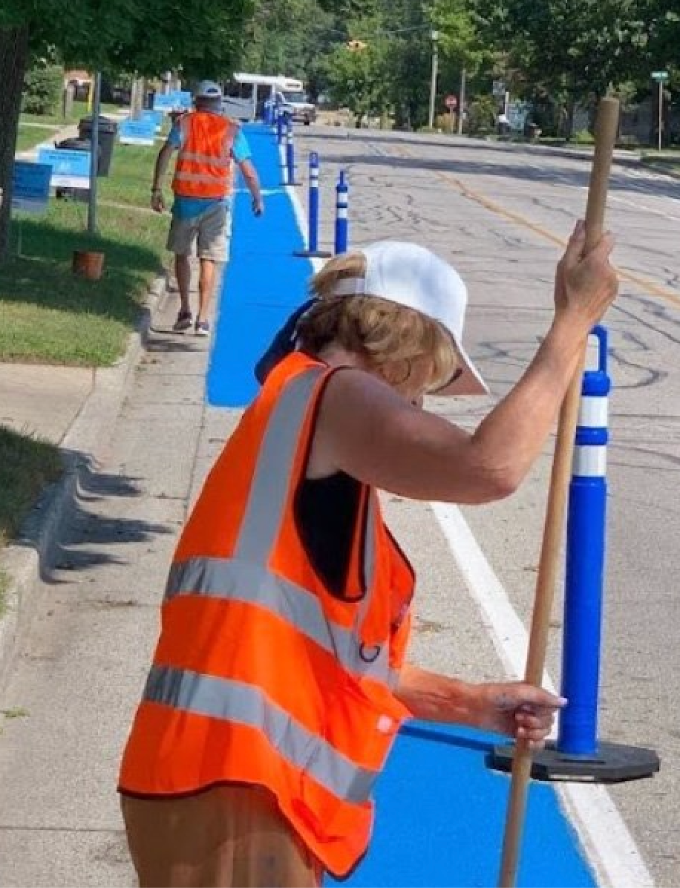
Transformation
Sometimes the easiest way to start a very large endeavor is with a small one first.
I saw a bumper sticker recently that said, “The good thing about things being so fucked up is that there’s plenty to do.” But how? When the national government is actively working against intelligent learning and cooperation, where do you even start?
ARTICLE: Wheeling in the Trojan Mice
Activism
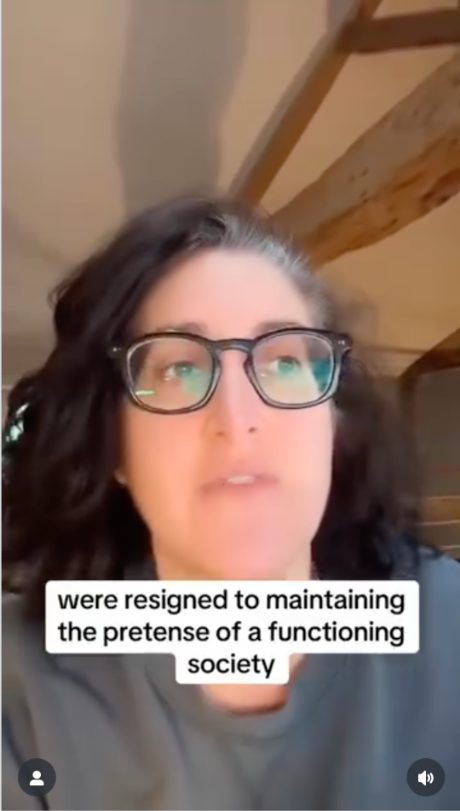
That sensation that everything seems broken but feels strangely normal? It has a name.
Ernst Bloch warned that the most profound loss under fascism is not material or even psychological security, but the erosion of imaginative hope—the ability to envision a different, better reality.
ARTICLE: Systems Are Crumbling – But Daily Life Continues. The Dissonance Is Real
Activism
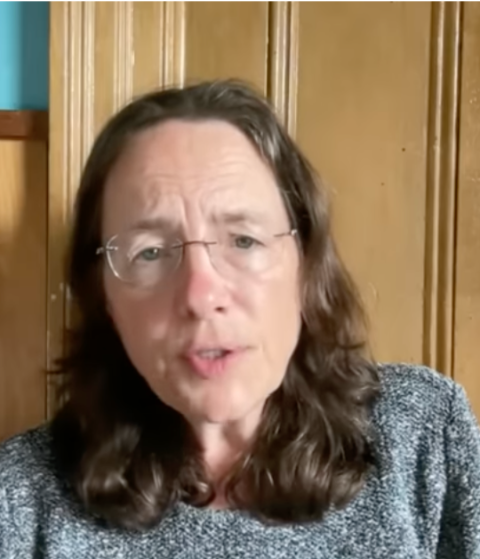
"This is also a time of extraordinary possibility."
This week, Heather Cox Richardson posted a video in which she acknowledges that Americans have good reasons to be feeling freaked out by presidential and Supreme Court overreach. But importantly, she urges people not to feel powerless.
VIDEO: It's Our Job to Make Sure People Know the Truth
Gathering
Gathering
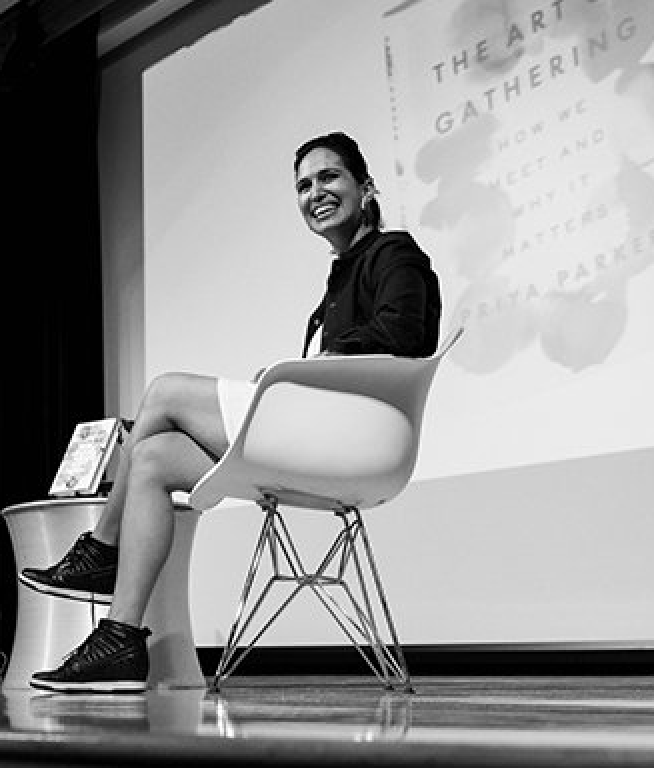
Six ways to host a gathering that you'd want to attend
Regular readers know that one of the inspirations behind this letter is one of Austin Kleon's maxims: draw the art you want to see, make the music you want to hear, write the books you want to read.
ARTICLE: Create the Gathering You’ve Been Waiting For

Libraries
A visual exploration of how a critical piece of social infrastructure came to be.
It won’t surprise you to learn that the first libraries were for white men only—and that their eventual spread and democratization was driven largely by the tireless efforts of women.
ARTICLE: A History of the American Public Library

Communes
'Maybe the main reward of trying to do things differently is giving encouragement to others that they can create the possibilities they see.'
Around 50 people, with a span of seventy years between the youngest and the oldest, call Cobb Hill CoHousing home.
ARTICLE: Six Reasons for Communitarian Living

Libraries
“Bad libraries build collections, good libraries build services, great libraries build communities.”
When Nicola Heath applied for her first library job, she assumed libraries were mainly about lending books.
ARTICLE: Public Libraries Are Not Just About Books. At Their Heart, They Are About Social Equity


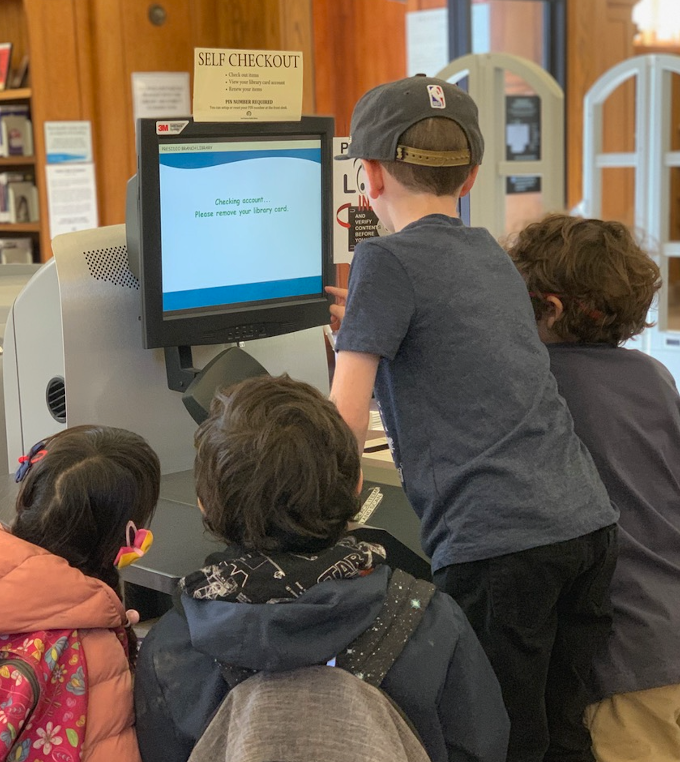
Libraries
A civic institution where everything is free and the doors are open to all
And speaking of defending libraries, Free For All: The Public Library is a feature-length documentary from PBS’s Independent Lens series that explores the history, significance, and current challenges facing America’s public libraries.
TRAILER: How Public Libraries Shaped America | Free For All: The Public Library | Independent Lens | PBS