August 21, 2026
Teaching
Teens: take responsibility for your own education
As a teenager, I was a lousy student. The first time I ever saw a psychologist was to help my parents and teachers understand why I wasn’t “living up to my potential.”
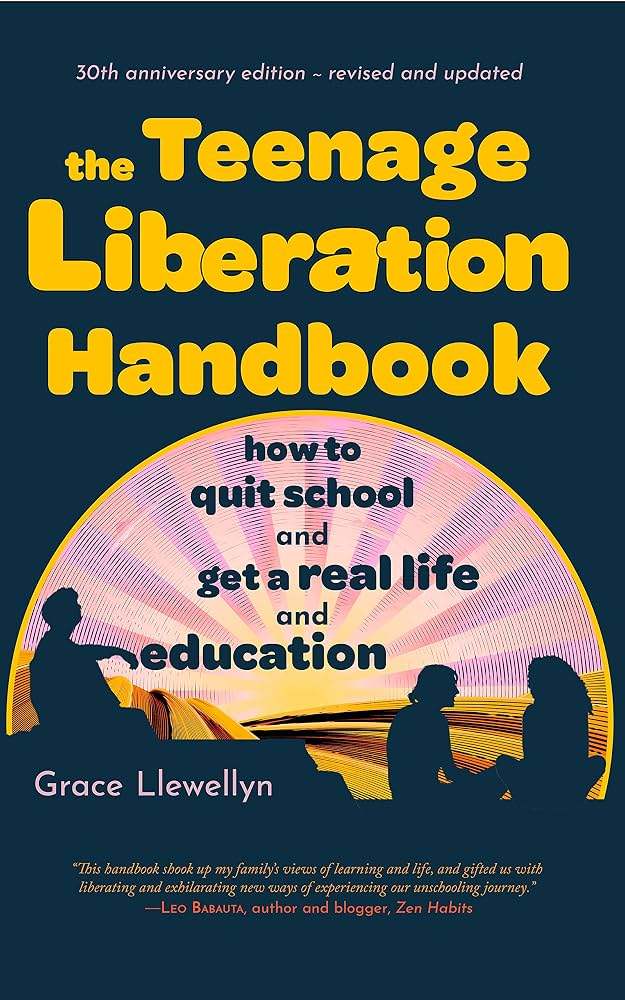
I suspect things might have been different if they’d had—and listened to—this book.
Grace Llewellyn published The Teenage Liberation Handbook: How to Quit School and Get a Real Life and Education in 1991. She had been a middle-school teacher herself, but eventually became convinced that for some young people, the problem wasn’t that they were failing at school. School was failing to give them the freedom they needed to learn.
So she wrote a book for teenagers. Not their parents. Not their teachers. Not school administrators. Teenagers.
Even that feels radical. Llewellyn speaks directly to young people as people capable of making consequential decisions about their own lives. If school isn’t working for you, she says, you don’t necessarily need to try harder to become better at school. You can take responsibility for your own education.
And then she shows you how. Read voraciously. Find mentors. Volunteer. Travel. Make things. Get a job. Take college courses. Spend time with people who know things you want to know. Follow an obsession farther than a school schedule would ever allow. Figure out what interests you and build an education around it.
Llewellyn calls this unschooling, but the idea underneath it is bigger than whether or not a teenager attends school. It is agency.
For most of my adolescence, the question adults were asking about me was some version of: Why won’t Mitch do what we know he’s capable of doing? Nobody thought to ask me what I wanted to do.
That’s the reversal at the heart of The Teenage Liberation Handbook. Education doesn’t have to be something designed by adults and delivered to young people. A young person can become the author of their own education.
Fortunately, I had enough agency to figure this out on my own. Instead of going to college, I started my first business at 19—a natural-foods cafe on the main drag in Amherst, Massachusetts, a college town. I somehow assumed I had permission to do that.
But I also know that being white, male, and middle-class had something to do with that assumption. Plenty of young people were never given the same sense of permission.
More than thirty years after Llewellyn first published the book, its title still sounds wonderfully subversive. But its central proposition doesn’t strike me as subversive at all. Your education belongs to you.
BOOK: The Teenage Liberation Handbook – 30th Anniversary Edition!