July 17, 2026
Learning
Compassion begins with the person you are today.
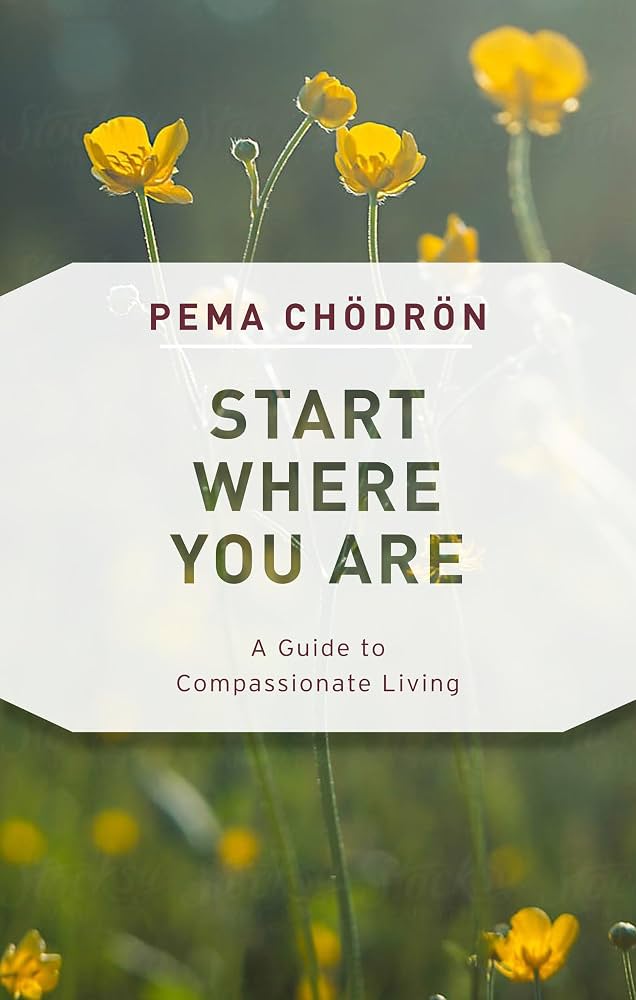
Pema Chödrön has a simple but demanding invitation: stop waiting to become a better version of yourself before engaging the world. Begin with the person you are today.
She suggests that the feelings we most want to avoid—fear, resentment, shame, disappointment—are not obstacles to growth. They are the raw material from which compassion is made. Rather than escaping discomfort, she invites us to become curious about it, to meet it with honesty, and to discover that our own vulnerability is one of the surest paths to understanding others.
The book is organized around 59 short Tibetan Buddhist lojong, or “mind-training,” slogans. Each is a small practice: a way of interrupting habitual reactions and responding with greater awareness. Like a pattern language, the slogans are meant to be carried into ordinary life and tested in real situations, one interaction at a time.
Chödrön also introduces tonglen, a meditation that uses the breath to cultivate kinship with others. Beginning with our own experience of suffering, it gradually widens our circle of concern until the boundary between “my pain” and “our pain” becomes less fixed.
The longer I spend trying to understand what helps people flourish together—in families, businesses, organizations, and communities—the more I appreciate Chödrön’s reminder that every one of those places is made up of people carrying unseen fears and unfinished stories. Learning to meet our own experience with honesty and compassion isn’t separate from that work. It’s one of the conditions that makes it possible.
BOOK: Start Where You Are. A Guide to Compassionate Living