July 31, 2026
Culture
Hope is a discipline.
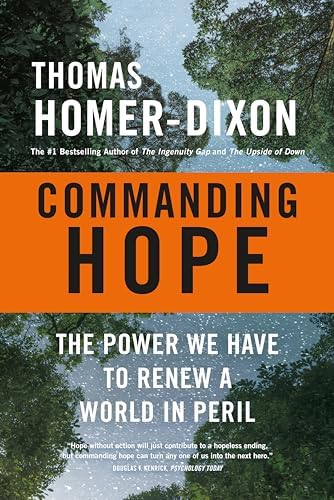
Every society lives by stories about the future. When those stories begin to fail, hope becomes more than a feeling. It becomes a cultural resource. Thomas Homer-Dixon's Commanding Hope explains why.
Optimism says things will probably work out. Hope chooses to act even when we can’t know how the story ends. Thomas Homer-Dixon believes that distinction may determine whether societies navigate the decades ahead with courage or resignation.
His starting point is familiarly sobering. Climate change, biodiversity loss, political polarization, technological disruption, economic inequality—these are not isolated problems. They reinforce one another, creating the kind of cascading instability that complex systems sometimes experience before they reorganize.
But this is not another book about collapse.
Looking across history, Homer-Dixon notices a recurring pattern...histories greatest periods of creativity often emerge during times of profound disruption. As old systems weaken, people begin experimenting with new ways of living, governing, learning, and working together. Most of those experiments fail. A few become the seeds of the next era.
That possibility is where hope lives. Not in certainty. Not in prediction. In the willingness to keep building even when outcomes remain unknown. Every lasting culture has depended on people who could imagine a future before they could prove it was possible.
One of the book’s most valuable contributions is its insistence that emotions matter. Fear can sharpen our attention. Grief can remind us what we love. Hope is what allows people to organize, imagine, and persist long enough for meaningful change to happen. It gives communities the confidence to experiment before success is guaranteed.
For Homer-Dixon, hope isn’t wishful thinking. It’s a form of leadership.
Why it matters
Culture is one of the ways societies carry hope forward. Long before institutions change, artists, teachers, neighbors, entrepreneurs, and community builders begin experimenting with different ways of living together. Most experiments disappear. A few become tomorrow's common sense.
Commanding Hope offers a language for inhabiting that space. It doesn’t ask us to ignore risk or manufacture optimism. It asks us to become the kind of people who can remain curious, connected, and creative while the future is still taking shape.
That’s a really nice definition of hope. It’s not confidence that everything will be fine. It’s the decision to become someone capable of helping things go well.
BOOK: Commanding Hope