September 4, 2026
Company
Bosses are not a law of nature.
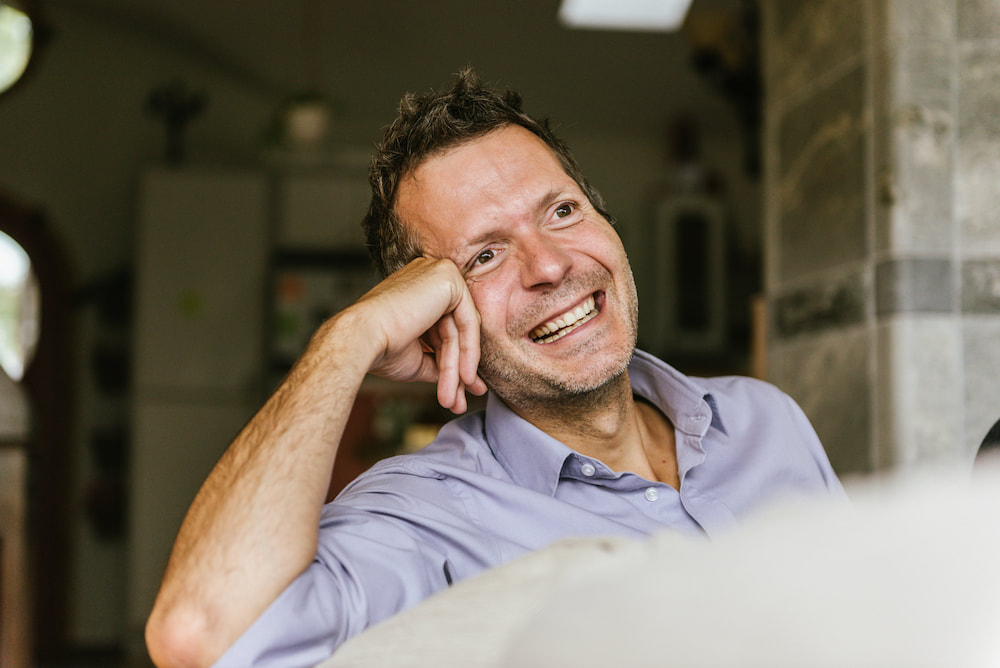
Frederic Laloux went looking for companies that trusted people to act like capable adults—and found them. Photo credit: Freunde von Freunden - Robert Rieger
As a young man, Frederic Laloux found himself wondering why organizations filled with intelligent, capable adults so often produced bureaucracy, politics, and disengagement—and somehow diminished the very people they depended on.
He had an unusually good vantage point from which to see the problem. Laloux spent ten years at McKinsey & Company, advising companies and working closely with senior executives. Instead of seeing the inner workings of one company, he watched many of the same patterns play out again and again.
The experience gave him two educations at once. One was in strategy, restructuring, performance, organizational design, and all the machinery through which large companies try to make themselves work. The other came from watching the people inside those systems. Laloux became particularly interested in the moments when executives stopped performing their professional roles and simply spoke as people. He began to wonder what a company might look like if the people who worked there didn’t have to leave so much of themselves at the door.
Eventually, he became less interested in diagnosing the problem and more interested in finding out whether anyone had already built something different. Were there places where people had found other ways to work together, without reproducing so much of the hierarchy, politics, and bureaucracy he had seen throughout his career?
He went looking for them. For Reinventing Organizations, published in 2014, Laloux studied a dozen organizations in very different fields and countries: a Dutch home-care organization, a French manufacturer, an American tomato processor, a German school, among others. They weren’t following the same management theory. Most weren’t even aware of one another. Yet many had arrived independently at surprisingly similar ways of working.
That became the heart of the book. Laloux proposes that the conventional company isn’t the inevitable endpoint of organizational development. Just as societies have discovered new ways of organizing themselves over time, companies can evolve too. He believed he was seeing another form emerge, built around three recurring ideas: self-management, wholeness, and evolutionary purpose.
The obvious objection is scale. A dozen committed people may be able to work without much hierarchy. But surely a company with hundreds or thousands of employees needs managers, layers of authority, and decisions flowing from the top down. How else could all those people possibly coordinate what they do?
This is where Laloux’s case studies get interesting. Buurtzorg, the Dutch home-care organization, grew to thousands of nurses working in small, self-managing teams with remarkably little central administration. At Morning Star, one of the world’s largest tomato processors, hundreds of employees coordinate their work without conventional bosses or job titles. FAVI, a French automotive supplier, reorganized its factory into small teams responsible for particular customers, giving frontline workers authority over decisions that would ordinarily belong to managers.
These aren’t communes or tiny experimental businesses. They care for patients, run factories, manage expensive equipment, meet production schedules, serve demanding customers, and compete in conventional markets.
And self-management doesn’t mean that everyone is equal at everything or that every decision is made by consensus. People still have different expertise, responsibilities, and influence. What largely disappears is the assumption that authority has to follow the organizational chart.
That distinction matters. The alternative to hierarchy isn’t chaos. Large groups of people can coordinate complicated work in other ways: through small autonomous teams, peer commitments, transparent information, clearly understood responsibilities, and decision-making that puts authority closer to the people who actually know the work.
Laloux found companies already doing this, sometimes with thousands of people. Which leaves us with a different question. If hierarchy isn’t the only way to organize a large company, what else have we been assuming is inevitable?
BOOK: Reinventing Organizations