May 22, 2026
Teaching
The deepest purpose of education is to help people become free and responsible human beings.
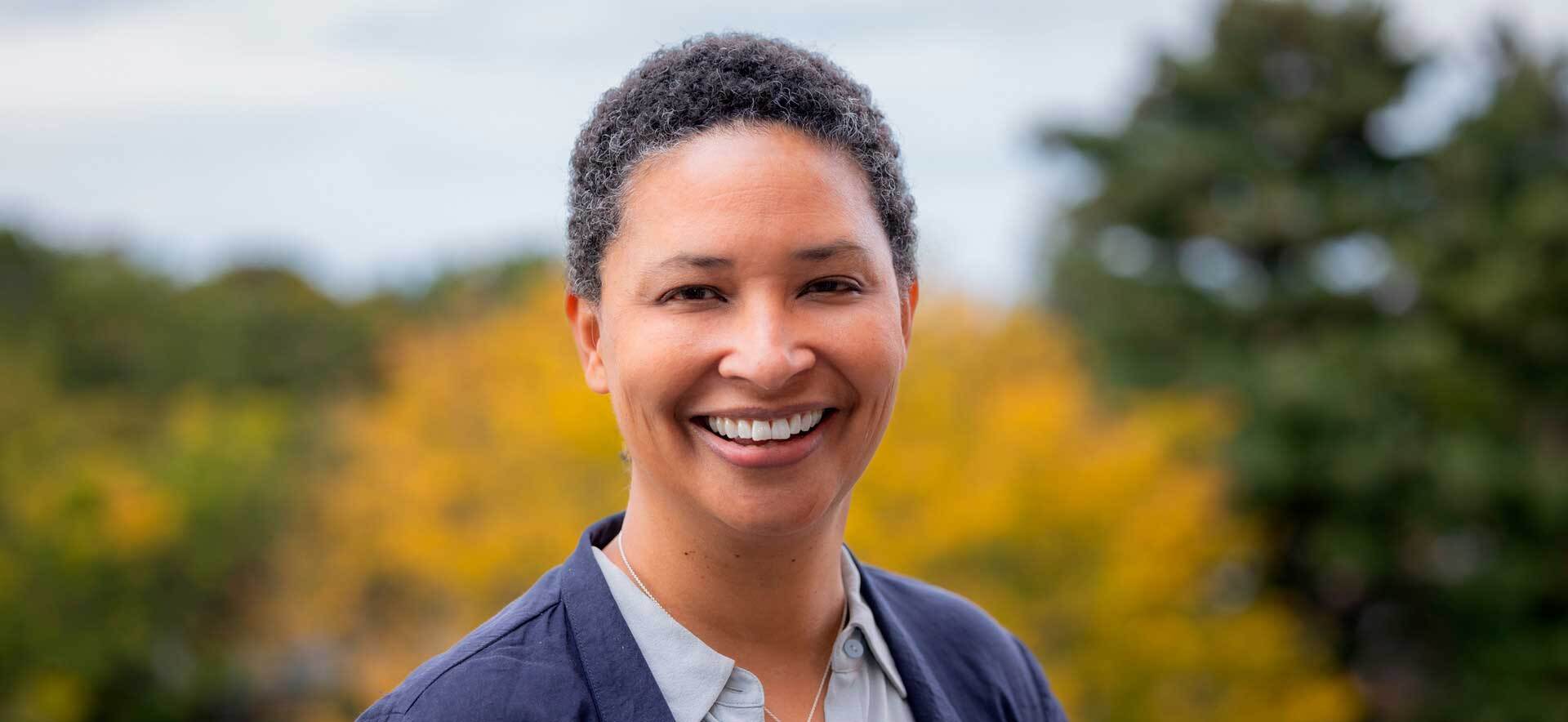
Photo Credit: Melissa Blackall via Brandeis University
Danielle Allen describes herself as “a Harvard prof and democracy advocate working on democracy renovation 24-7.” We’ve talked before about her conviction that democracy’s promises of freedom and equality can only be fulfilled if ordinary people show up as engaged citizens willing to participate in public life rather than retreat from it.
In this essay, she turns her attention to education and argues that its deepest purpose in a democracy is not simply to prepare people for work, but to prepare them to share power.
Allen points out that philosophers of education, from Plato onward, have typically understood human development along three overlapping axes: the economic, the civic, and the existential or cultural. She then maps education’s purpose along those same lines.
The economic dimension is about helping people develop the skills and knowledge needed to sustain a livelihood and participate meaningfully in economic life.
The civic dimension is about preparing people to act as citizens capable of helping govern a shared world.
And the existential or cultural dimension is about helping people find meaning, belonging, love, moral orientation, and spiritual or cultural grounding within communities of value.
Allen laments that contemporary debates about education have become badly lopsided. We overwhelmingly emphasize workforce preparation, credentials, and competitiveness while neglecting the civic and existential dimensions that are equally necessary both for human flourishing and for democratic life itself.
Her proposal is to make “democracy education” the organizing purpose of schooling. Not because economics no longer matters, but because genuine civic capacity depends on people also possessing material security, dignity, and strong social bonds. In her formulation, you can organize education around civics and still encompass the economic and existential dimensions—but not the other way around.
Her definition of democratic education is refreshingly concrete. Education, she says, should help people become agents who can pursue their own purposes without dominating others, while also participating in shaping the conditions under which everyone lives.
That means learning how to deliberate, negotiate disagreement, advocate for one’s convictions within a framework of mutual respect, and participate in the kind of transformative public speech and action she calls “prophecy”—acts capable of shifting shared values and expanding democratic possibility.
What I especially appreciate is her insistence that schools should not simply deliver civics facts, or turn every subject into a civics seminar. Instead, education should help young people clarify what they care about and what kind of life they hope to live. Then it should help them see how those private aspirations depend upon public systems and collective arrangements.
Her examples are intentionally ordinary. The aspiring nurse depends upon a democratically governed healthcare system. The entrepreneur depends upon public infrastructure, legal systems, research institutions, and policy-shaped markets. Once students recognize these relationships, civic participation no longer appears as an abstract obligation imposed from outside. It becomes part of sustaining the conditions that make their own lives possible.
For Allen, the deepest public purpose of education in a democracy is preparing people to share power. And sharing power, in her account, means much more than voting. It includes deliberating toward consensus, advocating strongly while recognizing the dignity of opponents, and learning to “call each other in” rather than merely “call each other out” when conflict emerges.
This also changes how educational success should be measured. Referring again to the current public discourse, schools cannot ultimately be judged only by test scores, graduation rates, or workforce outcomes. The real test is whether more people come to experience democratic life as genuinely theirs—whether they possess real standing, voice, and capacity to shape collective conditions.
Finally, she offers one of the clearest arguments I have read for why strong public schools still matter.
If learning to share power requires learning alongside people we did not personally choose—across lines of class, race, religion, ideology, and culture—then publicly governed schools tied to geographic communities remain essential democratic institutions. Allen notes that public investment in education has deep roots in American history, reaching back to colonial Massachusetts, where towns were required to support schools so children could learn the laws and participate in civic life.
She acknowledges ongoing debates around vouchers and privately governed alternatives. But her conclusion is steadfast: if education is meant to cultivate the habits, relationships, and “bridging social capital” necessary for democratic life, then public investment must remain anchored in schools that serve a genuinely public purpose rather than merely private advantage.
ARTICLE: Education and Its Public Purposes