March 27, 2026
Learning
We are a lot smarter together.
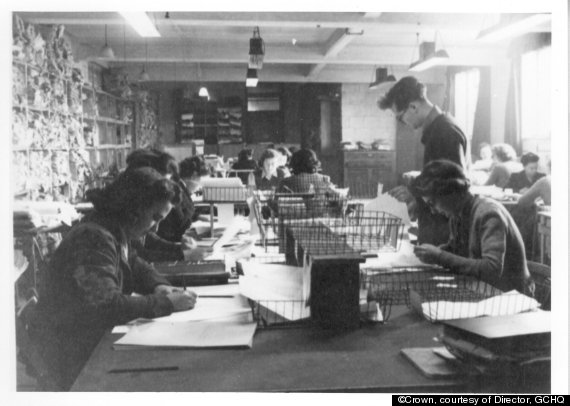
Bletchley Park was one of history's most consequential experiments in collective intelligence. Mathematicians, linguists, chess players, crossword enthusiasts, classicists, and clerks worked in deliberate combination — each contributing a different kind of mind to a problem no single discipline could crack alone. At its peak nearly 10,000 people worked here, three quarters of them women. The intelligence they produced together is estimated to have shortened WWII by two years.
The smartest person in the room is almost never the person who thinks they are. And in any case, the room itself is usually smarter than any single person in it — if we know how to work it.
This is not a flattering metaphor. It is a finding. When groups are given the conditions to think well together — genuine diversity of perspective, real listening, shared stakes, and the freedom to disagree — they reliably outperform even their most gifted individual members. Not occasionally. Consistently. The research on collective intelligence points to the same thing the best teachers, the most resilient communities, and the oldest democratic traditions have always known: we are a lot smarter together.
It's how Wikipedia outran every expert-built encyclopedia ever attempted. It's how the Allied codebreakers at Bletchley Park — mathematicians, chess players, classicists, and crossword enthusiasts working in deliberate combination — cracked problems none of them could have touched alone. It's how open-source software, written by strangers across time zones who will never meet, runs most of the world's critical infrastructure. Distributed systems, when they're well-designed, are smarter than centralized ones.
The tragedy is how rarely we act like it.
Most of our institutions were built on the opposite assumption — that intelligence is scarce, that it lives at the top, and that the job of everyone else is to comply. We built schools to sort, bureaucracies to control, and media to broadcast. We optimized for scale and got fragility. We optimized for efficiency and got brittleness. Communities are planned by consultants who will never live in them. Policies are made by people insulated from their consequences. And then we wonder why so little of what we build actually works.
The corrective is not complicated, but it is demanding. It requires building systems that are porous enough to let information move, humble enough to be revised, and honest enough to surface what isn't working before it's too late. It asks different questions: not just "what is the right answer?" but "who else needs to be in this conversation?" Not just "how do we communicate the plan?" but "how do we make the thinking visible so others can improve it?" It requires treating dissent as a resource rather than a threat, and keeping power close to the people most affected by its exercise.
This is old knowledge dressed in new urgency. Elinor Ostrom proved it for commons governance. The open-source movement proved it for software. The best teachers, the most resilient communities, and the oldest democratic traditions have always known it. The pattern holds: when you design for participation, you get better outcomes and more durable systems — and not incidentally, more humane places to live and work.
Love & Work keeps returning to this idea from many angles: the forest that shares nutrients through fungal networks, the neighborhood that discovers it knows how to solve problems it couldn't see alone, the organization that learns to trust its own distributed wisdom.
In each case the story is the same; pay attention to what your neighbors are figuring out. That's the curriculum.
SUPPORT: Love & Work Catalog