April 3, 2026
Learning
We cannot predict the future, but we can choose our direction.
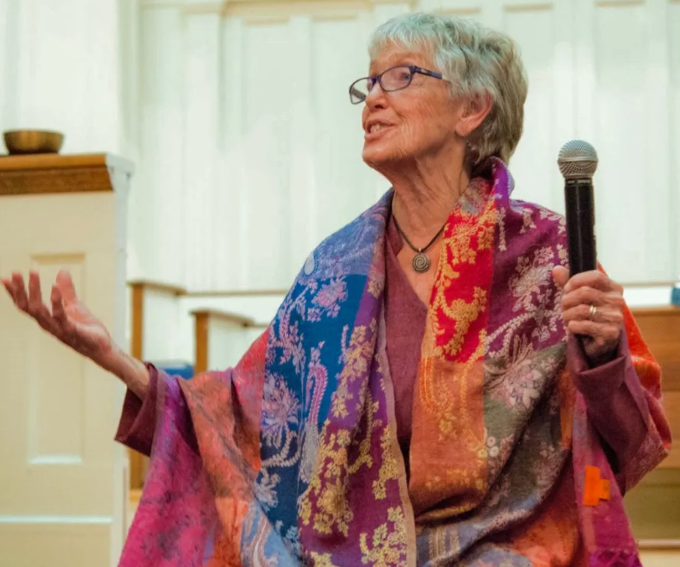
Though she first wrote it in the late 1990s, Joanna Macy could have written this essay for these unsettling, surreal days, when the confusion isn’t whether things are bad, but how an ordinary person could possibly respond.
In her quiet and stedfast voice, Macy says that the greatest danger we face is not climate chaos, war, a president who demeans others while abusing power for profit, or billionaires who hoard wealth while others struggle for basics. The greatest danger, she says, is psychic numbing: the impulse to shut down our capacity to feel grief, fear, and outrage about what is happening to the Earth. When we suppress this despair, we lose energy, imagination, and the ability to respond; our lives become thinner and more distracted.
She invites us instead to “crack the shell”: to let our defenses fall so the heart can open, allowing new perception, a wider sense of self, and deeper community to emerge. Speaking honestly about our pain for the world brings us into solidarity with others and reveals that our anguish is a sign of our belonging to the web of life.
Long before she named the Great Unraveling—the slow fraying of ecological, economic, and social systems under business-as-usual—Macy was mapping its inner landscape in “The Greatest Danger,” showing how external breakdown is mirrored by the temptation to shut down within.
She frames our moment as a convergence of the Great Unraveling and the Great Turning, a shift from a culture of empire to one of Earth community. She insists we cannot know how the story ends. In that uncertainty, what we can rely on is intention—the motivation we bring, the vision we hold, the “compass setting” we choose—which can keep us from getting lost in grief and help us act with maturity and purpose.
Her guidance does not prescribe what each of us should do in response to a world on fire. Instead, it shows how to keep the heart open enough to recognize the work that is truly ours.
By accepting uncertainty and letting go of the need to predict success or failure, our minds and hearts return to the present, which becomes alive with possibility. In that aliveness, we rediscover the quiet power of feeling as guidance—the source of clarity, courage, and connection that makes thoughtful action possible
ESSAY: The Greatest Danger
RESOURCE: Personal Guidelines for the Great Turning