April 17, 2026
Learning
What people think they can do together can shape outcomes as much as any policy or formal plan.
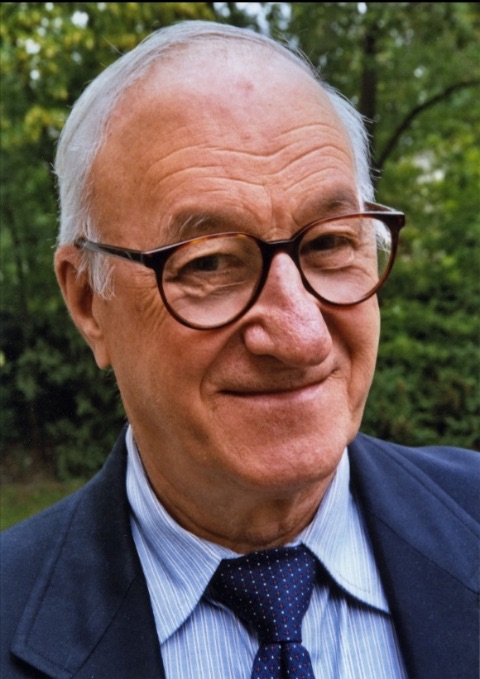
Albert Bandura was one of the most influential psychologists of the 20th century. Long before “social emotional learning” or “mindset” became common language, he argued that change is a process of learning—how people gradually develop new ways of thinking and acting.
In a 1961 paper called Psychotherapy as a Learning Process, Bandura upended the idea that behavior could be explained by any single cause. He showed instead that our actions, our surroundings, and our inner life are constantly shaping one another. That insight helped nudge psychology toward a view of people as active participants in their own change. His social cognitive theory has since rippled far beyond therapy into classrooms, public health campaigns, media, and the everyday stories we tell about how lives and cultures shift.
Albert Bandura was one of the most influential psychologists of the 20th century. Long before “social emotional learning” or “mindset” became common language, he argued that change is a process of learning—how people gradually develop new ways of thinking and acting.
In a 1961 paper called Psychotherapy as a Learning Process, Bandura upended the idea that behavior could be explained by any single cause. He showed instead that our actions, our surroundings, and our inner life are constantly shaping one another. That insight helped nudge psychology toward a view of people as active participants in their own change. His social cognitive theory has since rippled far beyond therapy into classrooms, public health campaigns, media, and the everyday stories we tell about how lives and cultures shift.
For those of us interested in how cultures grow and change, his 1997 book Self-Efficacy: The Exercise of Control offers a clear framework for how people come to believe they can influence the course of their lives. Bandura argues that in a fast-changing and interdependent world shared belief matters. What people think they can do together can shape outcomes as much as any policy or formal plan.
Bandura calls this collective efficacy—a group’s shared belief that it can organize and act to reach a goal. He shows how this belief shapes what groups attempt, how much effort they give, and how they respond when things don’t go as planned. A neighborhood that believes “we can make this safer” behaves differently than one that has given up. A team that trusts its ability to improve something will take risks a discouraged group won’t.
What makes this useful now is that Bandura doesn’t treat personal agency and larger systems as opposites. People create systems, and those systems shape how people live. Our sense of what we can do together always sits inside those conditions.So collective efficacy isn’t a pep talk. It’s a working judgment that shifts over time—updated as people gain experience, watch each other act, and adjust to real limits. In a complex, high-pressure world the need for this only grows. We either learn how to act together across differences, or we get pushed around by forces we don’t control.
Read this way, self-efficacy is more than a theory of belief. It’s a guide to culture-building. The essays and case studies that I gather in Love & Work offer examples you can use—stories of artists, teachers, organizers, and neighbors testing what’s possible in real settings. The point isn’t to celebrate heroes. It’s to build a steady sense that “we can do things together”—in schools, libraries, congregations, and local councils—even when the wider culture says otherwise.
At a time when it’s easy to feel discouraged by leaders who rely on fear and confusion to separate us from our own capacity to act, Self-Efficacy: The Exercise of Control makes a clear case: belief in our shared capacity is itself a strong and vital force. It shapes which futures people pursue, their sense of promise and potential, their enthusiasm for the work, and how long they stay with it.