November 29, 2024
Culture
“The ultimate hidden truth of the world is that it is something we make and could just as easily make differently.”
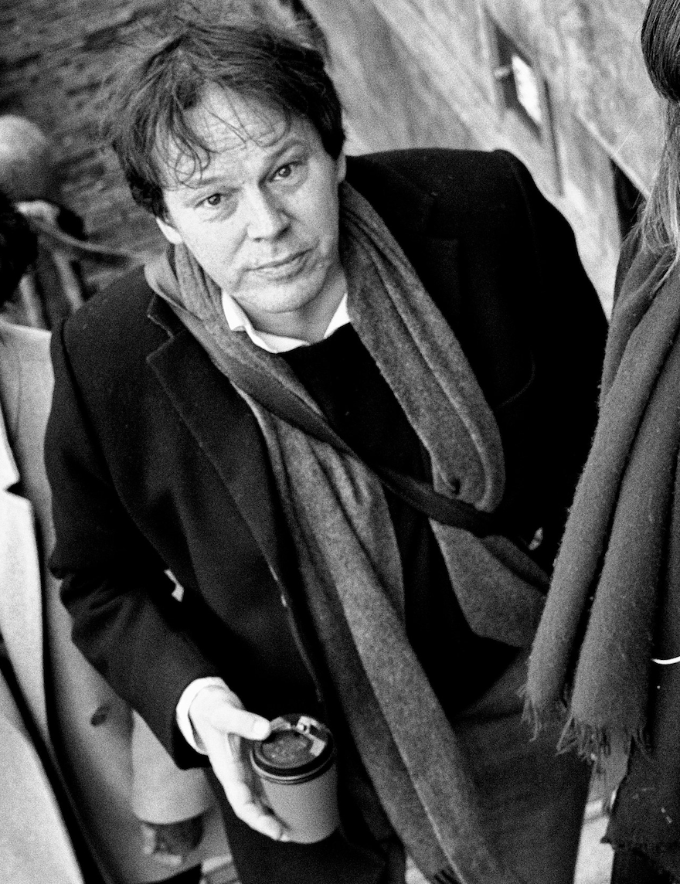
David Graeber in Amsterdam, March 2015. Photo by Guido van Nispen via Creative Commons.
David Graeber in Amsterdam, March 2015. Photo by Guido van Nispen via Creative Commons.
David Graeber in Amsterdam, March 2015. Photo by Guido van Nispen via Creative Commons.
This month Macmillan published a new collection of the writings of David Graeber, The Ultimate Hidden Truth of the World . . .. Rebecca Solnit wrote the forward, and an appreciation of her friend, the late anthropologist, activist and anarchist who believed that ordinary people have the power to change the world.
"He insisted, again and again," she wrote, "that industrialized Euro-American civilization was, like other societies past and present, only one way of doing things among countless options. He cited times when societies rejected agriculture or technology or social hierarchy, when social groups chose what has often been dismissed as primitive because it was more free. And he rejected all the linear narratives that present contemporary human beings as declining from primordial innocence or ascending from primitive barbarism. He offered, in place of a single narrative, many versions and variations; a vision of societies as ongoing experiments, and human beings as endlessly creative. That variety was a source of hope for him, a basis for his recurrent insistence that it doesn’t have to be this way."
ESSAY: ‘It Does Not Have to Be This Way’: The Radical Optimism of David Graeber