July 24, 2026
Economics
Safe futures are good business.
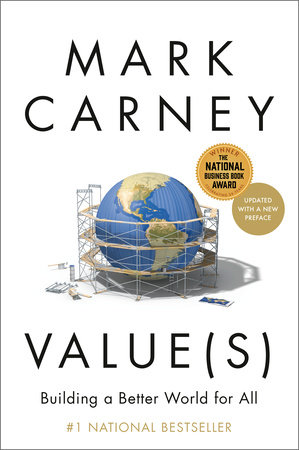
We often hear that markets reward what people value. But markets can only function well when they rest on values they cannot create themselves. Mark Carney explores what happens when market value begins to crowd out the social and moral values that make markets possible.
Over the past half-century, he laments, we’ve become remarkably good at pricing things. We can calculate returns, optimize efficiency, and measure almost everything that can be bought and sold. But in the process, we’ve allowed market value to crowd out many of the deeper values on which healthy societies depend: trust, fairness, resilience, stewardship, belonging, and care for future generations.
That confusion has consequences.
When short-term profit becomes the dominant measure of success, it becomes harder to justify investments whose greatest returns arrive years or decades later. Healthy forests, strong public institutions, affordable housing, thriving neighborhoods, and stable democracies begin to look like costs instead of assets. Yet these are precisely the conditions that make markets—and prosperous lives—possible.
Carney writes with unusual credibility. Before becoming a public intellectual, he served as Governor of both the Bank of Canada and the Bank of England, guiding financial systems through the global financial crisis and Brexit. He knows markets intimately, which makes his critique difficult to dismiss as ideological.
His message is not anti-capitalist. It is pro-foundation.
Markets are extraordinary tools for coordinating human activity. But they cannot, by themselves, generate the trust, cooperation, functioning institutions, and ecological stability upon which they ultimately depend. Those are products of culture, community, and democratic life.
This insight feels increasingly important.
As climate change, political polarization, and economic insecurity deepen, stability itself is becoming one of our most valuable assets. Businesses need functioning communities. Investors need predictable institutions. Families need confidence that tomorrow will resemble today closely enough to make plans. It's no accident that countries such as Denmark, Finland, and the Netherlands consistently rank among the world's most prosperous and resilient. Their success rests not only on strong markets, but also on high levels of trust, effective public institutions, and a long-term commitment to the common good.
BOOK: Value(s): Building a Better World for All