June 12, 2026
Learning
Reading the world as a whole system, not a broken machine
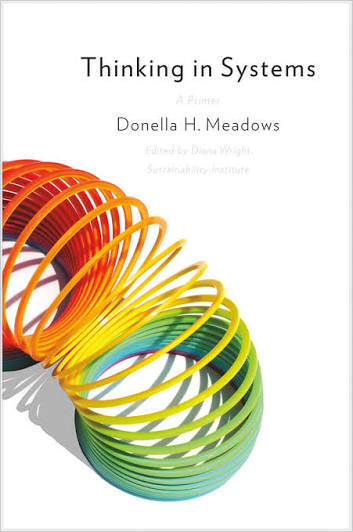
Donella H. “Dana” Meadows (1941–2001) was an American environmental scientist, systems analyst, educator, and writer. She is widely regarded as one of the most influential voices in sustainability and systems thinking of the late twentieth century.
Her worldview emerged at the intersection of scientific training, early exposure to system dynamics, and decades spent modeling, teaching, and observing complex systems in practice. Trained as a scientist and systems modeler, and later a farmer and community builder, she came to see that most of what we call separate ‘problems’ are actually the behavior of interconnected systems—and that meaningful change depends less on fixing parts than on reshaping the patterns, feedbacks, and stories that hold those systems together.
She lived these ideas. She helped found the intentional community of Cobb Hill Cohousing in Hartland, Vermont, which remains active today, and practiced sustainable agriculture. The combination of modeling, teaching, journalism, and hands-on community work reinforced her conviction that farms, towns, economies, and ecosystems are living, relational wholes rather than machines with easily replaced parts.
Meadows wrote a draft of Thinking in Systems around 1993 and circulated it informally within the systems dynamics community, but she never published it during her lifetime. When she died in 2001, the manuscript remained unfinished and had not yet been fully edited and organized for general readers.
Colleagues at the Sustainability Institute—the organization Meadows founded, now known as the Donella Meadows Institute—shaped the material into a three-part structure: introducing systems concepts, exploring system traps and opportunities, and examining leverage points and mindset. The book was published in 2008.
It begins by explaining how systems generate their characteristic behaviors over time: why growth curves steepen, why policies backfire, and why well-intended interventions can produce oscillation, overshoot, or collapse. Meadows introduces reinforcing and balancing feedback loops as the basic engines of systems and emphasizes the importance of delays and information flows in shaping how systems respond to change.
From there, she explores common system archetypes and traps—such as policy resistance, the tragedy of the commons, shifting the burden, and escalation—to show that many recurring social and ecological crises share similar underlying structures. Seeing these patterns, she suggests, allows us to move beyond blame and symptom-chasing toward interventions that alter system structure, incentives, and information flows rather than simply pushing harder on the same levers.
In the later chapters, Meadows introduces her influential hierarchy of leverage points, ranking places to intervene in a system—from adjusting parameters such as taxes and subsidies to changing information flows, rules, and, ultimately, the goals and paradigms from which the system arises. She stresses that the deepest leverage lies in changing mindsets and stories, while also cautioning that such shifts are difficult and require humility, experimentation, and long-term commitment.
Read in the light of 2026, I find myself repeatedly muttering, “So that’s what’s going on...” The patterns she names—growth that overshoots and collapses, well‑meant fixes that backfire, systems that “push back” against change—map uncannily onto our current tangle of climate disruption, political volatility, fragile supply chains, and frayed social fabric.
It is not that she predicted particular headlines; it’s that she gives you a vocabulary and a set of lenses that make today’s overlapping crises legible as behaviors of systems, not random chaos or isolated failures. Once you’ve seen her diagrams of reinforcing loops, delays, and leverage points, it becomes harder to experience 2026 as a barrage of separate problems and easier to notice the underlying habits, assumptions, and feedbacks that keep producing them.
Readers of this letter are by now familiar with the concept of radical hope, the belief that even in the face of profound loss and uncertainty, new and more life‑giving patterns of living together can emerge—often before we have words for them or guarantees they will succeed. Thinking in Systems gives that belief a scientific backbone, turning it from well‑intentioned optimism into a disciplined way of seeing how different, more life‑giving patterns might actually take hold.
BOOK: Thinking in Systems: A Primer