May 22, 2026
Learning
If we only see ourselves as we are now, we miss our ability to imagine, grow, and choose new paths.
Roberto Mangabeira Unger is an unusually ambitious and original social theorist. A Harvard law professor, philosopher, and former Brazilian government minister, he has spent decades holding up how humans and our societies are far more capable of transformation than we typically allow ourselves to see, let alone believe.
Central to his thesis is a stubborn insistence that we are not merely the products of our circumstances. Overcoming our circumstances, he says, is the purpose of education, politics, and even spiritual life. Our challenge and our opportunity is to cultivate human capacity. Our job is to exceed the conditions that produced us and to build new systems and processes more worthy of our true capacity.
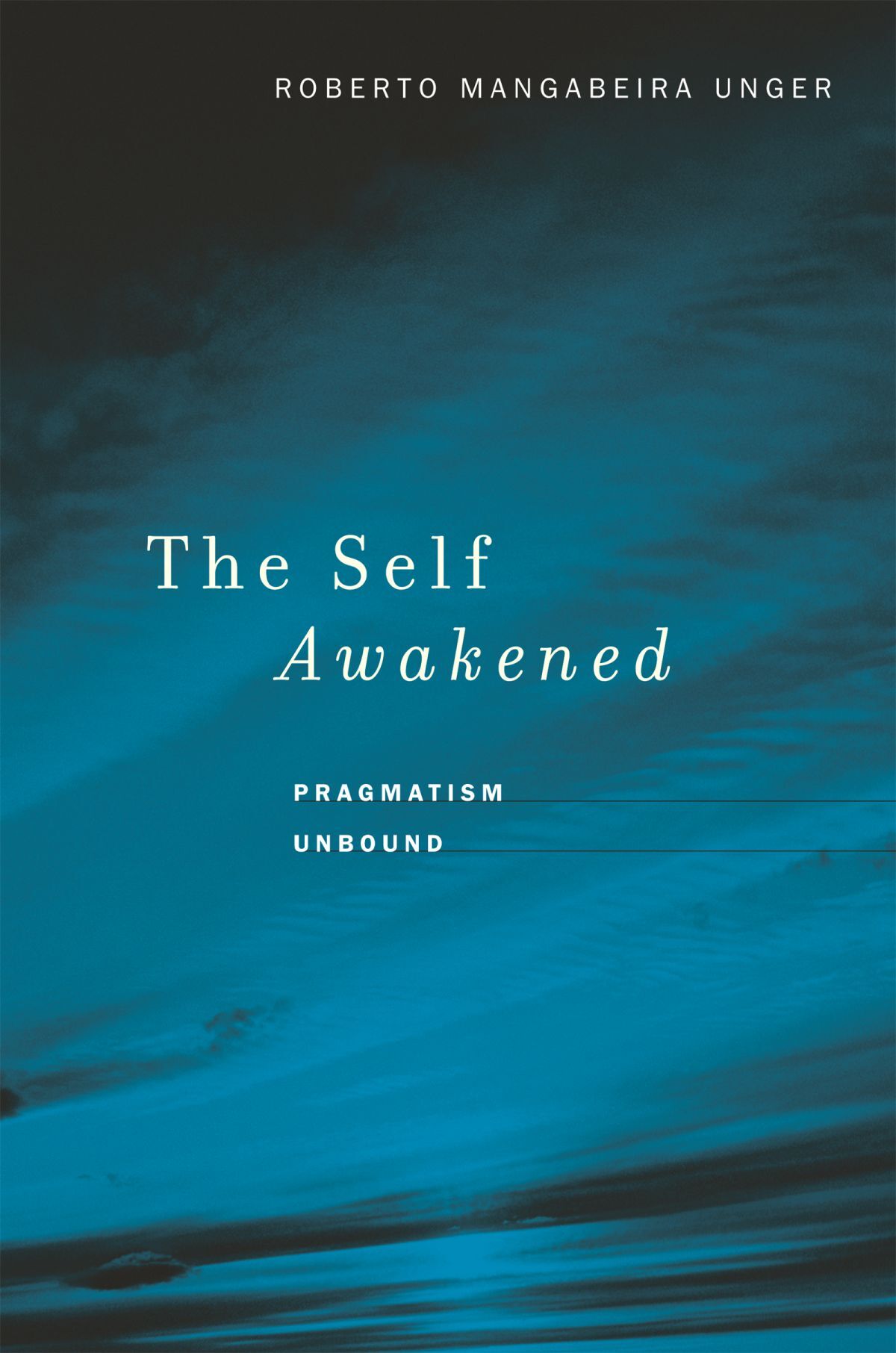
In 2007, Unger published The Self Awakened, a work that feels remarkably prescient today. Its thesis is simple: in the 19th century America produced a philosophy that is uniquely suited to transforming the world, and then largely failed to use it. That philosophy is pragmatism.
Pragmatism emerged in the decades following the Civil War, when American thinkers grew impatient with the grand abstract systems dominating European philosophy—ideas that, in a rapidly changing new society, often felt detached from lived experience. These renegades—he focuses on Ralph Waldo Emerson, William James, and John Dewey—were living inside a young, first-draft country. They wanted a philosophy that matched the condition that America itself was an ongoing experiment rather than a settled civilization.
In Unger’s telling, each developed a philosophy that had a more demanding test: What does this idea actually do in the world? What kinds of people does it help us become?
From Emerson, Unger takes the idea of self-creation: the belief that conformity to inherited arrangements is a kind of betrayal of human possibility. From James, he takes the understanding that ideas are tools for living rather than mirrors of some fixed reality. From Dewey, he takes the conviction that democracy is not simply a form of government but a way of life requiring the continual reconstruction of institutions.
Then our very ambitious social theorist adds a much more insistent challenge. What does it take to actually live these foundational questions? He’s clearly disappointed that American pragmatism stopped short of its own promises. Pragmatism, he says, hinted at radical openness while ultimately kowtowing to existing institutional and economic arrangements as fixed. With this book Unger wanted to “unbind” pragmatism—to push its logic all the way into economics, politics, education, and social life.
He does so with a mantra: human beings are always more than the contexts that shaped them. Every social role, institution, identity, and belief system both forms us and constrains us. But unlike other creatures, we possess the capacity to step back from those constraints, question them, and remake them. He calls this our “context-transcending” nature.
This is not merely abstract philosophy for him. It is the foundation of genuine education, democratic politics, love, and spiritual life. Any system that treats people as fully defined by their current circumstances, he says plainly, diminishes what human beings actually are.
The implications for education are especially striking. If human beings are context-transcending creatures, then education cannot simply be about transmitting established knowledge to prepare students for existing roles. Its deeper purpose must be helping people develop the ability to imagine alternatives—to exceed the world they inherited rather than merely adapt to it. Education that fails to cultivate this capacity becomes, in Unger’s words, a form of domestication, no matter how well intentioned.
His political argument follows naturally. Democracy, he says, is not merely a set of procedures for collective decision-making. At its best, it is a social order organized around the ongoing revision of the arrangements under which people live together. A healthy democracy would remain in a state of productive self-questioning rather than settling into stagnant and unjust stability. He calls this “high-energy democracy.”
What makes the book especially compelling to me is its spiritual dimension. Unger is not talking about religion in any conventional sense. He is talking about the human hunger to live beyond mere self-interest—to participate in something larger, more connected, more open to possibility. He argues that the great religious traditions recognized something essential about the human condition: our need to transcend the merely given. But he wants to reconnect that impulse to the project of building a fuller human life here in the world rather than locating transcendence elsewhere.
At its core, The Self Awakened articulates something very close to what I explore in this letter: the insistence that human beings are not permanently trapped by the conditions they inherit, that private meaning and public possibility are inseparable, and that becoming more fully human is always both a personal and a collective project.
On the eve of America’s 250th anniversary, his not-so-gentle prodding feels more relevant than ever. Why, exactly, would we stop trying to fulfill the democratic and human potential we conceived of centuries ago? Why would we choose merely to adapt to the world we inherited rather than try to exceed it—especially now, when that world is increasingly unequal, unstable, and hostile to so many people?
Perhaps this is precisely the moment to call upon what Unger describes as our “context-transcending” nature: the uniquely human capacity to step beyond inherited arrangements and imagine something better.
It may finally be time to build the kind of high-energy democracy he envisioned.
BOOK: The Self Awakened. Pragmatism Unbound