April 24, 2026
Civics
How shared hardship reveals our innate capacity for belonging, agency, and interdependence
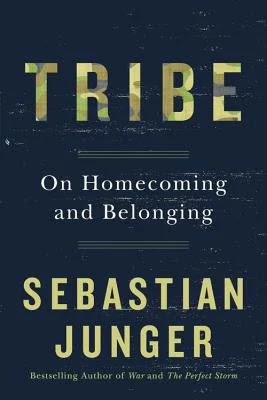
Sebastian Junger has spent much of his life moving toward the places most of us avoid—storms, war zones, the thin edges where systems fail and people are forced to rely on each other. In Tribe: On Homecoming and Belonging, he turns from the question of how we survive those moments to something more intriguing: why, inside disruption, so many people feel more awake, more necessary, more alive than they do in the steady drift of ordinary life.
He notices that when hardship is shared, something in us shifts. Strangers become neighbors. The distance between people collapses. We begin to act as if we belong to one another. It’s not the crisis itself that calls this forth, but the conditions it creates: mutual dependence, clear purpose, a sense that each person matters to the whole.
Junger traces this back to older human arrangements—small, interdependent groups where survival required contribution, where status came from usefulness, where no one made it alone. Against that backdrop, much of modern life starts to look like a kind of quiet deprivation. We have more comfort, more safety, more autonomy than ever before—and yet we can pass entire days without being needed, without needing anyone. The result is a different kind of loss: loneliness, disconnection, a thinning of meaning.
He draws on a wide range of evidence—history, anthropology, disaster response, accounts from soldiers and civilians—to make a simple claim: when people are bound together by real stakes and shared effort, mental health improves, generosity rises, and even joy becomes more available. Not in spite of hardship, but braided through it.
Junger names capacities many of us recognize but rarely use: mutual aid, shared responsibility, collective intelligence. It suggests that the systems we’ve built—efficient, individualistic, often hierarchical—can mute those capacities, even as they promise freedom.
He is, of course, not arguing for crisis. He’s asking us to notice what crisis makes visible. In moments of real need, people tend to show up for one another with clarity and purpose. That response isn’t unusual—it’s built in.
We are clearly in a moment of crisis, a breakdown of systems shaped by patriarchy, slavery, and imperialism. But we can also see early signs of other ways of living together, grounded not in greed and domination but in care and reciprocity. That’s why his point lands: in the face of loss, agency doesn’t disappear; it shifts. And when it shifts it’s easier to see that we don’t have to live or struggle alone.
Book: Tribe: On Homecoming and Belonging