April 17, 2026
Civics
The news feels hopeless; my neighborhood doesn't.
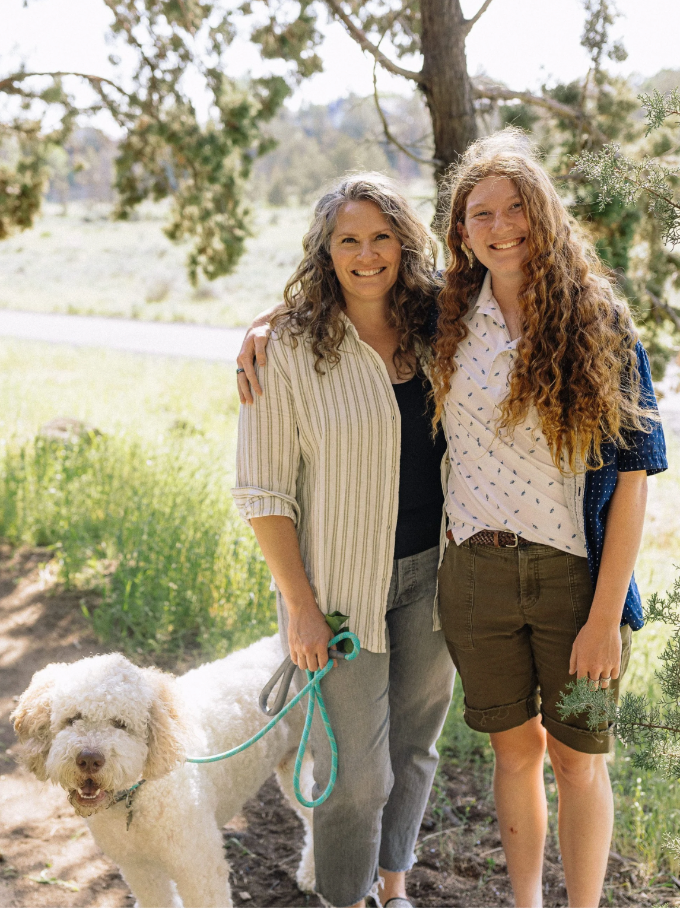
Amanda Page of Oregon, with two family members. Of her many roles—flight paramedic, tribal member, school board director, mom...—she says her favorite is the work she does as a Social Responsibility & Belonging Advisor, "where I get to help our company engage in meaningful ways with the communities we serve, ensure health equity for rural communities, and build a workplace where every employee feels like a valuable member of the team." She is currently running for Deschutes County Commissioner.
I know I speak for millions when I say that, in a time when the daily news feels endlessly bleak, I’m hungry for reminders that ordinary people still have real power close to home. Writing in Ms., Kerani Mitchell offers exactly that, with a tapestry of examples that give both context and inspiration to the question, “What can I do?”
She grounds her overview in the Social Change Ecosystem Framework, a practical map that helps people and organizations see the different roles needed in social movements and identify which ones they are best suited to play. Developed by Deepa Iyer of the Building Movement Project, it centers shared values such as justice, equity, solidarity, and community care, and identifies roles—such as weaver, builder, storyteller, healer, disrupter, and visionary—that together form a healthy ecosystem for social change. No one is asked to do everything; movements become more effective and sustainable when diverse roles are recognized and coordinated.
From there, Mitchell turns to the hyperlocal, describing women of color, Indigenous, trans, and gender-expansive organizers who are already meeting needs and building power through mutual aid, neighborhood campaigns, and everyday practices of care. Food distribution, tenant support, community safety efforts, and voter engagement all appear as expressions of different roles within the same ecosystem, rather than scattered, isolated projects. By the end, her message is less about heroic resistance than about durable connection: When we find our own role in community—whether as a storyteller, a healer, or a behind-the-scenes builder—despair shrinks, and democracy becomes something we practice together, not just something we watch in horror on the news.
Part of my own personal theory of change is that no one is asked to save everything; each of us is invited to take up our share of the work with whatever mix of creativity, care, and courage is available to us, right where we are. Mitchell’s work helps bring that share into focus.
ARTICLE: The Antidote to Despair Is Finding our Role in Community Building