April 10, 2026
Nature
The many benefits of investing in relationships, diversity, and reciprocity
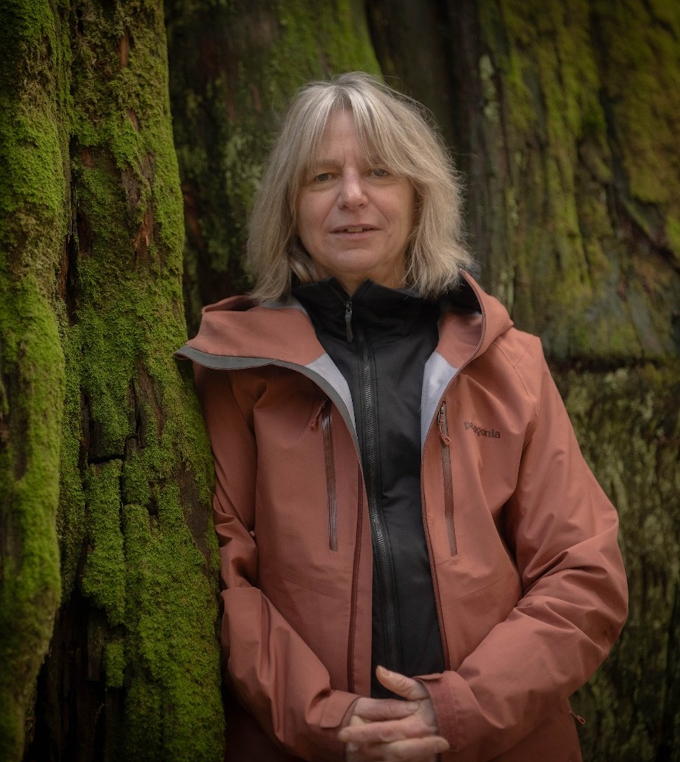
Suzanne Simard is a Professor of Forest Ecology at the University of British Columbia. Photo by Bill Heath
In her first book, Finding the Mother Tree, Suzanne Simard argued that forests are not collections of isolated trees but living, communicating communities connected by underground fungal networks.
In her new work, When the Forest Breathes, she extends that idea into a broader thesis: forests are relational, self-renewing communities whose health depends on cycles of reciprocity among trees, fungi, soil, and people—and if we learn from those relationships, we can redesign forestry, climate policy, and even our own communities around regeneration rather than extraction. This approach can produce healthier, more biodiverse forests, increase carbon storage, reduce vulnerability to fire and drought, and align human economies with ecological cycles.
To make this case, she weaves together decades of fieldwork, long-term research from the Mother Tree Project, collaboration with Indigenous knowledge holders, and personal narrative, demonstrating that relationships—not isolated parts—shape forest health.
From this perspective, climate change is not just an emissions problem but a question of restoring the relationships that allow forests, and the climate, to heal. Fires, in this view, are not only disasters to suppress but disturbances whose risks can be reduced by maintaining diversity, fungal networks, and mother trees.
She emphasizes that Indigenous communities have long treated forests as kin, developing practices such as cultural burning, selective harvesting, and shared governance that embody a regenerative ethic.
Her approach also has significant economic implications: managing forests as resilient systems can reduce disaster costs, stabilize local economies, and protect essential ecosystem services like clean water, pollination, and carbon storage.
She suggests applying these principles to human communities by investing in relationships, diversity, and reciprocity rather than isolated resilience. Practices that reconnect people to forests—time in nature, learning from Indigenous stewardship, and local governance—can also reduce stress and strengthen belonging.
Taken together, When the Forest Breathes is not just about trees but about how to live in a damaged world: by recognizing that our well-being depends on the health of living systems, and by organizing our economies and lives around regeneration rather than extraction.
BOOK: When the Forest Breathes