February 20, 2026
Nature
Tomorrow is not for sale.
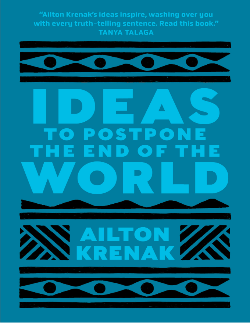
Ailton Krenak says it plainly. The economic system most of us take for granted—corporate capitalism, shaped by a colonial mindset—has done far more than damage the Earth. It has also diminished our sense of agency and narrowed our imagination. It trains us to believe in endless growth, constant progress, and technological rescue, even as the living and social systems that sustain us visibly fail around us.
In Ideas to Postpone the End of the World, Krenak articulates how the problem runs deeper than policy or technology. Our very ideas of “humanity” and “progress” estrange us, he says, from the Earth that sustains us and from the relationships that make us human. He describes a system that treats people as expendable and places economic activity above life itself. He calls this logic necropolitics—a way of organizing society that decides who is allowed to live and who can be sacrificed.
In fact, he challenges the idea of a single, universal “humanity.” He asks how we can call ourselves “a humanity” when about “70 percent of us are totally alienated from even the minimal exercise of being,” with most people denied real agency and treated mainly as consumers.
In his telling, that idea has often served power. It justified colonization and created what he calls a kind of “Humanity Club,” made up of “rich trendsetters” who design the narratives of the world, while everyone else is staff and consumers “of the artificial existences the club members design.”.
He links this directly to colonial history: white Europeans claimed an “enlightened humanity” that had to civilize “benighted humanity,” using that idea to justify colonization and a single “right way of being in the world.”
Against this, Krenak points to other ways of being human. Indigenous and place-rooted cultures that remain in relationship with land, mountains, and rivers—not as objects, but as kin. These ways of life carry memory, story, and joy. They offer not a return to the past, but a different orientation to the present and the future.
The title is a provocation. To postpone the end of the world is not to invent new technologies or expand the economy. It is about waking up from the story we are living inside. Krenak points toward another way of being—grounded in shared dreams, relationships with one another and the natural world, and the wisdom of ancestors. A way of life that sees the Earth and one another not as resources to be maximized, but as living presences to be cherished and honored.
PDF: Ideas to Postpone the End of the World