April 3, 2026
Learning
Education belongs at the center of any serious conversation about the future.
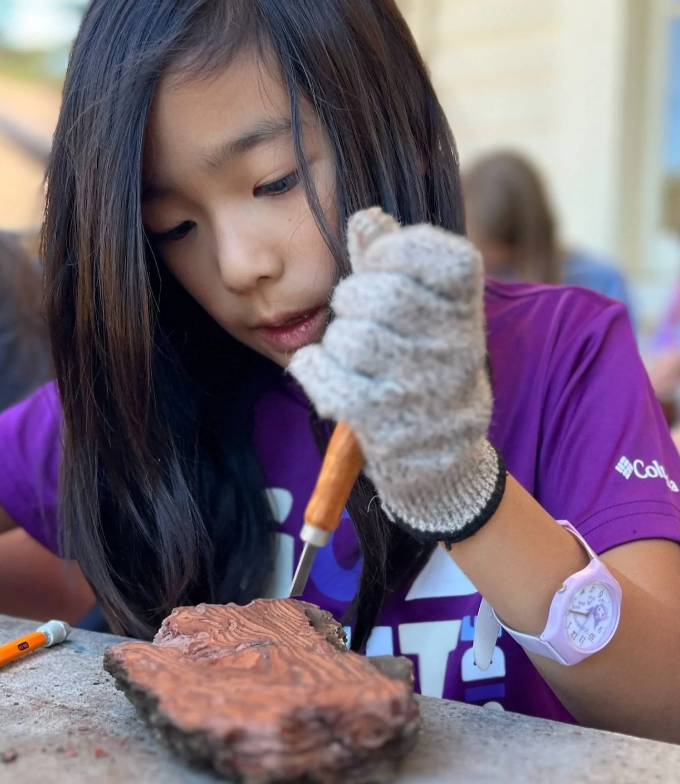
The Brightworks school in San Francisco views the mind not as a vessel to be filled, but as a fire to be kindled. They pose a simple question: What if education could communicate to each child, “I see you, you are important, your ideas matter”? Then they promise to help students find something to do with those ideas. ARTICLE
We have confused education with the delivery of content. For more than a century, most schools in the industrial world have been organized around a simple transaction: adults hold knowledge; children receive it. The measure of success is how much sticks. The tools are lessons, tests, grades, and credentials—a production line that begins with small children and ends, theoretically, with prepared adults.
The theory is tidy. The results are not.
Across the world, students are anxious, disengaged, and increasingly convinced that what happens in school has little to do with what matters in life. Teachers are burning out. The curriculum races forward while the child—the actual child, with fears and curiosity and hunger for meaning—sits largely unaddressed. We have built an extraordinarily elaborate system for managing learning, and in doing so, we have crowded out the conditions under which learning actually happens.
What those conditions are, we now know with some precision. The brain does not learn the way a hard drive stores files. It learns through meaning, emotion, and relationship—through the felt sense that something matters, connects to who I am, and has consequences for people I care about. When young people are given real problems, genuine stakes, and the space to connect ideas to their own lives and moral sense, they develop differently—more resilient, more integrated, better equipped for the complexity of adult life. When they are given drills, behavior charts, and test prep, something immeasurable is lost.
The implications are not small.
If the purpose of education is to produce test scores, the current system is roughly functional. But if the purpose is to produce people who are capable of caring about a complicated world and doing something about it, then we are working against ourselves. We are designing for compliance when we need to be designing for agency. We are optimizing for performance when we need to be cultivating purpose.
This is not a new observation. John Holt noticed it in the 1960s, watching children in classrooms learn not to think but to manage the impression that they were thinking—to guess what the teacher wanted, cover their uncertainty, and survive the social hazards of being wrong in public. Jerome Bruner noticed it. John Dewey noticed it before either of them. What is new is that we now have the evidence to explain exactly what is being damaged and how.
The good news is that we also know what better looks like. It does not require a revolution in funding or a wholesale dismantling of institutions. It requires a shift in what we treat as central. An algebra teacher who asks her students to serve as financial planners for real families is not doing anything that costs more than a textbook. She is simply refusing to separate the mathematics from the meaning. A history teacher who frames his entire curriculum around the question "What is democracy arguing about?" is not departing from rigor; he is deepening it.
What these teachers share is a design intention. They are not simply trying to cover material. They are trying to create the conditions under which a young person can encounter the world as something worth caring about, and encounter themselves as someone capable of doing something about it. That is a different goal than passing a test. And it produces different people.
The world we are navigating needs a particular kind of person. Not a credentialed one, though credentials have their uses. It needs people who know how to tolerate uncertainty without shutting down, hold complexity without retreating to simple answers, and feel the weight of difficult things while remaining in motion. These capacities are not innate. They are developed. And they are developed—or not—in the environments we design for the young.
This is why education belongs at the center of any serious conversation about the future. Every other project in this catalog—rebuilding local economies, reimagining democracy, designing for belonging, learning to live well on a finite planet—depends on people who have been taught, somewhere along the way, that the future is not something that happens to them. It is something they are making, right now, with whatever they have.
That lesson is rarely on the test. It is past time we made it the point.
.png)