March 13, 2026
Culture
Joy as an act of resistance
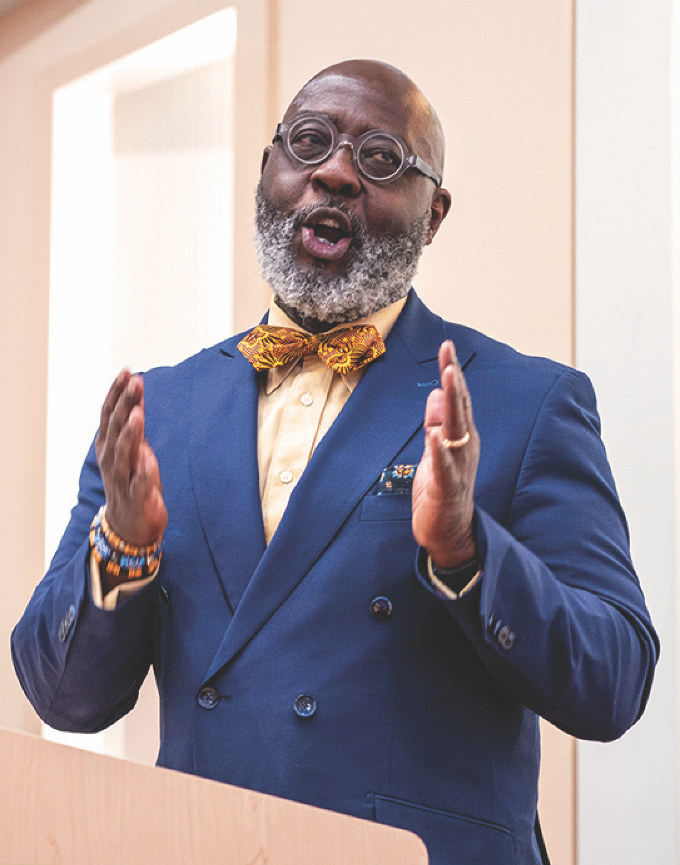
Willie James Jennings thinks that joy is serious communal work, learned together in places like clubs and meeting halls, places where people help one another hold on to life. Photo by Gregg Brekke for Presbyterian Outlook
Willie James Jennings is a professor of Systematic Theology and Africana Studies at Yale Divinity School, a Baptist minister, and the author of The Christian Imagination and After Whiteness. Miroslav Volf is the founder and director of the Yale Center for Faith & Culture and a professor at Yale Divinity School. In this interview, they introduce joy as an embodied, communal act of resistance against despair—one that can grow into a sustaining way of life.
Jennings calls this vision “joy for our time”: walking a path of joy “even against our doom,” resisting despair’s claim that destruction has the final word. He finds such joy in churches (though not all churches), in hospital rooms where grief and remembrance mingle with deep joy, and in Black barbershops and beauty shops where indirect speech, storytelling, and humor leave people with the feeling that “things are going to be better.” Clubs and dance halls, he says, are also among those “good” communal spaces—like bars, gyms, and street corners—where people learn to “make joy” together, pressing their whole bodies into music and dance as a shared, boundary-crossing act of resistance against despair.
Jennings and Volf suggest that joy—especially among those struggling to survive—is a hard‑won communal practice that can grow into a way of life, continually reopening the possibility of living well together even when familiarity and habit have numbed us to expect and accept less.
PODCAST/TRANSCRIPT: Joy and the Act of Resistance Against Despair