February 27, 2026
Culture
How to reweave the social fabric of the world—one neighborhood at a time
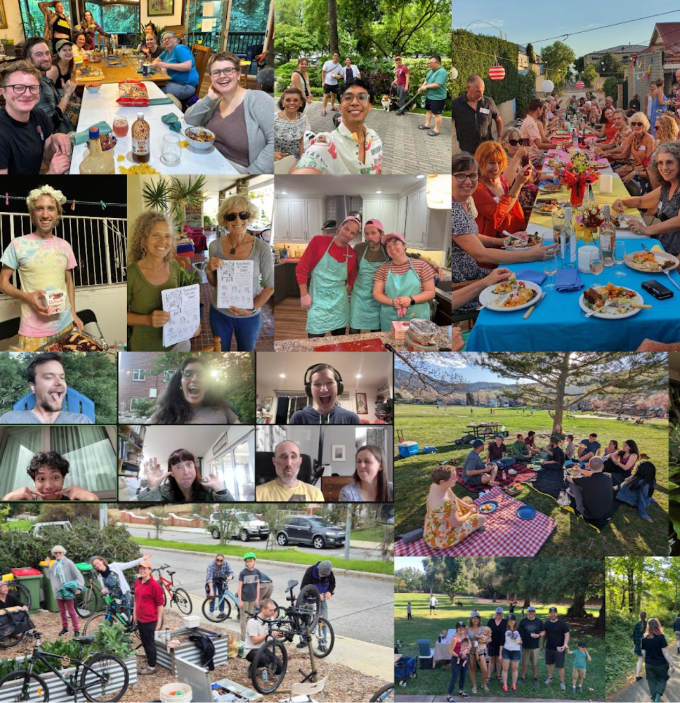
Neighborhood Accelerator is a 6-month, peer‑supported program that helps local “stewards” turn ordinary blocks into stronger communities through simple gatherings, shared projects, and ongoing neighbor-to-neighbor communication. These are snapshots from neighborhoods that particpated in the first cohort of the Neighborhood Accelerator program.
Savannah Kruger and her partner Jon Bo loved their apartment in Boulder, Colorado—close to parks, trails, groceries, and downtown—but felt something was missing. “There wasn’t much community in our neighborhood yet.” So they decided to build it.
They began with a simple potluck for their 31-unit building, hand-delivering handwritten invitations and knocking on every door. Fifteen neighbors showed up. With a bit of gentle facilitation, initial awkwardness gave way to real conversation—about gardens, shared projects, and everyday life. From that first gathering came a group chat where neighbors now swap favors, coordinate time together, and support one another. Over time, the building—and even the surrounding blocks—shifted into a place where a walk to the park often means running into friends.
That early success, paired with the loneliness of figuring it out, led Kruger to help create a broader community of practice. She joined the Cabin team to run the Neighborhood Accelerator, a 6-month program for people building neighborhood connection in their own communities. Alongside participants stewarding 10 neighborhoods worldwide, she helped create a shared learning space where people designed invitations, hosted gatherings, and built communication channels in parallel—sharing challenges and successes as they went.
In the article, she also highlights two related efforts. In Australia, the West Beacy Bunch transformed a 350-home area into a “do-ocracy” of bonfires, shared gardens, and mutual aid that proved vital during COVID. In New York City, Manhattan 75 began with a single building WhatsApp group and a rooftop dinner, gradually growing into a named, recognizable community through small projects like a lobby library and a tree-well garden.
Across these examples, the pattern is clear: community does not appear on its own. It is designed—through invitation, small acts of leadership, and simple structures that make it easier for people to show up for one another.
ARTICLE: Building Neighborhood Communities
WEBSITE: Neighborhood Village Project