May 2, 2025
Civics
Hope is both active and participatory.
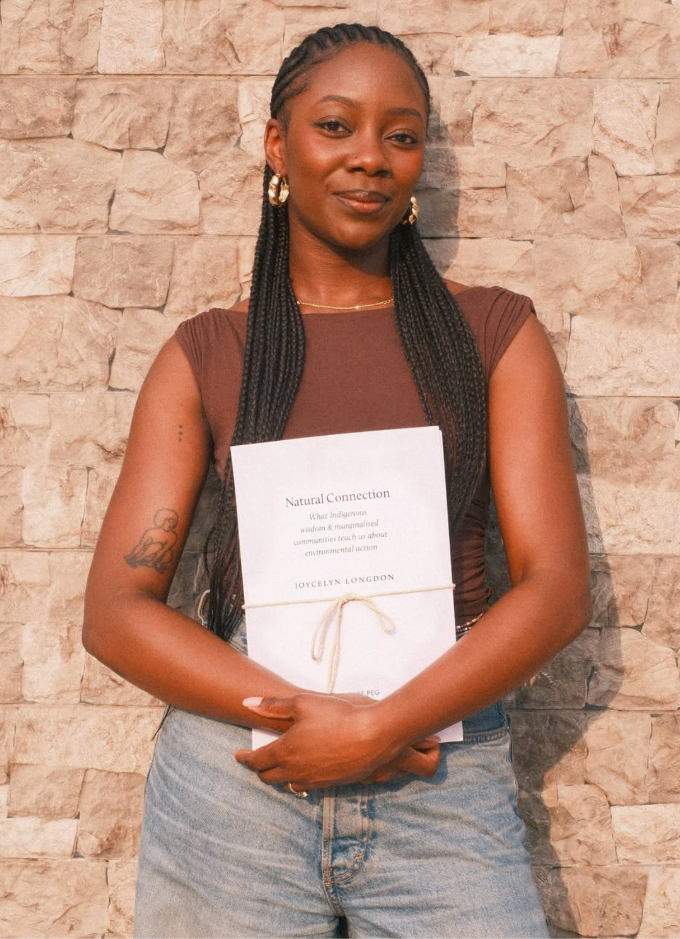
"It seems that many find it is easier to accept the end of the world than to hope and act for its survival." - Joycelyn Longdon Photo via Instagram
"It seems that many find it is easier to accept the end of the world than to hope and act for its survival." - Joycelyn Longdon Photo via Instagram
Joycelyn Longdon works at the intersection of environmental justice and technology. Through projects like ClimateInColour, she focuses her energy on how people learn about and engage with climate issues. She puts justice, diversity, and hope in the center of her endeavors.
Her new book, Natural Connection, What indigenous wisdom & marginalised people teach us about environmental action, uses storytelling to show that impactful environmental work happens not just through headline-grabbing activism. Instead it often happens at the local, community level. She emphasizes that foundational environmental work starts with reconnecting with our roots, with one another, and with the natural world.
Atmos recently published an excerpt in which she and Rebecca Solnit explore how to move through despair and turn grief into meaningful climate action.
“What our hope must do, is go to work. our hope has to be active, not merely by existing, but by fueling our diverse and unique approaches and dedication to change.”
“These words exist as reminders that so much of what we need to survive already exists. that we are more resourced, more powerful, and wiser than we have been made to believe.”
BOOK EXCERPT: The Root of Climate Action is Hope