March 28, 2025
Civics
“Communal eating is the beating heart of coliving.'
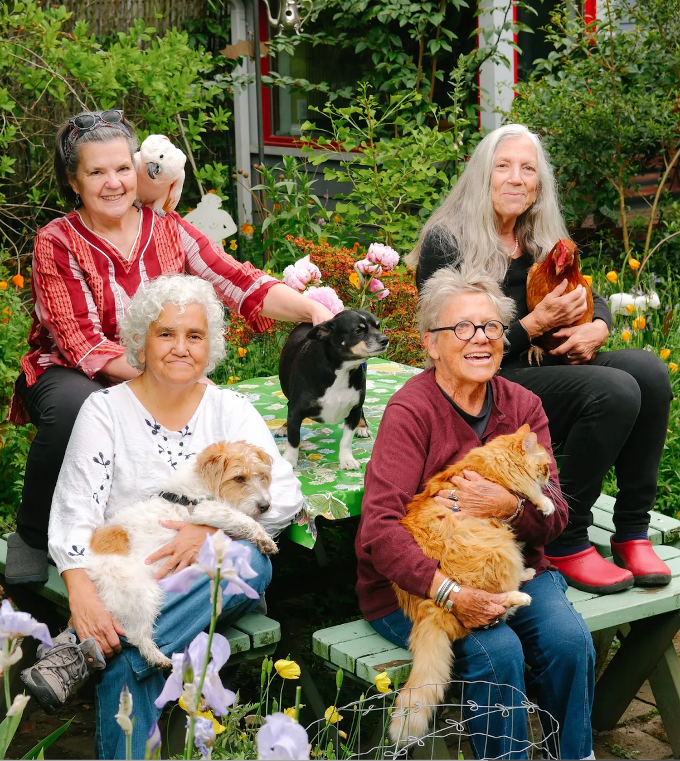
WOW House—which stands for Wild Older Women—is just one of many communal living arrangements across the US, households where people who aren’t related or romantically involved choose to reside together. Photo by Genna Martin
WOW House—which stands for Wild Older Women—is just one of many communal living arrangements across the US, households where people who aren’t related or romantically involved choose to reside together. Photo by Genna Martin
In 1970, a New York Times investigation into the “commune phenomenon” identified nearly 2,000 groups living together, “seeking economic advantages, social revolution, love, pot, God, or themselves.” More than 50 years later, people continue to come together to redefine success beyond conventional individualism.
Belle Cushing visited three modern communal groups, each offering a distinct approach to collaborative living. Her report highlights the clear benefits of these setups, demonstrating how they foster rewarding, supportive, and sustainable lifestyles.
ARTICLE: How Communal Living Makes Cooking Easier, Cheaper, and Better