March 7, 2025
Teaching
Anne Herbert on honest hope, random acts of kindness, and senseless acts of beauty
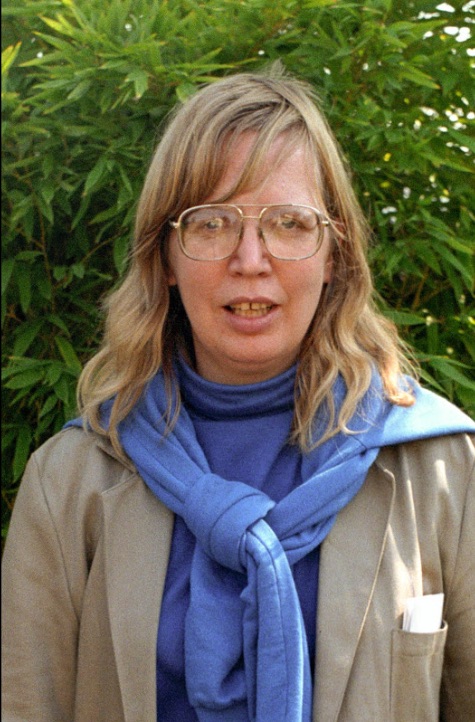
Anne Herbert, ca. 1988. Photo by Kevin Kelly
Anne Herbert, ca. 1988. Photo by Kevin Kelly
This week, I stumbled upon an essay by Anne Herbert, published in CoEvolution Quarterly in Fall 1982, when she was an editor there. In Honest Hope, she writes:
"When we start to hope, we often promise ourselves too much. If this one thing changes—if injustice disappears, and there are no more lonely days, lonely nights, for anyone, for me.
"The war ends, we/they get the vote, but waking up each day stays too much the same. People find new ways to steal joy from each other.
"Give up, hide—lost dreams turn to headaches because we refuse to cry.
"If we started with honest hope, could we go farther, do you think? What would honest hope look like? What can we honestly hope for?
"Time. The lie often has to do with too soon. The hopeless (lazy) say: 'It'll never happen,' and the hopeful say, 'Yes, it will happen and soon' turning to the angry 'NOW!' Some of it does happen now, some never, but mostly it happens some off kind and not soon enough. Not enough for the hoping workers to notice that it happened. They've given up or want so much more it doesn't matter.
"Percentages of a single lifetime may be too short for honest hope to live in."
It's a beautiful essay that naturally connects with my own use of the term radical hope. As with so many brilliant ideas published by Whole Earth and CoEvolution, it is only available as a PDF of the full issue—but it's well worth scrolling to page 80.
P.S. That same year, at the Sausalito Land Company restaurant, Anne scribbled the words Random Kindness and Senseless Acts of Beauty on a placemat. She wrote them in response to the news of the day, including the Rodney King incident and the growing tensions that led to the Persian Gulf War. As you know, her sentiment became a powerful meme.
ESSAY: Honest Hope