March 7, 2025
Learning
Proposing a new enlightenment
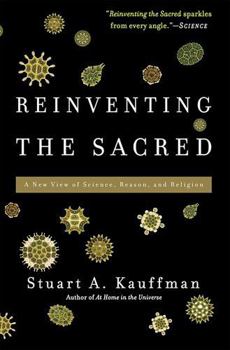
Stuart A. Kauffman also believes we can be saved by the beauty of the world. He argues that the universe’s inherent creativity should be regarded as sacred, offering a foundation for meaning and spirituality without relying on religion.
His perspective fosters reverence and awe while remaining firmly rooted in science. He even proposes a New Enlightenment—a paradigm shift in which science moves beyond strict materialism to acknowledge the richness and unpredictability of reality.
I appreciate his assertion that moral values emerge naturally from human cooperation and are ultimately more enduring than rules imposed by religious doctrine. He suggests that societies can redefine ethics based on human interconnectedness and self-organization rather than external commandments.
Highly relevant to today’s political climate, Kauffman argues that political ideologies often rely on outdated, reductionist thinking, treating society as if it were a controllable, mechanistic system. Any lasting political framework, he contends, must embrace complexity and emergent change rather than rigid, top-down control.
“We must find a new way to frame meaning, one that does not depend on reductionist physics but instead on the emergent, ceaseless creativity of the universe.”
“The biosphere is not describable by fundamental physics alone. It is a lawless domain, forever inventing new structures and functionalities.”
“We do not need a supernatural God to experience the sacred. The sacred is the ongoing creativity of the cosmos, unfolding before us.”
BOOK:Reinventing the Sacred. A New View of Science, Reason, and Religion